





Enamelled Porcelain Lamp
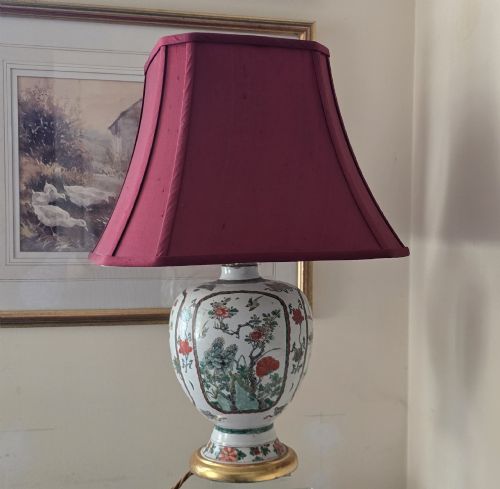
These enamelled porcelain lamp examples bring colour and texture into a room, combining painted ceramic bodies with period brass or gilt bronze mounts.
Enamelled Porcelain Lamp
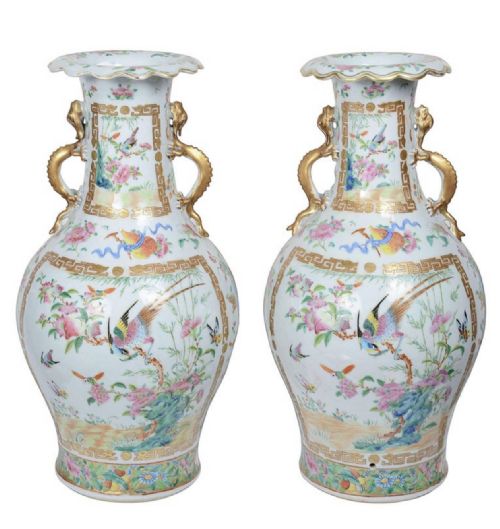
When you search for an enamelled porcelain lamp, you encounter pieces that began life as vases or decorative vessels before being mounted for electricity in later periods. The selection here leans heavily towards nineteenth-century Chinese export wares, including Famille Rose, Famille Verte, and Rose Medallion styles.
Many of these items appear in pairs, retaining their original vessel forms while incorporating brass, gilt bronze, or wooden bases alongside fabric or silk shades. Alongside Chinese export pieces, European works such as Vieux Paris porcelain and Italian enamelled designs occasionally surface in the archive.
The form functions primarily as a table lamp, serving as both a functional light source and a substantial decorative focal point in a traditional interior. The transformation from vessel to lamp often occurred decades after initial manufacture, adapting antique ceramics for modern domestic use.
How they were made
The foundation of each piece is fired porcelain, painted by hand using enamel pigments that sit proud of the white ceramic body. Artisans built up the palette through successive kiln firings, frequently combining opaque and translucent enamels with gilt detailing.
Metal components in brass, gilt bronze, or cloisonné enamel provide structural support, often fitted securely to the foot and neck of the ceramic body without damaging the antique porcelain. Silk and fabric shades complete the construction, diffusing the light across the painted surfaces.
Enamelled Porcelain Lamp Retail Price Guide 2026
Typical asking prices for enamelled porcelain lamp among the pieces listed under this phrase on Sellingantiques today, from the lower quarter to the upper quarter. They describe what is for sale here now, not the wider market.
Nineteenth-century artisans occasionally turned dinnerware and ginger jars into domestic lighting, proving that a good vase refuses to retire.
What varies in quality
The standard of painting on the porcelain body dictates much of the visual appeal, ranging from loose, rapid brushwork to finely detailed figural scenes and botanical motifs. Crisp delineation of the enamel colours and the generous use of gilding separate superior examples from simpler production wares.
The integration of the metal mounts matters greatly, particularly how cleanly the brass or gilt bronze collars and bases fit the contours of the ceramic vessel. Pairs that match closely in scale, colour saturation, and decorative layout command greater interest than assembled pairs with mismatched heights or palettes.
The Enamelled Porcelain Lamp Glossary
- Famille Rose
- A palette of Chinese porcelain enamels dominated by opaque pink or rose, introduced during the Qing dynasty. This palette allowed for soft shading and intricate floral or figural compositions.
- Famille Verte
- A classification of Chinese porcelain defined by a dominant green enamel palette, complemented by iron red, blue, and yellow. It flourised particularly during the Qing dynasty.
- Rose Medallion
- A distinct style of nineteenth-century Chinese export porcelain featuring panels of figures alternating with birds, butterflies, and flowers, all densely arranged within gilt borders. The decoration covers almost the entire surface of the ceramic body.
- Cloisonné
- A metalwork technique where thin wire partitions are soldered to a base to create cells, which are then filled with enamel paste and fired. In lamp mounts, this technique adds rich texture and colour alongside the ceramic body.
- Gilt Bronze
- Copper alloy cast and finished with a layer of gold, providing a bright metallic accent to the base or collar of the ceramic body. It protects the underlying metal from tarnishing while offering a warm visual contrast to the porcelain.
Enamelled Porcelain Lamp: Frequently Asked Questions
Are these lamps converted from old vases?
Most pieces listed under this search began as decorative vases, jars, or cisterns during the nineteenth century or earlier. They were subsequently fitted with electrical components and metal mounts, sometimes decades after the ceramic body was fired.
This conversion process allowed antique porcelain to find a practical role in modern interiors while preserving the original hand-painted artistry on the ceramic surface.
How do I identify Famille Rose from Famille Verte?
Famille Rose relies on an opaque pink or carmine enamel introduced in the eighteenth century, giving the palette a softer, pastel quality. It frequently appears alongside greens, yellows, and blues in domestic and figural scenes.
Famille Verte uses a dominant green enamel supported by iron red, cobalt blue, and yellow, producing a more vibrant and transparent colour scheme across the ceramic body.
Do these lamps usually come in pairs?
Many examples survive as matched pairs, particularly nineteenth-century Chinese export and Rose Medallion vessels that were manufactured together as decorative garnitures. Single lamps also appear frequently, originating from larger sets or surviving independently.
Matching pairs require careful comparison of the hand-painted details and overall height, as artisan production variations mean no two antique vessels are entirely identical.
What period do most of these pieces date from?
The majority of the ceramics originate from the nineteenth century, encompassing Qing dynasty Chinese export production and later European interpretations like Vieux Paris porcelain. Occasional pieces point towards specific decades such as the 1870s, 1890s, or 1920s.
Dating relies on the style of the enamel painting, the form of the porcelain body, and the nature of any associated metal mounts or wiring configurations.