





Enamelled Glass Perfume Flask
An enamelled glass perfume flask combines vivid colour with pocket-sized utility, offering a tactile piece of dressing-table history.
Enamelled Glass Perfume Flask
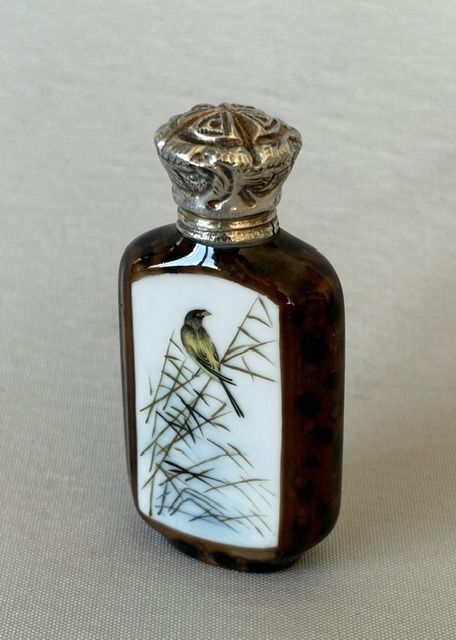
An enamelled glass perfume flask is a portable vessel designed for holding scent, combining glass bodies with decorated enamel surfaces. These pieces emerge across the nineteenth and twentieth centuries, spanning Victorian, Edwardian, and Art Deco periods.
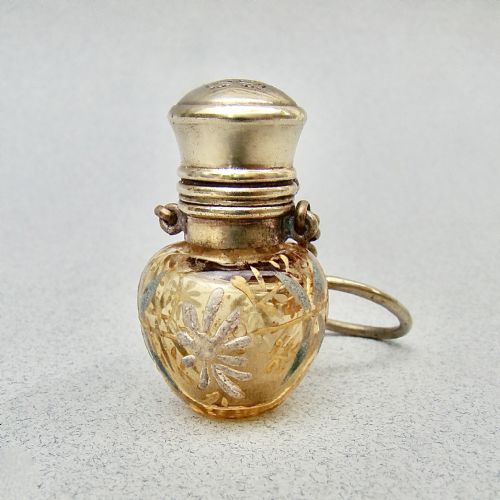
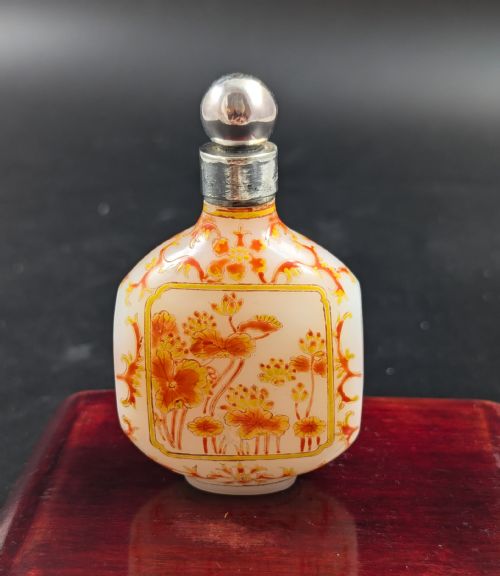
The most common examples on this page hail from the Art Deco era and the nineteenth century, often featuring French or English origin. Forms range from chatelaine scent bottles meant to be suspended from a belt to standalone dressing-table bottles and snuff bottles.
Makers and makers' marks appear occasionally, connecting specific pieces to designers like Karl Palda, Henry Perkins, or René Lalique. Materials paired with the glass span sterling silver, ormolu, gilded metal, and cut glass alongside the enamel decoration.
How they were made
The construction of an enamelled glass perfume flask relies on combining glass-blowing or cutting techniques with applied enamel decoration. Makers utilised satin glass, cut glass, or plain glass vessels as the base for vibrant colour work.
Metal mounts in sterling silver, ormolu, or gilded metal were then fitted to the glass necks and caps. Guilloche enamel techniques often provided geometric patterns beneath translucent layers on the metal components during the twentieth century.
Enamelled Glass Perfume Flask Retail Price Guide 2026
Typical asking prices for enamelled glass perfume flask among the pieces listed under this phrase on Sellingantiques today, from the lower quarter to the upper quarter. They describe what is for sale here now, not the wider market.
What varies in quality
The standard of an enamelled glass perfume flask rests upon the precision of the enamel work and the integration of metal mounts. Finer pieces display crisp guilloche patterns or hand-painted details that remain sharp and intact across the glass or metal surface.
The quality of the underlying glass - whether heavy cut glass, satin glass, or moulded blue glass - influences the tactile weight and presence of the flask. Furthermore, hallmarked silver or finely cast ormolu mounts elevate the craftsmanship beyond standard production items.
Karl Palda·Henry Perkins·René Lalique
The Enamelled Glass Perfume Flask Glossary
- Guilloche enamel
- A decorative technique involving precise mechanical engraving beneath translucent enamel layers. This method produces repetitive geometric patterns commonly seen on twentieth-century silver mounts.
- Chatelaine
- A decorative belt hook worn to suspend small household items such as scent bottles and keys. Chatelaine scent bottles typically feature small loops or chains for attachment.
- Ormolu
- Gilded bronze or brass used for mounts and decorative fittings. This material provides a bright, gold-coloured metallic accent against the glass body.
- Satin glass
- Glass treated to produce a velvety, matte surface finish rather than high polish. It offers a soft texture that contrasts with bright enamel decoration.
Enamelled Glass Perfume Flask: Frequently Asked Questions
What is an enamelled glass perfume flask?
An enamelled glass perfume flask is a small portable container designed for holding liquid scent, featuring decorated glass and enamel surfaces.
These pieces range from nineteenth-century chatelaine bottles to twentieth-century Art Deco dressing-table accessories.
How were these scent bottles used?
These bottles served to hold personal fragrance for daily use or social outings. Smaller chatelaine versions hung from belts for easy access during the Victorian and Edwardian eras.
Table perfume bottles remained stationary on dressing tables, while snuff bottles served similar portable functions for powdered tobacco.
How do I date an enamelled glass perfume flask?
Dating relies on stylistic markers, materials, and associated hallmarks. Victorian and Edwardian pieces often incorporate ornate chatelaine mountings or floral enamel motifs.
Art Deco examples from the 1920s and 1930s typically display geometric forms, clean lines, and guilloche enamel work.
What materials are used in these flasks?
The primary body consists of glass, which may be satin glass, cut glass, or coloured glass. This is combined with enamel decoration and metal elements such as sterling silver, ormolu, or gilded metal.
Silver mounts frequently carry English hallmarks that pinpoint the exact year and city of manufacture.