

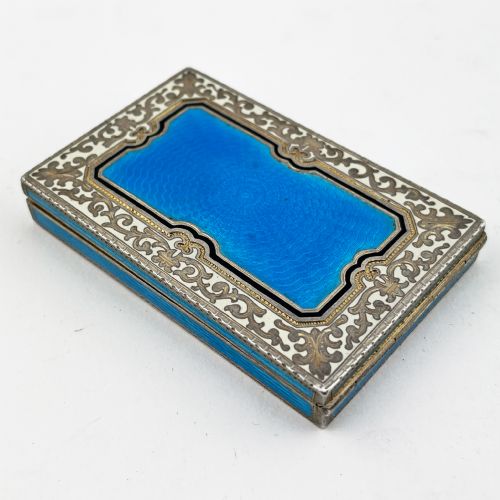


Enamelled Cigarette Case
An enamelled cigarette case is a pocket accessory combining precious metal with coloured glass, offering a neat snapshot of early twentieth-century design.
Enamelled Cigarette Case
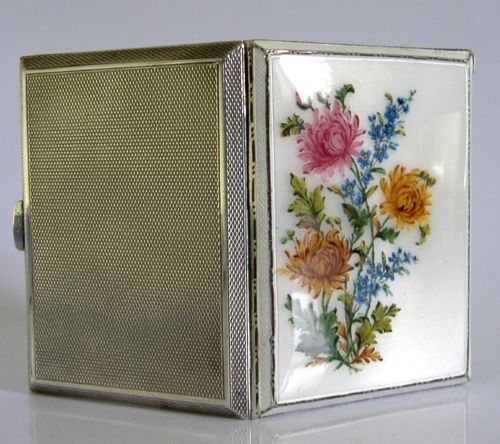
When you search for an enamelled cigarette case, you encounter pocket containers designed for tobacco or cards during the nineteenth and twentieth centuries. These pieces cross several design movements, from Edwardian floral motifs to geometric Art Deco compositions.
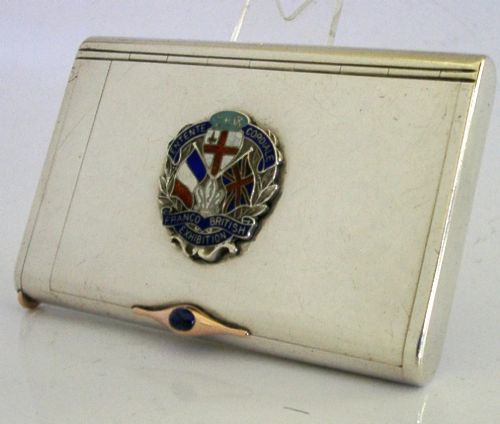
The specimens on this page include sterling silver, silver-gilt, and gilt metal foundations decorated with vitreous enamel. Forms range from standard cigarette holders to combination compacts and card cases.
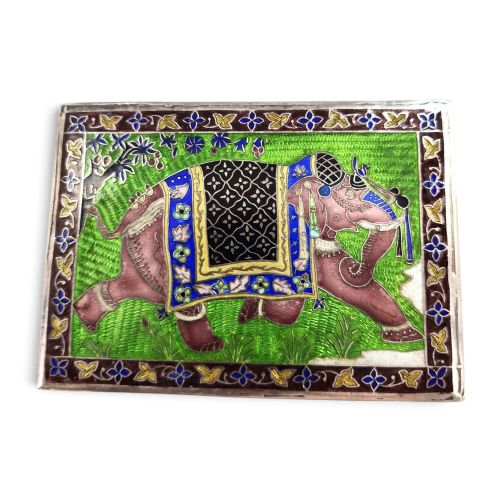
Origin points span Britain, Continental Europe, Russia, and India, demonstrating distinct regional techniques applied to personal metalwork.
How they were made
Makers formed the body of each piece from sterling silver or base metals, often applying a gilt wash to the interior surfaces. Artisans then fused powdered glass, known as vitreous enamel, to the metal base through high-temperature firing.
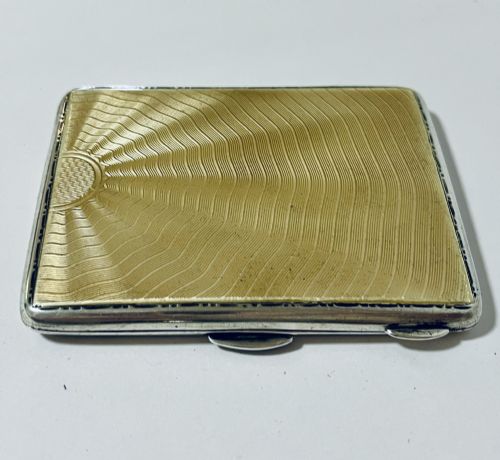
Specialised decorative methods such as cloisonné created distinct compartments for different enamel colours using fine metal wires. Other pieces relied on hand-painted botanical details or translucent enamel laid over engine-turned guilloche backgrounds.
Enamelled Cigarette Case Retail Price Guide 2026
Typical asking prices for enamelled cigarette case among the pieces listed under this phrase on Sellingantiques today, from the lower quarter to the upper quarter. They describe what is for sale here now, not the wider market.
Current listings feature pieces spanning the nineteenth century, the Edwardian era, and the Art Deco period of the 1930s and 1940s.
What varies in quality
Quality rests primarily on the complexity of the enamel work and the precision of the metal chassis. Finer examples display intricate cloisonné wirework or hand-painted botanical precision rather than plain enamel surfaces.
The integrity of the hinged closure and the crispness of the interior gilding also separate standard items from superior pieces. Continental and Russian silver-gilt works frequently exhibit higher standards of decorative ambition.
LIBERTY & CO·Khlebnikov
The Enamelled Cigarette Case Glossary
- Vitreous Enamel
- Glass powder fused to a metal substrate at high temperatures. This technique produces a durable, glossy coloured surface that resists wear.
- Guilloche
- An ornamental pattern mechanically engraved into metal beneath a translucent enamel layer. The technique creates a shimmering wave or sunburst effect.
- Cloisonne
- Enamelling technique using thin metal wires soldered to form cells. These compartments hold distinct colours of glass paste before firing.
- Silver-Gilt
- Silver object coated with a thin layer of gold on its surface. This finish prevents tarnishing and adds a rich internal warmth.
- Vesta Case
- Small pocket box originally designed for holding matches. Many examples feature integrated spring lids and striking strips.
Enamelled Cigarette Case: Frequently Asked Questions
What is an enamelled cigarette case?
These items are pocket-sized metal containers designed to hold cigarettes, cheroots, or cards, featuring fused glass decoration on the exterior.
Craftsmen produced them in various shapes and artistic styles throughout the nineteenth and twentieth centuries.
How were they used originally?
Owners carried them in pockets or handbags as functional accessories for daily smoking habits or social card games.
The sturdy metal and enamel construction protected the contents from crushing and moisture during travel.
How do you clean an enamelled piece?
Maintenance requires gentle cleaning with a soft cloth to preserve both the metal and the glass surface without scratching.
Harsh chemical dips and abrasive polishes should be avoided because they can damage delicate enamel or remove gilding.
How do you distinguish Art Deco examples?
Art Deco specimens typically feature symmetrical geometric patterns, strong colour contrasts, and streamlined rectangular profiles.
These designs contrast sharply with the softer floral motifs found in earlier Edwardian or Arts and Crafts pieces.