



Enamel Vanity Bottle
An enamel vanity bottle brings colour and bright metal to a dressing table, combining glass and fired pigment in small, portable forms.
Enamel Vanity Bottle
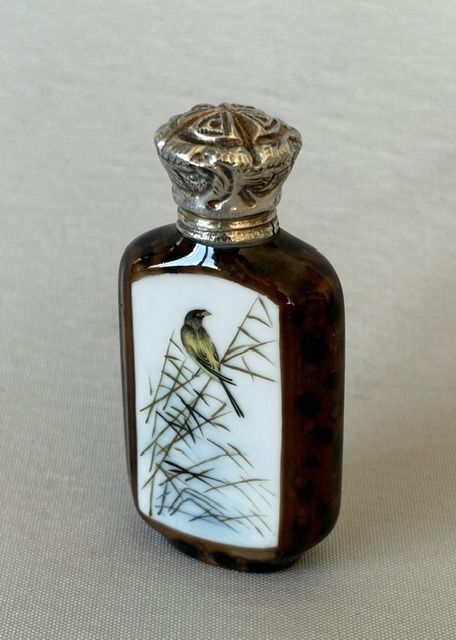
When you search for an enamel vanity bottle, you encounter dressing table wares designed to hold perfume, scent, or cosmetics. These pieces take the form of scent bottles, perfume atomisers, and lidded vanity jars made to sit upon a dressing case or table.
The selections span several periods, reaching from Georgian small hand-painted examples through Victorian and Edwardian silver mounts to geometric Art Deco designs. Mid-century British and continental European pieces also appear alongside earlier Victorian dressing table sets.
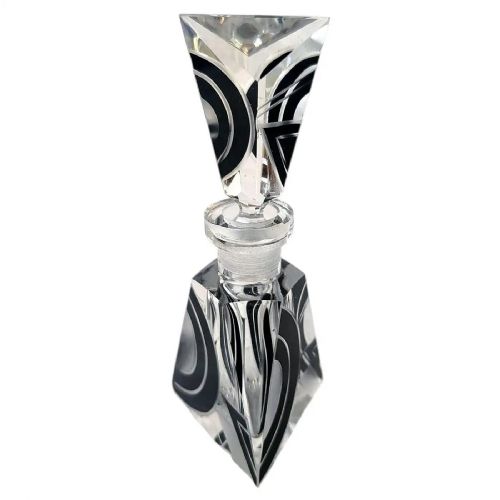
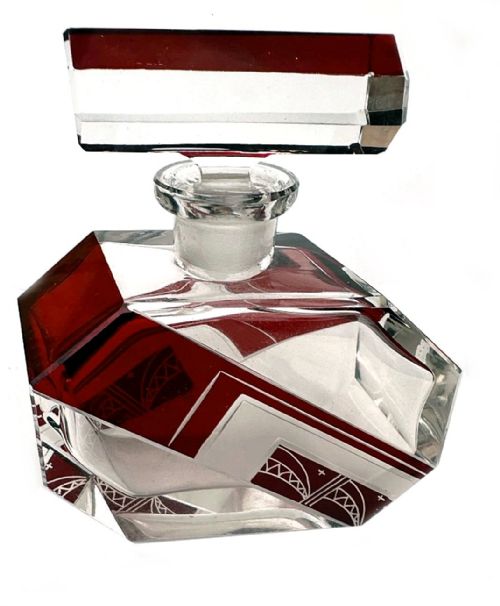
The most common examples on this page date from the Art Deco era, particularly featuring coloured or cut glass bodies paired with silver and guilloché enamel tops. Makers from Bohemia, such as Karl Palda, and London silversmiths dominate the geometric styles of the 1930s.
Materials and construction
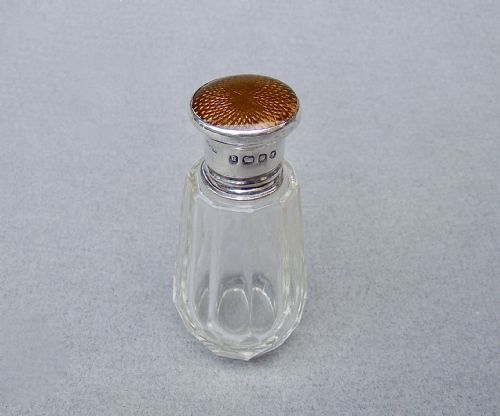
Makers combined blown or cut glass with sterling silver, chrome, and crystal to form the vessel bodies and mounts. Enamel work takes two primary forms on these items: opaque hand-painted scenes applied directly to the surface, and machine-turned guilloché enamel beneath translucent coloured glazes.
Silversmiths constructed collars, mounts, and screw caps from sterling silver, hallmarked in cities like London and Birmingham. Czech glassworks shaped clear, green, and blue glass into geometric or globe profiles, while French and English makers applied intricate metalwork directly to crystal bottles.
Enamel Vanity Bottle Retail Price Guide 2026
Typical asking prices for enamel vanity bottle among the pieces listed under this phrase on Sellingantiques today, from the lower quarter to the upper quarter. They describe what is for sale here now, not the wider market.
Factors determining quality
Quality rests upon the crispness of the glass cutting and the precision of the guilloché engraving beneath the enamel. Pieces by named makers like Karl Palda or established firms such as Mappin & Webb show tighter geometric control and heavier gauge silver mounts than anonymous factory production.
The condition and depth of the vitreous enamel dictate the visual appeal, as intact surfaces without chips or hairline fractures preserve the intended brilliance. Hand-painted examples rely on the delicacy and preservation of the miniature scenes, while machine-turned metalwork depends on the exact alignment of the engine-turned patterns.
Karl Palda·Henry Perkins·René Lalique·Mappin & Webb·Goldsmith's and Silversmith's Co.
The Enamel Vanity Bottle Glossary
- Guilloche enamel
- A decorative technique where metal is engraved with precise repetitive patterns before translucent enamel is applied over the top. This allows the underlying geometric design to shine through the coloured glass-like surface.
- Sterling silver
- A silver alloy containing 92.5 percent pure silver and 7.5 percent other metals, usually copper, used for bottle mounts and caps. Hallmarks stamped into the metal indicate the assay office and year of manufacture.
- Atomiser
- A spray bottle mechanism fitted to a perfume vessel to disperse scent in a fine mist. These often utilise rubber bulbs and metal mesh collars popular during the Art Deco period.
- Dressing table set
- A matching group of vanity accessories that includes perfume bottles, jars, and brushes. They coordinate in material, colour, and decorative style upon a dressing tray.
- Cut glass
- Glass shaped by grinding and polishing facets into the surface to catch the light. This method was widely utilised on Czech and English perfume bottles from the early twentieth century.
Enamel Vanity Bottle: Frequently Asked Questions
What periods do these vanity bottles come from?
The pieces span from the Georgian era, represented by small hand-painted scent containers, through Victorian and Edwardian silver-mounted designs. A large proportion originates from the 1930s Art Deco period, featuring geometric glass and coloured enamel work.
Later examples extend into mid-century British production and continental European workshop pieces, showing changing tastes in dressing table accessories across two centuries.
How do I identify an Art Deco bottle?
Art Deco vanity bottles display clean geometric lines, stepped profiles, and bold primary or pastel colours in the glass. Look for sunray motifs, symmetrical faceting, and machine-turned guilloché enamel caps typical of the 1920s and 1930s.
Maker attribution often points towards Czech glassworks, such as Karl Palda, or London silversmiths who produced matching perfume bottle sets during the interwar years.
Were these bottles used for perfume?
These vessels were designed to hold liquid perfume, scented oils, and volatile cosmetics on a dressing table. Many retain original glass daubers or stoppers inside the silver collar to apply fragrance directly to the skin.
Atomiser versions used squeeze bulbs to create a fine spray, while lidded jars held creams or powders rather than liquid scents.