



Enamel Flower Jewellery
Enamel flower jewellery brings vibrant botanical forms to life in precious metal, offering lasting colour through fused glass.
Enamel Flower Jewellery
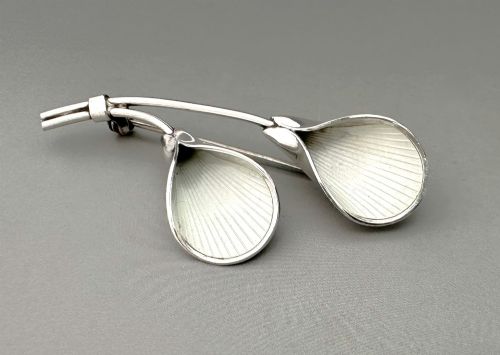
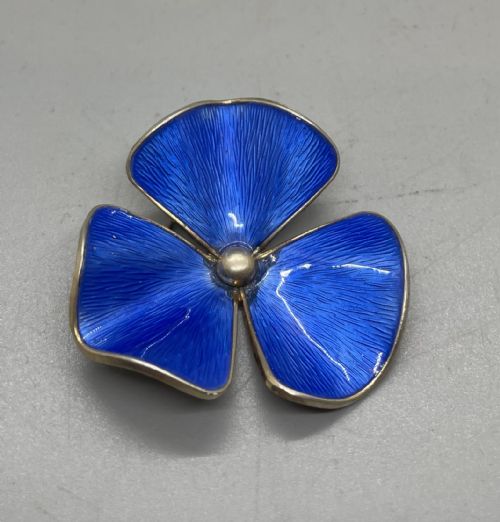
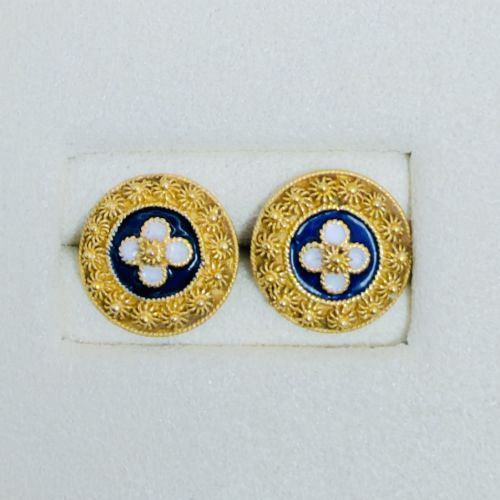
When you search for enamel flower jewellery, you encounter a diverse array of decorative accessories spanning multiple centuries and design movements. The selection ranges from intricate Edwardian pansies to mid-century Scandinavian brooches, capturing natural floral motifs in enduring metal and vitreous coatings.
Brooches form the most prominent category among these listings, alongside pendants, necklaces, stud earrings, and rings. Pieces frequently incorporate silver, silver gilt, and high-karat gold, often paired with gemstones such as moonstones, diamonds, pearls, and citrine.
Origins stretch across Britain, France, Portugal, and Scandinavia, reflecting distinct regional approaches to floral ornamentation. You will find items representing the Arts and Crafts, Art Nouveau, and mid-century modern aesthetic traditions.
Materials and construction methods
Makers fused powdered glass onto metal bases at high temperatures to create the vitreous enamel surfaces seen across these pieces. Guilloche techniques involve engine-turned patterns beneath translucent enamel, adding depth and shifting light effects.
Plique-a-jour methods omit the backing metal entirely, allowing light to pass directly through the translucent enamel cells much like stained glass in miniature. Metalsmiths combined sterling silver, silver gilt, and high-carat gold as structural foundations for delicate floral petals and leaves.
Enamel Flower Jewellery Retail Price Guide 2026
Typical asking prices for enamel flower jewellery among the pieces listed under this phrase on Sellingantiques today, from the lower quarter to the upper quarter. They describe what is for sale here now, not the wider market.
Listings feature silver and gold pieces from the 1890s to 1960, incorporating moonstones, diamonds, and guilloche enamel.
Factors determining quality
The precision of the metalwork and the complexity of the enamel technique dictate the sophistication of each piece. Superior examples display flawless application of vitreous glass without cracking, alongside secure stone settings and refined hand-finishing.
Design pedigree and the distinctiveness of the floral rendering elevate certain items, particularly those demonstrating advanced translucent techniques or specific regional craftsmanship. The integration of high-grade gemstones further distinguishes exceptional creations from standard production.
A H Darby & Son·Meyle & Mayer·Liberty & Co
The Enamel Flower Jewellery Glossary
- Guilloche
- An ornamental engraving technique that etches precise geometric patterns into metal before applying translucent enamel. This process allows light to reflect through the coloured glass.
- Plique-a-jour
- An enamelling technique resembling miniature stained glass where the enamel is fired into open wire cells without a backing. It creates a translucent effect that catches the light.
- Silver gilt
- Sterling silver that has been coated with a thin layer of gold through electroplating or fire gilding. This provides the warm tone of gold combined with the workability of silver.
- Festoon necklace
- A decorative necklace featuring draped chains, swags, or suspended elements such as enamelled floral drops and gemstones. It sits gracefully across the collarbone.
- Vitreous enamel
- A material made by fusing powdered glass to a substrate by firing, usually between seven hundred and nine hundred degrees Celsius. The resulting glass coating is durable and colourfast.
Enamel Flower Jewellery: Frequently Asked Questions
What periods do these pieces span?
The inventory covers items from the nineteenth century through the mid-twentieth century. This includes Edwardian, Art Nouveau, Arts and Crafts, and mid-century Scandinavian periods.
Each era brought distinct interpretations of floral design, utilising different enamelling techniques and metal alloys.
How do I care for enamel jewellery?
Vitreous enamel is essentially glass and requires gentle handling to prevent chipping or scratching. Store pieces separately in soft pouches away from hard metals.
Clean them gently with a soft cloth and lukewarm water, avoiding harsh chemical dips or ultrasonic cleaners that might damage delicate settings.
What is guilloche enamel?
Guilloche is a decorative technique where a machine engraves a precise, repetitive pattern into a metal surface. Translucent enamel is then applied over the top, allowing the engraved pattern to show through with shimmering depth.
This method was widely favoured during the Edwardian and mid-century periods for creating rich surface textures.
How are different gold purities used?
Pieces incorporate various gold purities, including eighteen-carat, nineteen-point-two-carat, and fifteen-carat gold. Higher karat weights offer a richer yellow tone and greater resistance to tarnishing.
These metals provide strong structural support for intricate enamel work and precious stone settings.