


Empire Table Clock
An empire table clock brings the commanding presence of nineteenth-century brass, marble and gilt bronze directly onto a mantelpiece.
Empire Table Clock
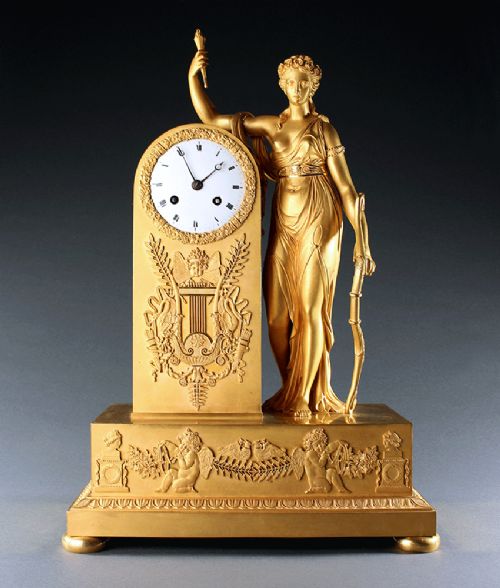
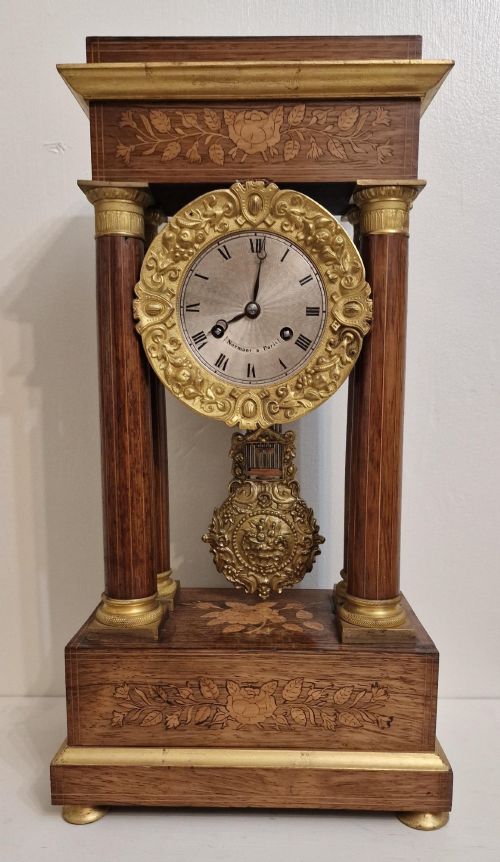
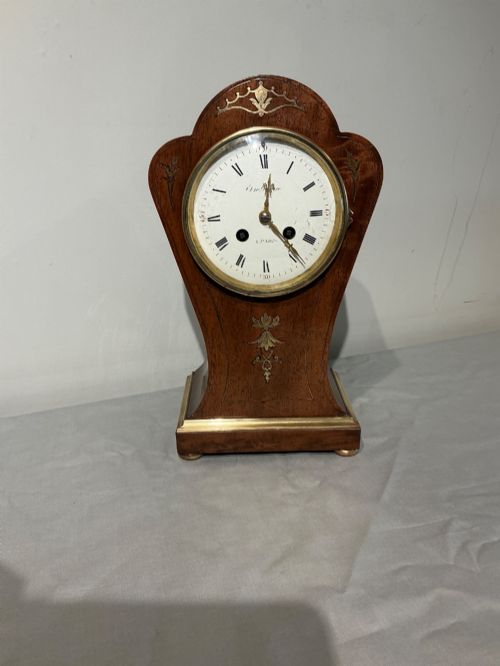
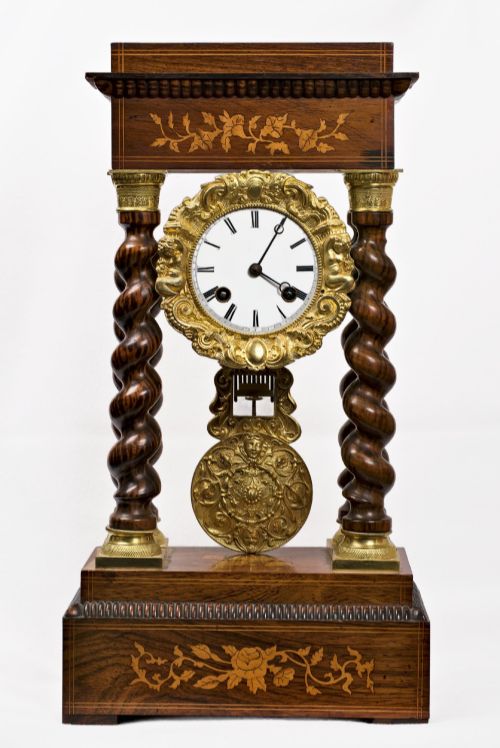
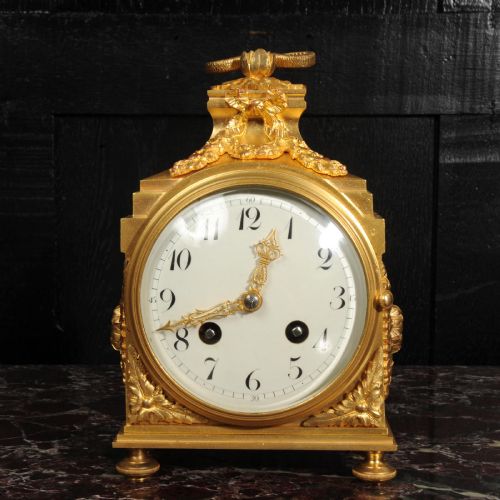
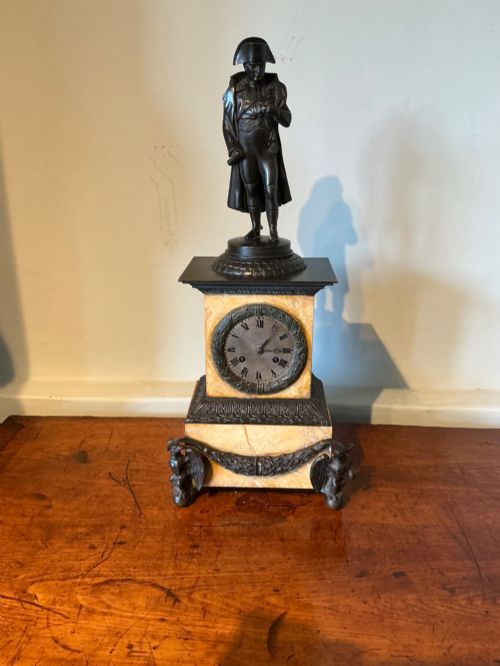
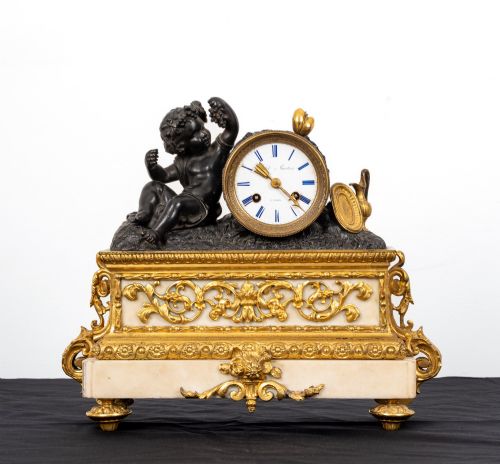
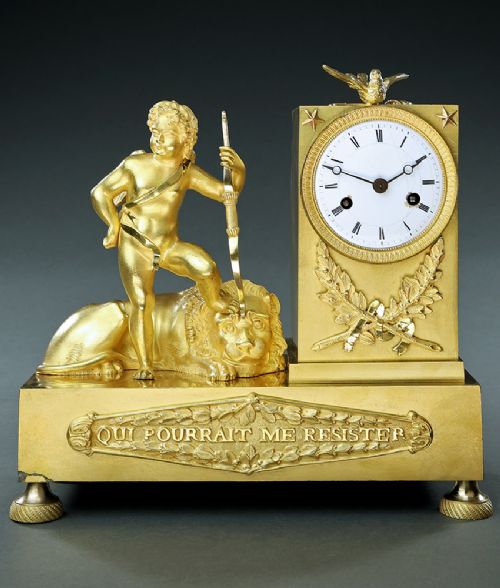
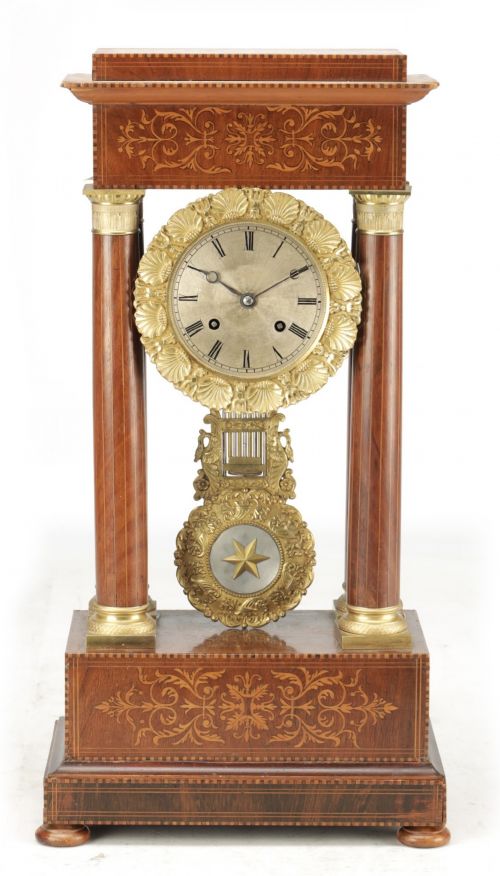
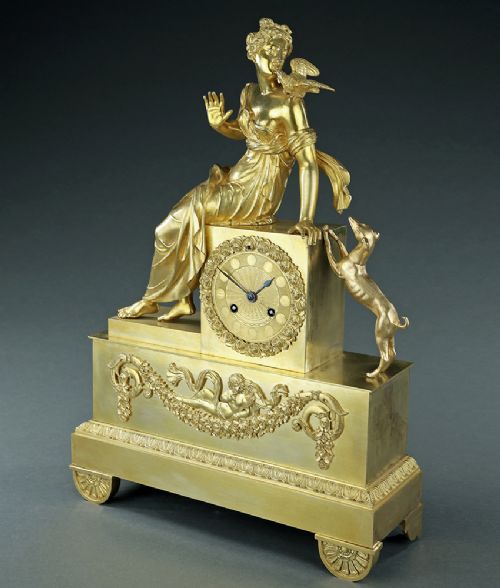
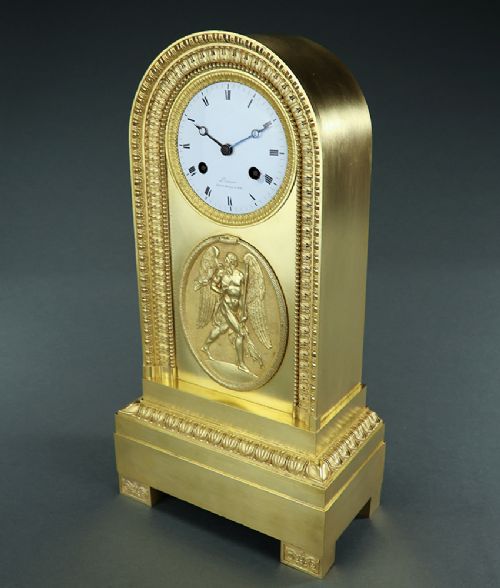
An empire table clock is typically a nineteenth-century French or English timepiece designed for domestic interiors, spanning periods from the Regency era through to late Victorian decades. These pieces take various forms, from architectural portico clocks and drumhead cases to elaborate figural mantel clocks depicting mythological or historical subjects.
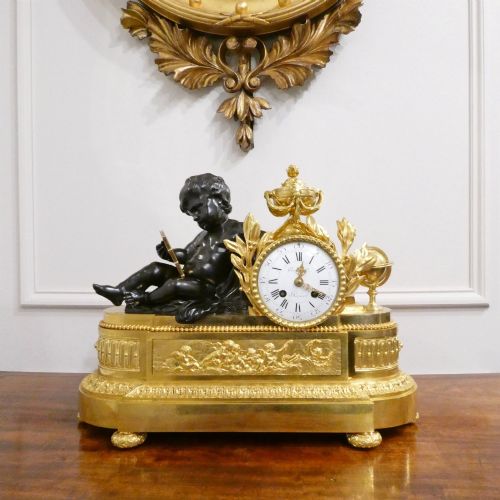
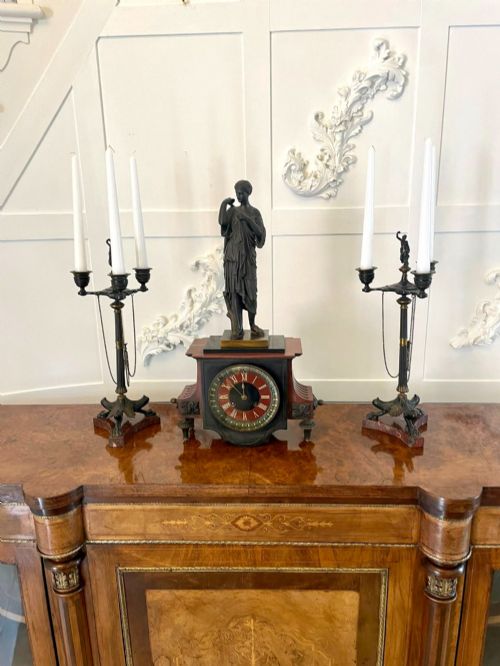
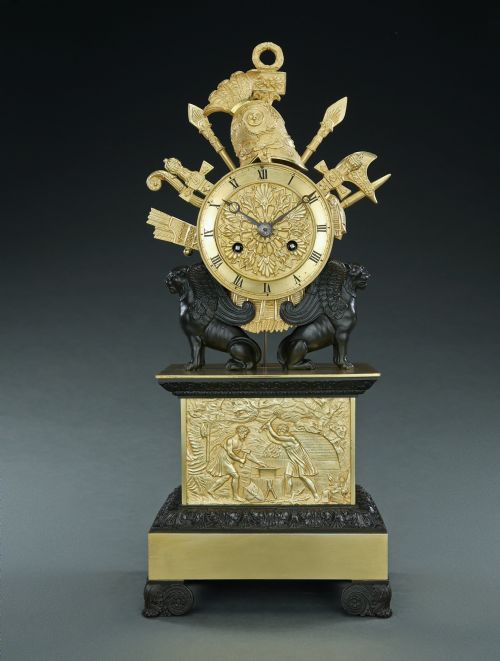
Buyers will most frequently encounter French examples cast in ormolu and patinated bronze, often incorporating green or rouge marble bases. These works combine timekeeping mechanics with sculptural narratives such as astronomy, romance or classical triumph.
The selection ranges from simple brass-mounted timepieces to ornate clock garnitures accompanied by matching side ornaments. Makers such as Japy Frères and individual horologists like Baetens London appear among these nineteenth-century creations.
Materials and construction
Makers constructed these clocks using heavy foundations of gilt bronze, ormolu and natural marble, paired with contrasting patinated bronze for figural elements. Dial faces frequently feature enamel with delicate markings, protected behind glass inserts.
Foundries employed precision casting and mercury gilding techniques to achieve the deep, enduring lustre seen on ormolu surfaces. Stonemasons cut and polished dense marbles like rouge and green varieties to support the substantial weight of the metalwork.
Empire Table Clock Retail Price Guide 2026
Typical asking prices for empire table clock among the pieces listed under this phrase on Sellingantiques today, from the lower quarter to the upper quarter. They describe what is for sale here now, not the wider market.
Judging quality and execution
Mechanisms signed by recognised makers or housing high-grade fusee movements indicate higher original workshop standards. The depth of the fire-gilding and the integration of hand-painted porcelain or signed enamel dials further distinguish the upper tier of these pieces.
Siffel and Cartier·Baetens London·Canaillor of Paris·Rodier·Japy Freres·Berger Paris
The Empire Table Clock Glossary
- Ormolu
- Gilt bronze created by applying a mixture of gold and mercury to a bronze base and heating it. This historic technique produces a rich, deep golden finish that resists tarnishing.
- Portico clock
- A distinct architectural clock style featuring four supporting columns reminiscent of a classical portico. The pendulum typically swings visibly within the central opening between the pillars.
- Garniture
- A set consisting of a central mantel clock accompanied by matching side ornaments such as urns or candelabra. These matched assemblies created a balanced display across a fireplace mantel.
- Fusee
- A conical pulley connected to the mainspring by a cord or chain in mechanical clocks. It equalises the force of the spring as it winds down to maintain consistent timekeeping accuracy.
- Pendule d'Officier
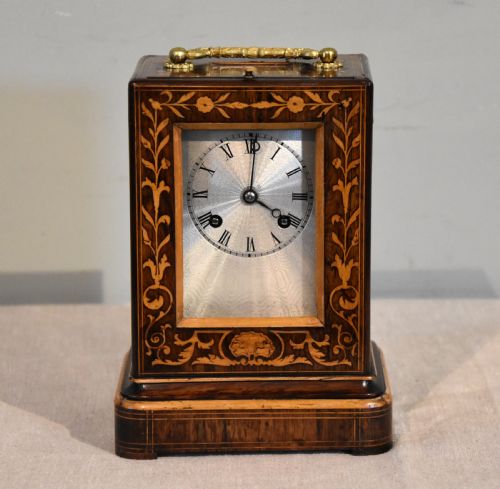
- A portable military-style table clock often fitted with a carrying handle on top. These compact pieces were designed for travel while retaining refined decorative brass or ormolu mounts.
Empire Table Clock: Frequently Asked Questions
How do I wind a mechanical empire table clock?
Most antique clocks require a dedicated winding key inserted gently into the dial holes to tension the mainspring barrels. Care must be taken not to overwind the mechanism.
Regulating the pendulum afterwards ensures the timepiece keeps accurate hours across its operational cycle.
Where should I place a heavy marble clock?
These dense marble and bronze clocks require a sturdy, level surface capable of supporting considerable weight safely. A solid mantelpiece or heavy sideboard provides an ideal foundation.
Keeping the clock away from direct sunlight and damp walls preserves the delicate enamel dial and gilt finishes.
How can I identify a Regency period clock?
Regency clocks typically display restrained classical elegance with clean architectural lines, brass inlay and patinated bronze details. They often reflect British tastes influenced by French design.
Examining the style of the brass mounts and the construction of the interior backplate helps confirm the era.