



Empire Style Wine Table
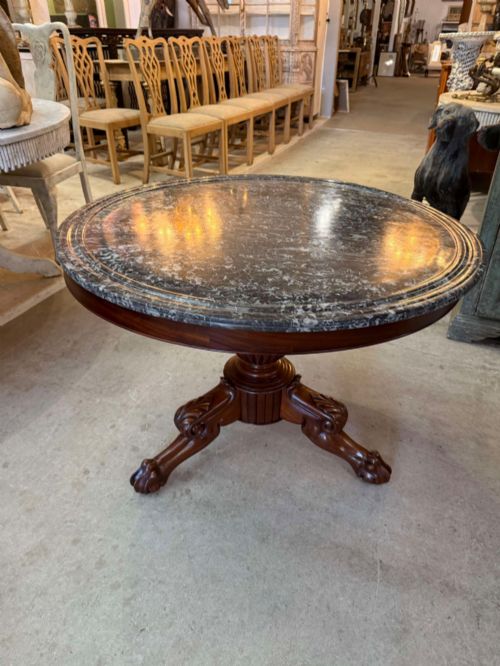
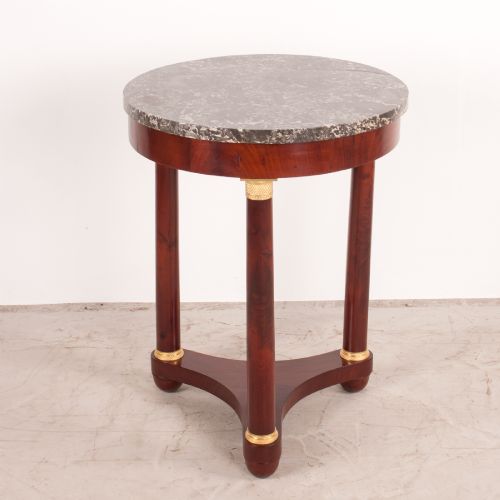
These empire style wine table pieces offer classic French form and fine mahogany or marble, bringing striking Neoclassical presence to a room.
Empire Style Wine Table
An empire style wine table takes the classic form of the French gueridon, serving as a compact pedestal or occasional table. These pieces often appear as side tables, centre tables, or small occasional tables suited to hold a glass or a lamp.
The pieces seen here date predominantly from the nineteenth century into the early twentieth century, spanning periods like French Empire, French Restoration, and French Chateau. A buyer is most likely to meet a nineteenth-century mahogany or marble-topped gueridon amongst these listings.
Originating largely from French workshops, these items reflect enduring Neoclassical design principles through circular tops supported by central columns or tripod bases. They function efficiently in smaller spaces while retaining a formal decorative character.
How they were made
Cabinetmakers utilised rich timbers such as mahogany and coromandel for the main structure, often mounting heavy circular slabs of marble directly onto the circular tops. The timber frames rely on solid turnings and stable pedestal bases to support the weight of the stone.
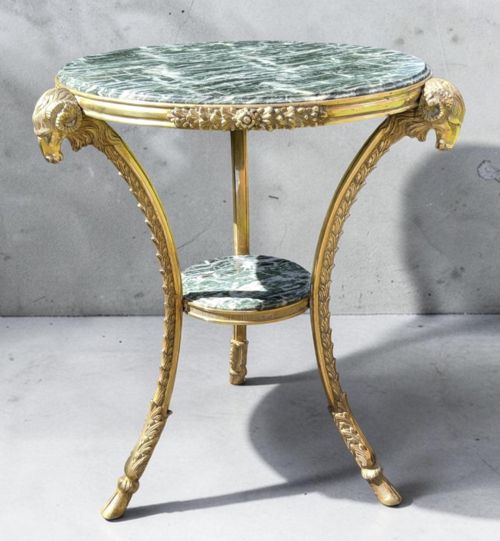
Metal ornament defines the decorative scheme, incorporating cast brass, ormolu, and gilt bronze mounts secured to the wood. Artisans also employed giltwood details, such as carved swans or classical motifs, to accent the structural lines.
Empire Style Wine Table Retail Price Guide 2026
Typical asking prices for empire style wine table among the pieces listed under this phrase on Sellingantiques today, from the lower quarter to the upper quarter. They describe what is for sale here now, not the wider market.
Cast brass rams heads and carved wooden swans peer out from beneath the tabletops, watching over the room with silent neoclassical dignity.
What varies in quality
The standard of the metalwork largely separates the top of the range from simpler examples, visible in the crispness and weight of the ormolu, gilt bronze, or cast brass mounts. Finer pieces display sharply chased rams heads or classical figures rather than soft, commercial castings.
The choice of materials and the integrity of the timber framing dictate structural quality, with dense coromandel or figured mahogany representing the higher tier alongside thick, finely polished marble tops. Original gilding and careful joinery further distinguish superior examples from standard production.
The Empire Style Wine Table Glossary
- Gueridon
- A small circular table on a central pillar or tripod base, originating in seventeenth-century France. This form provides the primary shape for the pieces on this page.
- Ormolu
- Finely ground high-carat gold applied to bronze, creating a rich golden surface finish. This technique highlights the decorative mounts on classical furniture.
- Neoclassical
- A style reviving classical Roman and Greek motifs, dominating French design during the empire period. It manifests here through symmetry, columns, and bronze mounts.
- Coromandel
- A dense, dark cabinet wood with contrasting figuring, prized for luxury furniture. It offers a heavier and more exotic alternative to standard mahogany.
- Giltwood
- Timber treated with gold leaf or gold paint to simulate solid gold enrichment. Carved wooden elements like swans and foliage often receive this finish.
Empire Style Wine Table: Frequently Asked Questions
What is an empire style wine table?
An empire style wine table is a small circular pedestal table, often called a gueridon, drawing on nineteenth-century French Neoclassical design. These pieces typically feature a marble or timber top supported by a central column.
They serve as versatile side or occasional tables in modern interiors, offering a compact surface that brings historic character to a room.
How were these tables used originally?
Historically, these small tables functioned as moveable pieces for serving drinks, holding lamps, or displaying decorative objects in grand salons and drawing rooms. Their portable pedestal design allowed servants to relocate them easily.
Today, buyers use them in living spaces and hallways for similar decorative and practical purposes, utilising the flat surface for lamps or small items.
What materials are common on these tables?
The listings show a strong reliance on mahogany and occasionally coromandel for the wooden frames, paired frequently with heavy marble tops. Metal components like cast brass, ormolu, and gilt bronze provide structural and decorative mounts.
Additionally, giltwood appears on specific pieces, providing gilded wooden carvings such as swans or classical flourishes that complement the metalwork.
How do I identify a nineteenth-century piece?
Nineteenth-century pieces generally display authentic period construction methods, traditional timber ageing, and hand-chased metal mounts such as ormolu or cast brass. The proportions and styling align directly with French Empire and Restoration aesthetics.
Examining the underside, the joinery around the pedestal base, and the quality of the marble edge helps confirm the period of manufacture.