



Empire Style Fixture
These empire style fixture designs bring classical grandeur and striking illumination to interiors through disciplined forms, gleaming metals and sparkling crystal.
Empire Style Fixture
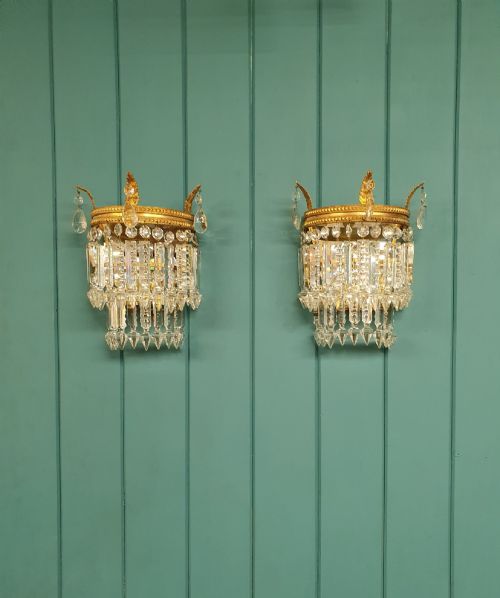
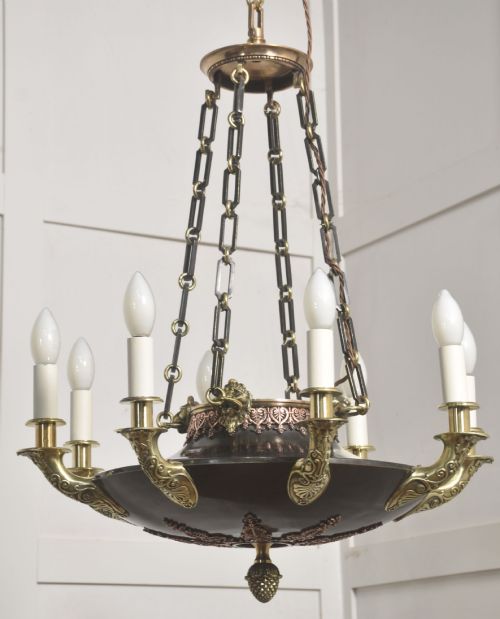
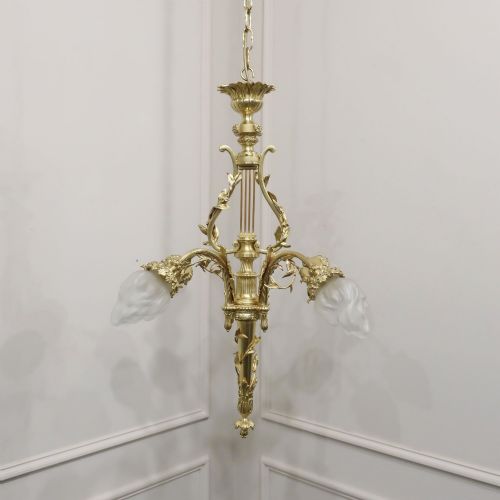
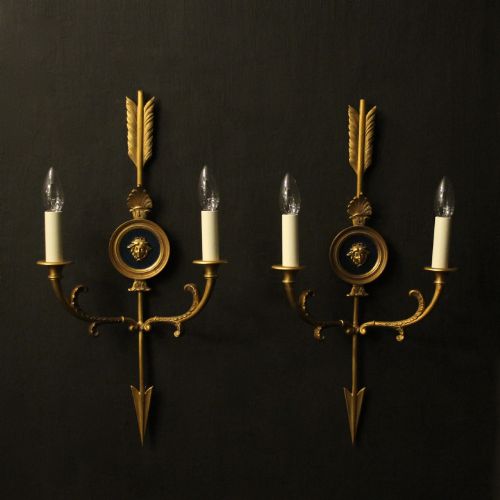
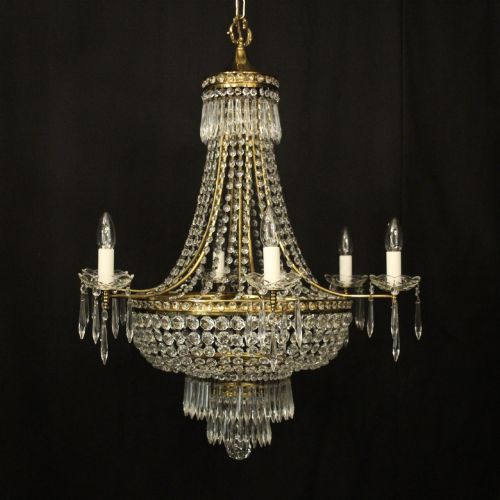
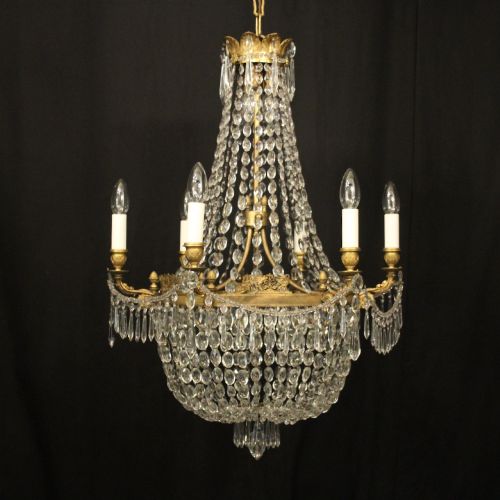
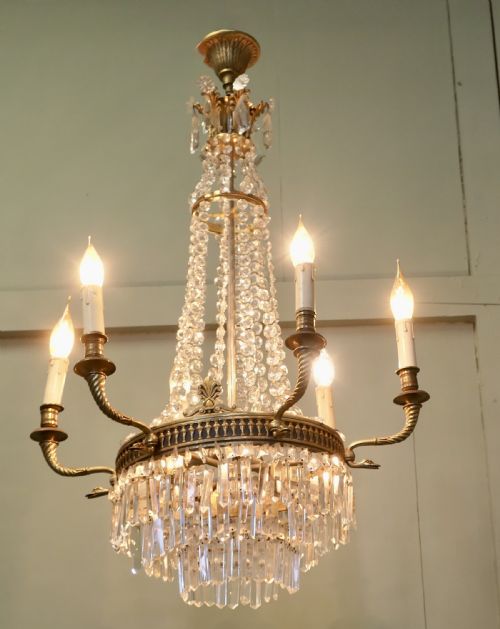
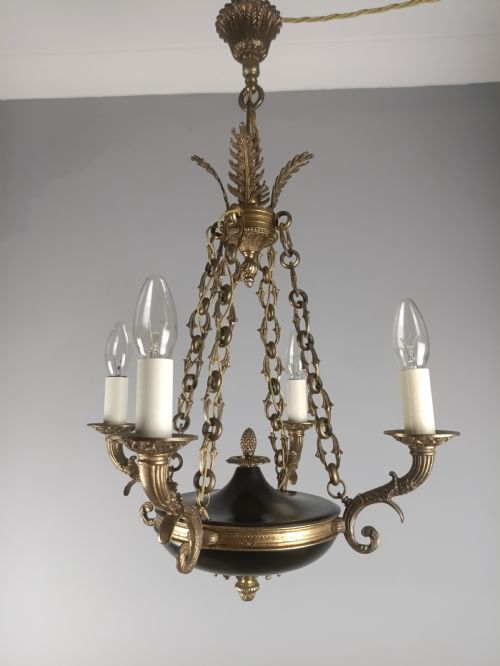
An empire style fixture encompasses grand chandeliers, ceiling lights, and wall sconces drawing on classical motifs and stately symmetry. The pieces seen here span the 18th century through the 1930s, incorporating French Empire, Regency, and Empire Revival interpretations.
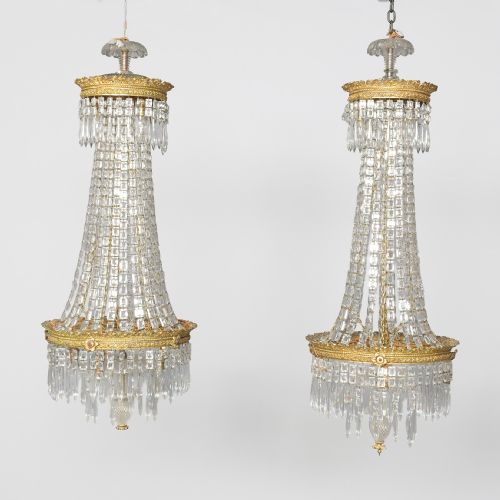
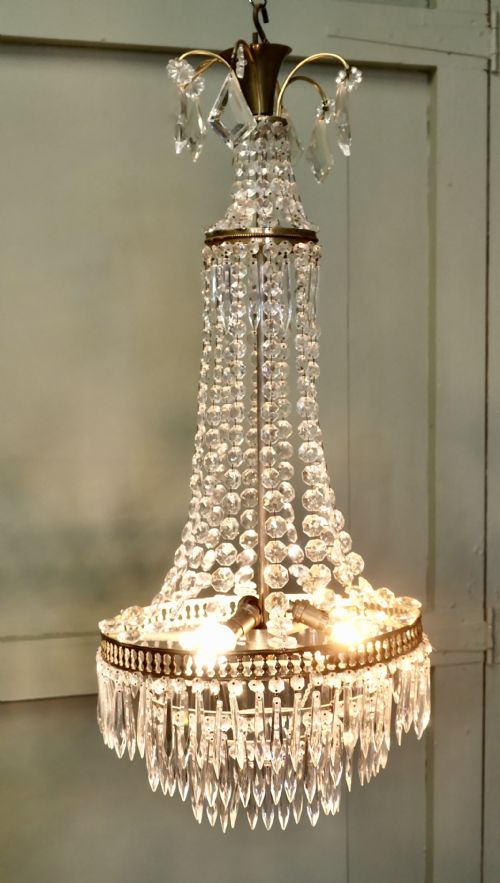
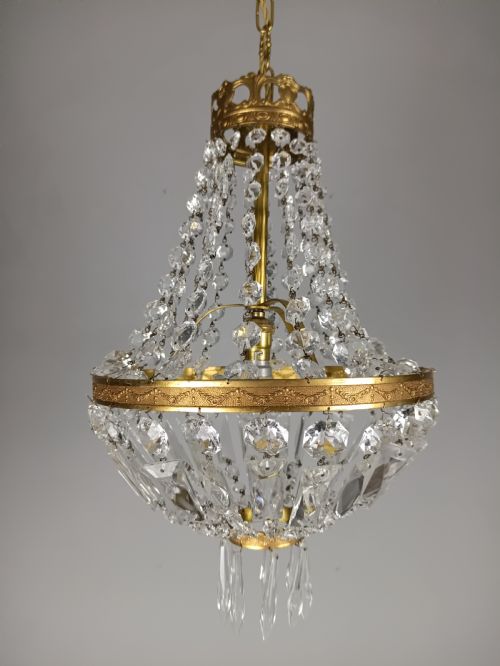
Chandeliers dominate the selection, frequently taking the form of tent and waterfall designs, basket configurations, and multi-light tiers. Wall lights and bouillotte fixtures also appear, offering smaller-scale applications of the same classical vocabulary.
Materials and construction
Metalwork forms the structural core, utilising brass, gilt bronze, and patinated bronze shaped into arms, frames, and mounts. Cast elements often display crisp neoclassical detailing.
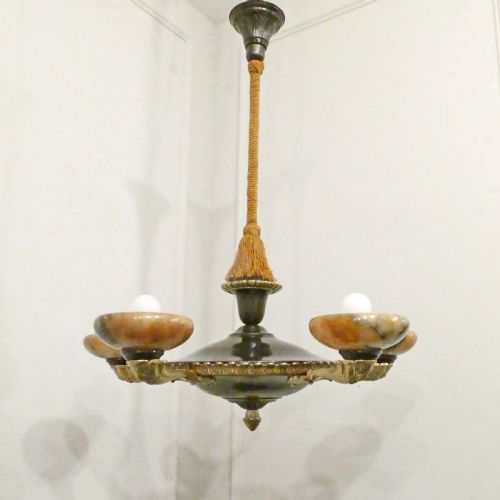
Glass and crystal elements create the characteristic light-play, featuring cut glass crystals, drops, and faceted beads arranged in tents, bags, and waterfalls. Alabaster and frosted glass occasionally provide alternative diffusers.
Empire Style Fixture Retail Price Guide 2026
Typical asking prices for empire style fixture among the pieces listed under this phrase on Sellingantiques today, from the lower quarter to the upper quarter. They describe what is for sale here now, not the wider market.
Prison bag chandeliers earned their evocative name from the tight wire mesh of crystals resembling historical netting.
What separates the fine from the ordinary
Quality rests upon the crispness of the bronze casting and the depth of the gilding, where hand-chased enrichment separates superior metalwork from flat commercial production. Precision in the alignment of crystal drops and the complexity of the cut glass further distinguish the finer examples.
Integrity of proportion dictates the visual success of a piece, ensuring that the relationship between the central corona, the cascading crystal tiers, and the lower cage feels balanced rather than congested.
The Empire Style Fixture Glossary
- Tent and waterfall
- A classic chandelier configuration where an upper crown holds strings of crystals draped in a tent shape above cascading tiers of drops.
- Bag chandelier
- A lighting form featuring a lower bag-shaped net of closely strung crystals enclosing the internal burners or bulbs.
- Gilt bronze
- Copper alloy coated with a layer of gold, providing a rich, durable metallic finish frequently seen on high-status French examples.
- Toleware
- Painted sheet metal, often utilised for shades or structural components in specific provincial or bouillotte lighting designs.
- Colza hanging light
- A specialised oil-burning suspension fixture utilising colza oil, common in period lighting before general electrification.
Empire Style Fixture: Frequently Asked Questions
How do I hang a heavy antique chandelier safely?
Suspension requires fixing directly into ceiling joists or utilising a heavy-duty joist hanger capable of supporting the combined weight of metal and crystal. Professional installation ensures the electrical wiring matches contemporary safety standards while preserving the antique frame.
Weight distribution matters greatly with large multi-light fixtures, so consult a structural specialist if your ceiling construction is uncertain.
What is the difference between Empire and Regency styles?
French Empire design draws heavily on Napoleonic military triumphs and classical Roman motifs, utilising rich gilt bronze and formal symmetry. Regency style represents the British parallel during the same era, often incorporating lighter brass work and distinct local interpretations of classical antiquity.
Both styles share a devotion to classical proportion, yet the regional detailing in mounts and metal finishes reveals their origins.
How do I clean an antique crystal chandelier?
Cleaning involves wiping individual crystals by hand using a mild solution of warm water and professional glass cleaner while the fixture remains suspended. Avoid harsh chemical sprays that might damage the surrounding brass or bronze mountings.
Droplets should be dried with a lint-free cloth to restore their refractive sparkle without disturbing the original wire fixings.
Were these fixtures originally electrified?
Most antique examples originating from the 18th and 19th centuries were originally designed for candles or oil lamps before being converted to electricity later in their lifespan. Surviving pieces frequently show evidence of adaptation, such as drilled arms or fitted internal wiring tubes.
This evolution is standard for period lighting and does not detract from the historical integrity of the piece.