






Empire Style Bedside
These empire style bedside pieces bring classical symmetry and rich mahogany or burr elm to a bedroom, offering both striking presence and practical surface space.
Empire Style Bedside
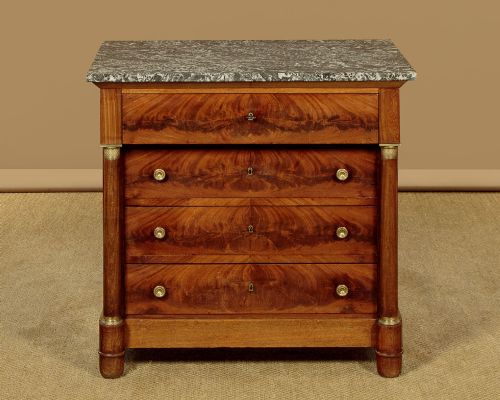
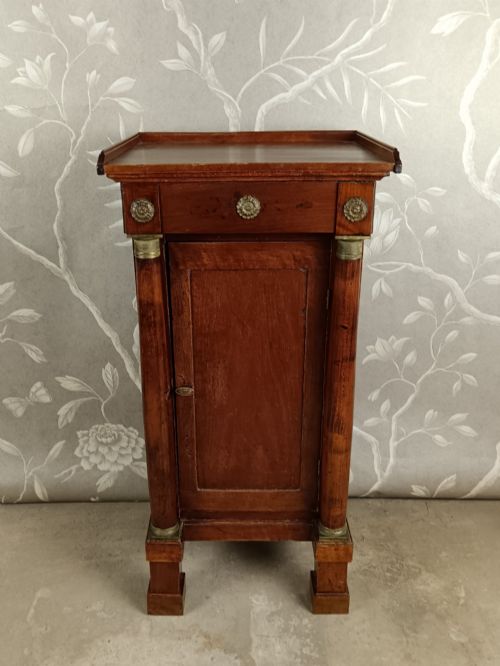
When you search for empire style bedside, you are looking at items designed for the bedroom that draw on classical motifs from the nineteenth century and subsequent revival periods. The selections here range from bedside cabinets and commodes to side tables and nightstands, often featuring rich timber surfaces.
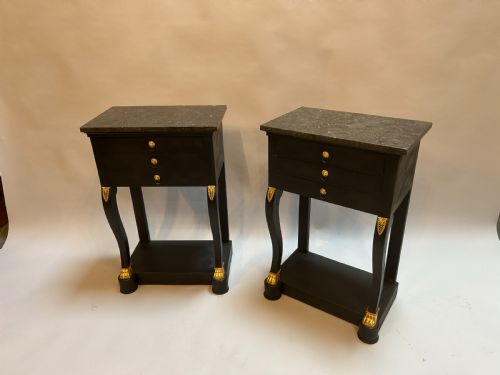
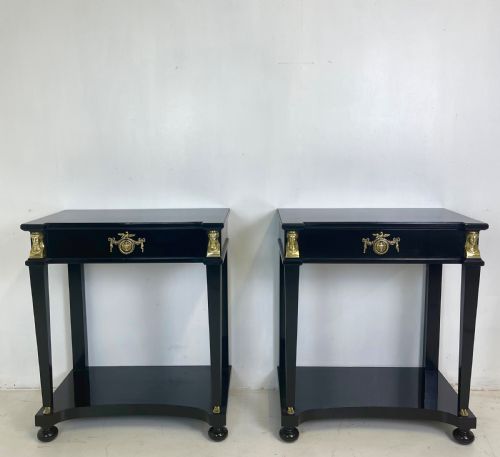
You are most likely to meet nineteenth century examples or early twentieth century revival pieces, including pairs of bedside chests and cabinets. Many incorporate traditional materials such as marble tops and decorative mounts, reflecting French Empire and Italian Empire influences.
The category also encompasses related bedroom furniture suites and occasional tables that share the same architectural lines and neoclassical vocabulary. These items function as practical bedside storage while establishing a distinct period character in the room.
Materials and Construction
The pieces listed on this page utilise solid and veneered timbers such as mahogany, walnut, burr elm, and ebonised wood as a primary structure. These woods provide a deep, warm ground for the metal mounts and stone surfaces applied during construction.
Ornate detailing is achieved through the use of brass, ormolu, and gilt metal cast into classical masks, columns, and mounts. Marble slabs are frequently fitted to the tops of cabinets and commodes, offering a durable and cool surface.
Empire Style Bedside Retail Price Guide 2026
Typical asking prices for empire style bedside among the pieces listed under this phrase on Sellingantiques today, from the lower quarter to the upper quarter. They describe what is for sale here now, not the wider market.
Even the smallest nightstand occasionally insists on wearing a heavy bronze classical mask, just to remind the alarm clock of ancient Rome.
What Distinguishes Quality
The distinction between tiers of quality rests in the crispness of the cast brass and ormolu mounts, alongside the selection of timber veneers like burr elm and mahogany. Finer examples display sharp detailing in classical masks and mounts that integrate cleanly with the wood or stone body.
Construction methods and the integration of fitted marble tops also set different grades apart, where tighter joinery and heavier, high-grade materials elevate the piece. The overall proportion and balance between timber and metal ornament dictate the visual success of the work.
The Empire Style Bedside Glossary
- Ormolu
- Gilt bronze or brass mounts applied to furniture and lighting. This technique gives metallic decorative elements a rich golden finish.
- Commode
- A low chest of drawers or cabinet. In this context, it often serves as a bedside storage unit with a marble top.
- Biedermeier
- A Central European style from the nineteenth century focusing on utility and clean lines. It often utilises domestic timbers with minimal ornamentation.
- Neoclassical
- A style inspired by classical antiquity. It relies on symmetry, straight lines, and classical motifs such as columns and masks.
- Ebonised Wood
- Timber treated to resemble ebony. This dark finish provides high contrast against gilt metal mounts.
Empire Style Bedside: Frequently Asked Questions
What is an empire style bedside cabinet?
An empire style bedside cabinet is a small piece of bedroom furniture designed for storage beside a bed, drawing inspiration from nineteenth-century classical design. These cabinets often feature mahogany or walnut construction, sometimes topped with marble.
They provide a convenient surface for lamps and personal items while concealing storage space behind a door or within drawers. Their aesthetic relies on architectural lines and classical metal mounts.
How do I identify french empire revival pieces?
French empire revival pieces are identified by their revival of nineteenth-century motifs, often dating from the early decades of the twentieth century. Look for symmetrical forms, dark woods, and cast metal ornamentation.
These items emulate the grandeur of earlier Napoleonic designs but were produced in later periods like 1910 or 1920. The construction methods and secondary timbers usually give away their actual twentieth-century manufacture.
Are marble tops original to these tables?
Marble tops on these tables are characteristic of continental bedside cabinets and commodes from the nineteenth century onward. They provided a practical, heat-resistant surface for washing equipment and candles.
When examining a piece, the fit and edge profile of the marble generally correspond to the period of the wooden base beneath it. They remain a defining feature of many commodes and nightstands in this style.
How do I clean mahogany bedside furniture?
Mahogany furniture benefits from gentle cleaning with a soft cloth to remove dust without harming the polished finish. Avoid using silicone-based polishes that can build up a hazy film over time.
For pieces with ormolu or brass mounts, take care not to let cleaning agents touch the surrounding wood. Regular, light maintenance preserves the depth of the timber grain and the lustre of the metal.