



Empire Secretaire
An empire secretaire offers a commanding architectural presence paired with concealed writing surfaces, making it a functional centrepiece for serious correspondence.
Empire Secretaire
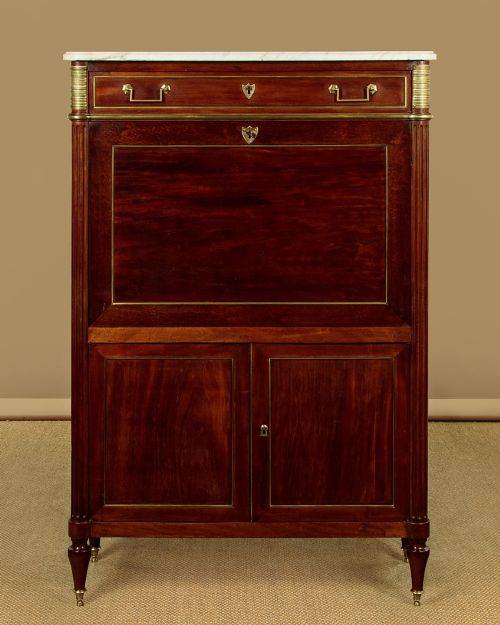
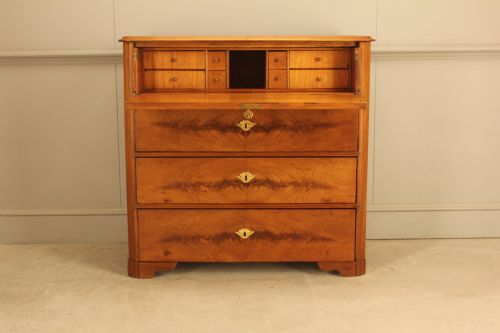
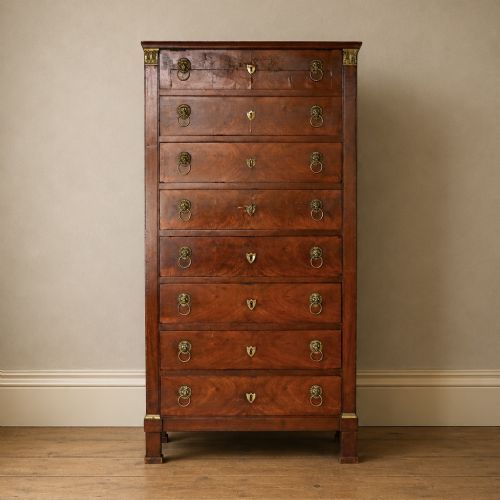
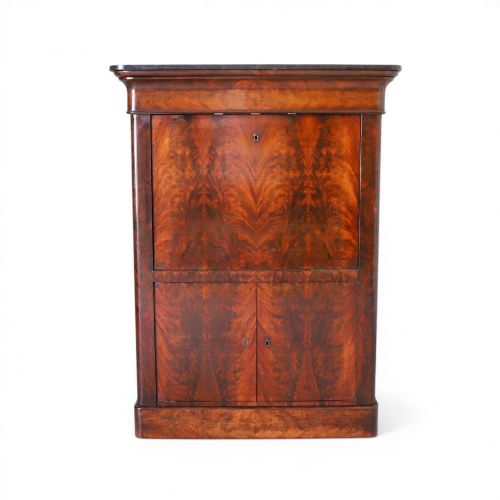
An empire secretaire encompasses tall writing cabinets, cylinder desks, and upright chests equipped with a drop-down writing flap. These pieces originate predominantly from the nineteenth century, drawing on continental design traditions including French Empire, Biedermeier, and Dutch variants.
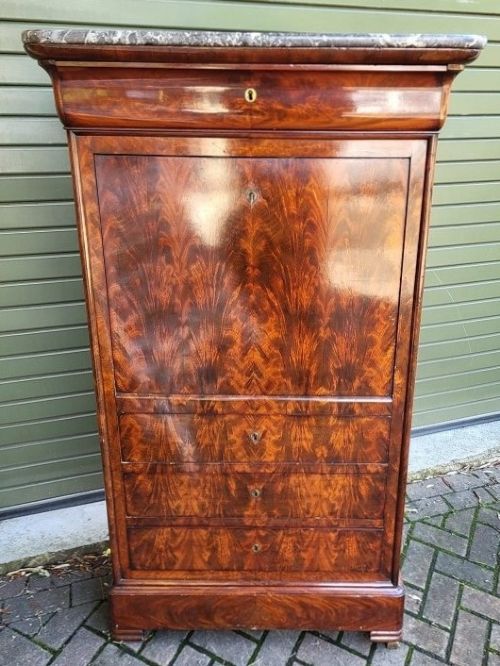
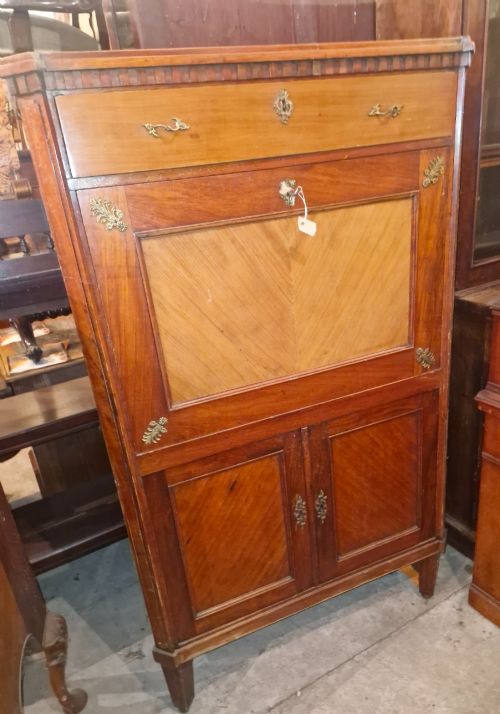
The version most commonly encountered on this page is the French secretaire à abattant, constructed in mahogany or flame mahogany and frequently topped with marble. Alongside these upright cabinet forms, buyers will also discover walnut escritoires and Biedermeier commodes designed for domestic workspaces.
How they were made
Cabinet makers built these carcasses using solid oak or pine frames, applying figured veneers of mahogany, walnut, flame mahogany, and satin birch to the exterior surfaces. This method allowed craftsmen to display striking grain patterns across large drawer fronts and drop-down writing flaps.
Mounts in brass and ormolu were cast and applied to punctuate the architectural lines of the furniture. Marble slabs served as heavy, durable working or display surfaces on top of many continental cabinets.
Empire Secretaire Retail Price Guide 2026
Typical asking prices for empire secretaire among the pieces listed under this phrase on Sellingantiques today, from the lower quarter to the upper quarter. They describe what is for sale here now, not the wider market.
Listings span the eighteenth and nineteenth centuries, incorporating French Empire, Biedermeier, and Dutch styles executed in mahogany, walnut, and marble.
What varies in quality
The refinement of the timber selection largely determines the standing of a piece, with figured flame mahogany and rich walnut commanding attention for their depth of grain. Superior examples exhibit precise matching of veneers across multiple drawers and panels.
The sophistication of the internal fitments, such as secret drawers, fitted mirror compartments, and concealed pigeonholes, distinguishes the work of finer workshops from standard production.
The Empire Secretaire Glossary
- Secretaire à abattant
- A tall upright cabinet featuring a hinged fall-front panel that drops down to create a writing surface. This form conceals an interior arrangement of small drawers and pigeonholes.
- Escritoire
- A traditional term for a writing desk or cabinet. These pieces typically combine drawer storage with a dedicated writing surface.
- Ormolu
- Gilded bronze used for decorative mounts and furniture trim. It provides bright metallic contrast against dark woods like mahogany and ebonised birch.
- Biedermeier
- A central European style spanning the nineteenth century characterised by clean lines, minimal ornamentation, and a focus on native wood grains. It privileges domestic comfort and utility over heavy classical revival pomp.
- Flame mahogany
- A veneer cut from the fork of a mahogany tree where the grain twists to produce a flickering, flame-like pattern. Cabinet makers reserved this striking material for primary display surfaces.
Empire Secretaire: Frequently Asked Questions
What is an empire secretaire?
An empire secretaire is an upright writing cabinet or desk characterised by architectural proportions and a drop-down writing flap. These pieces often feature classical mounts and rich wood veneers.
They serve as both storage furniture and functional writing desks within a room.
How do I use a secretaire abattant?
The fall-front panel unlocks and lowers into a horizontal position to provide a flat writing surface supported by internal brackets. This reveals an inner tier of small drawers and compartments for stationery.
When correspondence concludes, the flap lifts back into a vertical position to conceal the workspace.
Where were these cabinets made?
These items originate from across continental Europe during the nineteenth century and earlier. French, Swedish, Dutch, and general continental workshops produced distinct regional interpretations of the form.
French pieces often favour mahogany with marble tops, while Swedish Biedermeier examples frequently utilise birch and ebonised details.
What woods are used in these desks?
Mahogany and walnut form the primary structural and decorative timbers for most examples on this page. Flame mahogany and satin birch appear as select veneers on prominent exterior surfaces.
Oak and other secondary timbers provide robust internal framing for drawers and carcase structures.