

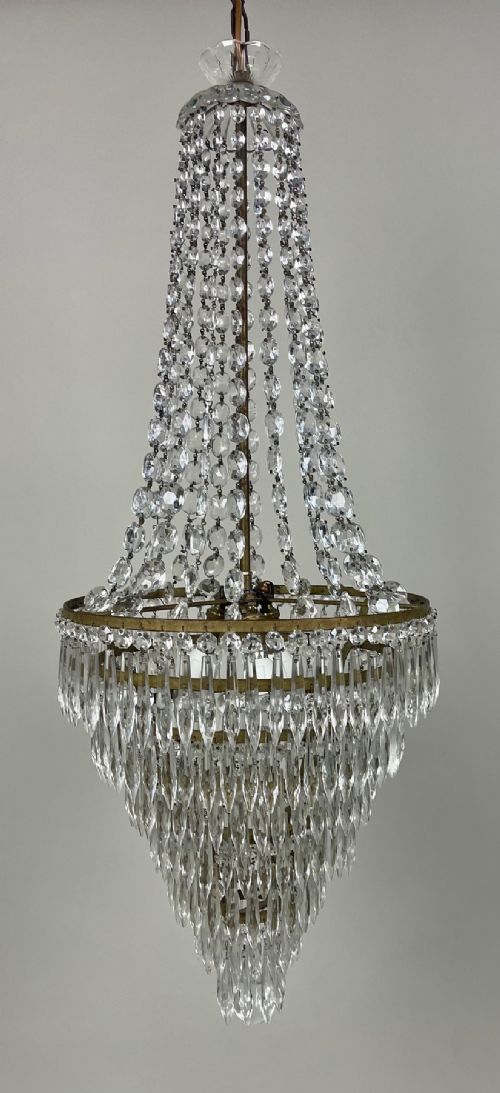
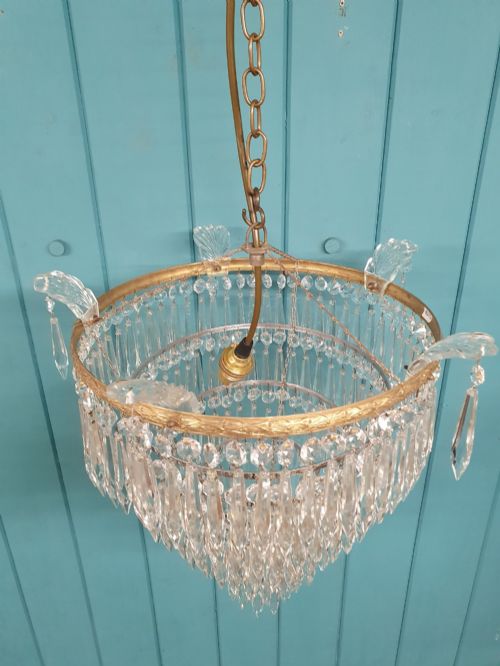
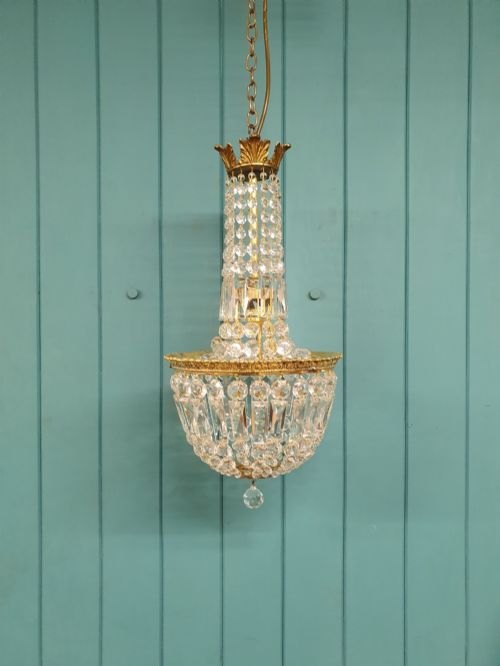
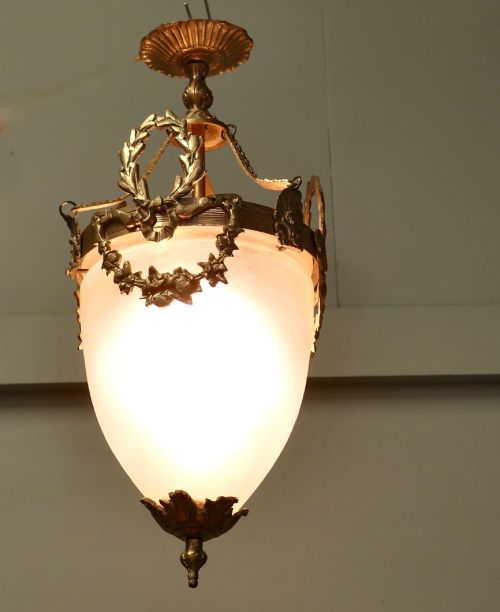


Empire Gilt Brass Pendant
An empire gilt brass pendant brings classic French Neoclassical light and structure into a room through tiered crystal and polished metal.
Empire Gilt Brass Pendant
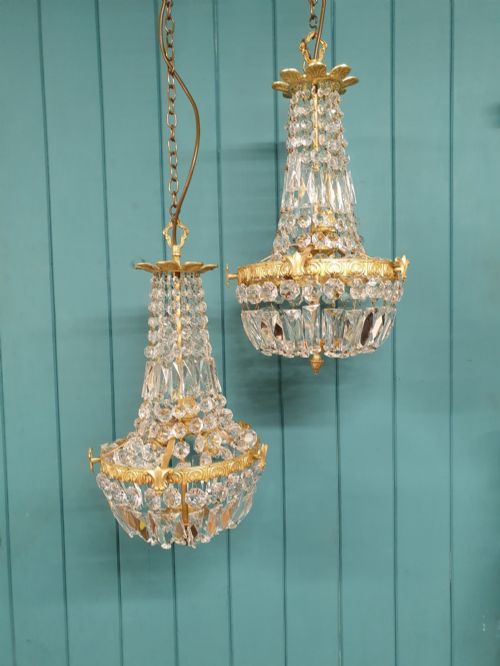
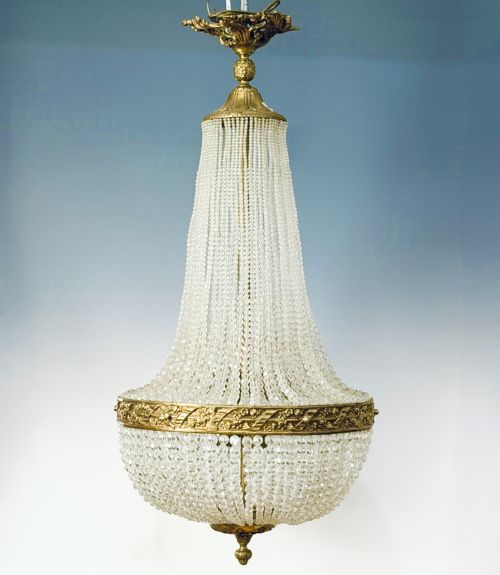
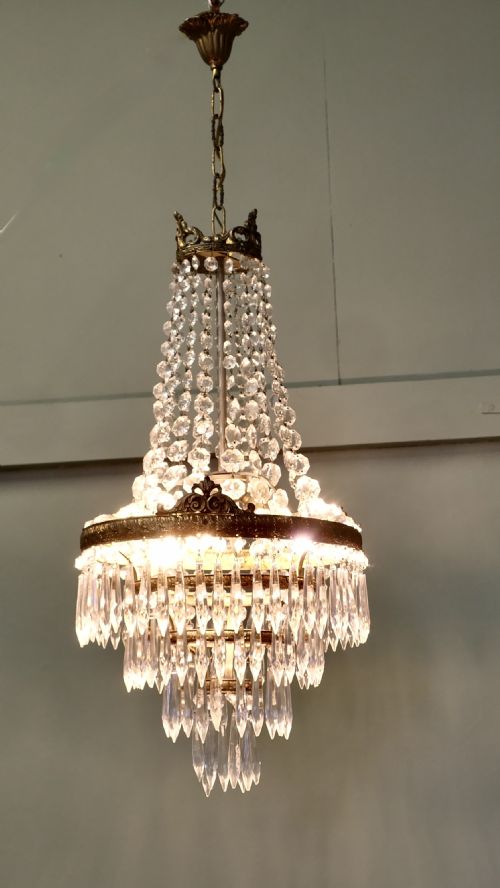
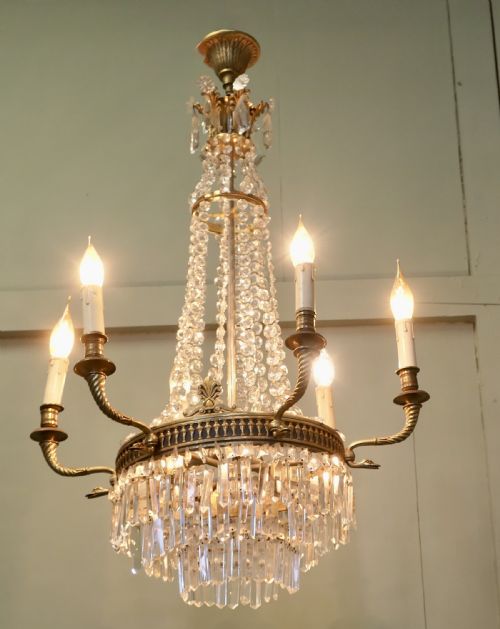
An empire gilt brass pendant encompasses French Empire style chandeliers and ceiling lights designed with classical proportion, often featuring tent and waterfall configurations of crystal drops. Buyers searching for an empire gilt brass pendant most frequently encounter French examples from the nineteenth century and early twentieth century, spanning styles from French Neoclassical to Rococo.
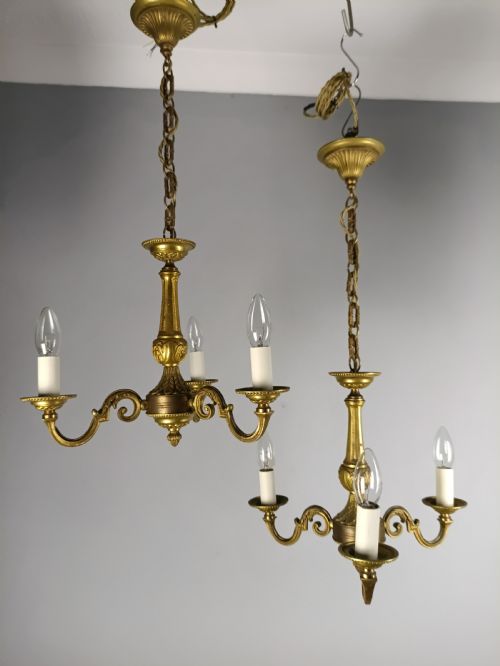
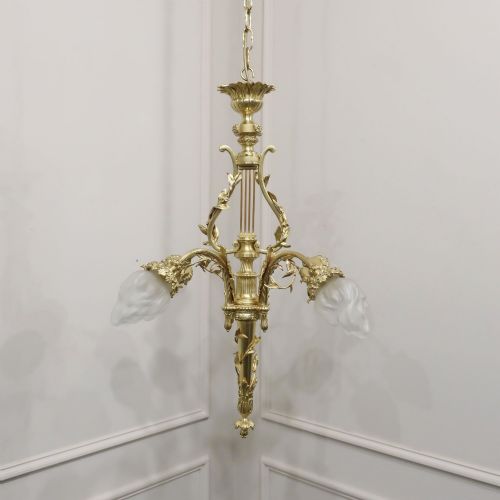
These ceiling fixtures range from single light baskets to large multi arm chandeliers with bronze or brass frames. The selections visible here include works incorporating patinated bronze, gilded bronze, ormolu, and glass prisms suspended beneath leaf decorated upper arms.
Materials and construction
The construction relies on cast brass and bronze frameworks treated with gilding, ormolu, or patination to achieve a rich metallic surface. These structural elements support glass and crystal components, including faceted prisms and waterfall drops arranged around central candle arms.
Makers utilised traditional metal casting and hand assembly techniques, linking glass beads and crystal pendants with wire to form tent frames and baskets. The integration of bronze, gilt brass, and cut glass creates the distinctive luminous quality characteristic of the period.
Empire Gilt Brass Pendant Retail Price Guide 2026
Typical asking prices for empire gilt brass pendant among the pieces listed under this phrase on Sellingantiques today, from the lower quarter to the upper quarter. They describe what is for sale here now, not the wider market.
Materials recorded across current selections include patinated bronze, ormolu, gilt bronze, crystal, and baked glass components.
Distinctions in standard and execution
Quality separates through the crispness of the bronze or brass casting, particularly in decorative details like leaf motifs and mountings. Finer examples display meticulous hand chasing on the metalwork and high clarity in the crystal prisms rather than pressed glass.
The architectural balance of the tent and waterfall structure and the integration of multiple arms indicate superior workshop production. A heavier metal gauge and more complex multi light configurations distinguish the upper tier of these ceiling fixtures.
The Empire Gilt Brass Pendant Glossary
- Ormolu
- Gilded bronze produced by applying a mercury and gold amalgam to a bronze base, creating a durable golden finish seen on classical mounts. This technique was widely employed in French workshops.
- Tent and waterfall
- A lighting configuration where strings of crystal beads form an upper conical tent shape, flowing down into a cascading waterfall of prisms around the lower arms. It maximises light refraction from internal candles or bulbs.
- Patinated bronze
- Bronze that has been chemically treated to produce a dark, aged surface tone rather than a bright gilt appearance. It offers a contrasting texture against polished brass or bronze elements.
- Prism
- A cut glass or crystal pendant designed to refract light into spectral colours. These elements hang from the frame and arms of empire chandeliers.
- Lyre
- A decorative motif shaped like an ancient musical instrument, often incorporated into the central body or hanging structure of Neoclassical light fittings.
Empire Gilt Brass Pendant: Frequently Asked Questions
How do I hang a heavy chandelier safely?
These fixtures require secure mounting directly into ceiling joists or a heavy duty ceiling box using appropriate steel fixings to support the combined weight of metal and crystal.
Professional installation by an electrician ensures the electrical wiring safely accommodates multi light configurations.
What rooms suit an empire chandelier?
Dining rooms, high ceilinged hallways, and drawing rooms provide suitable vertical space for the cascading form of tent and waterfall chandeliers.
Smaller single light basket versions fit comfortably in bedrooms or smaller studies where lower ceiling clearance is required.
How do I clean crystal drops?
Crystal prisms and glass beads can be washed using a mild solution of warm water and dish soap while still attached, or removed individually for thorough soaking.
Drying each piece with a lint free cloth restores maximum brilliance to the glass.
How can I tell nineteenth century pieces apart?
Nineteenth century examples display hand chased surface details on the bronze or brass framework alongside hand cut crystal elements rather than machine moulded glass.
Construction methods such as threaded pins and hand tied wire links help indicate period production.