
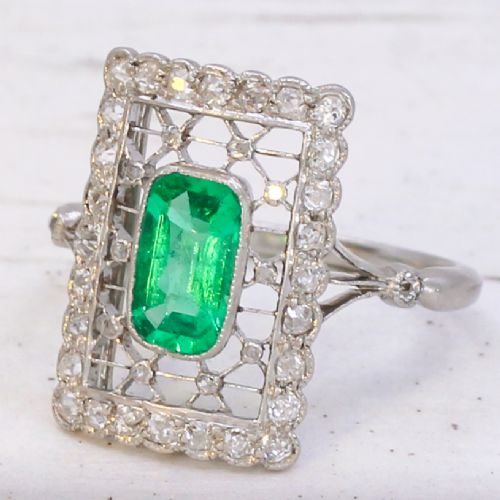
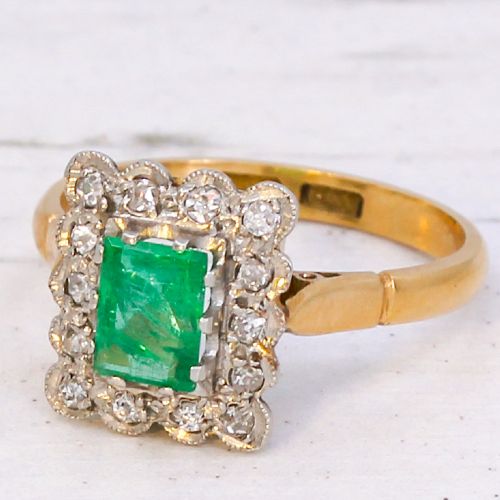
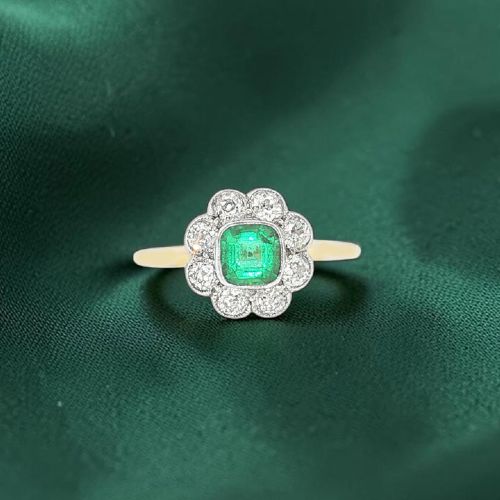
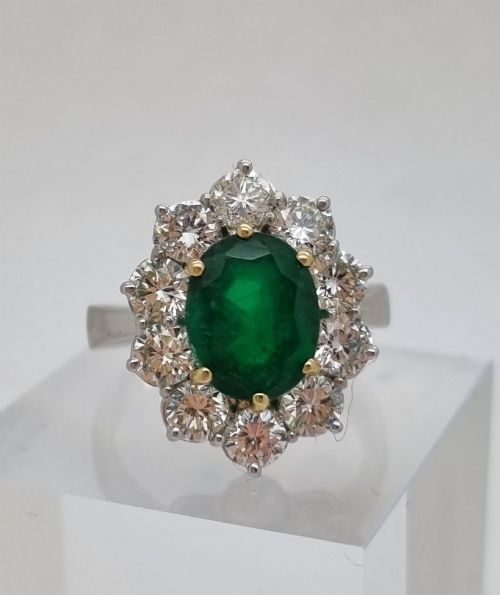
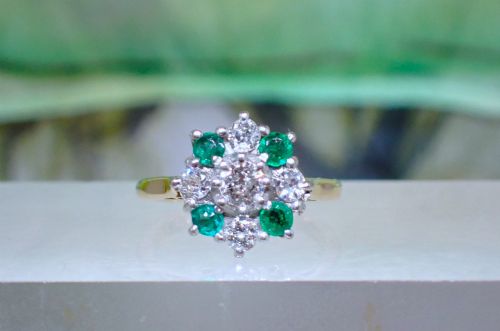
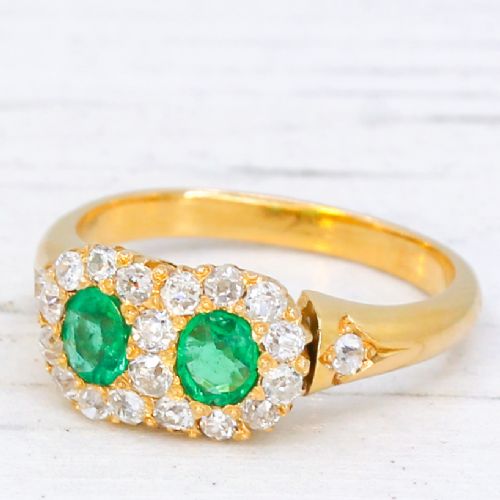
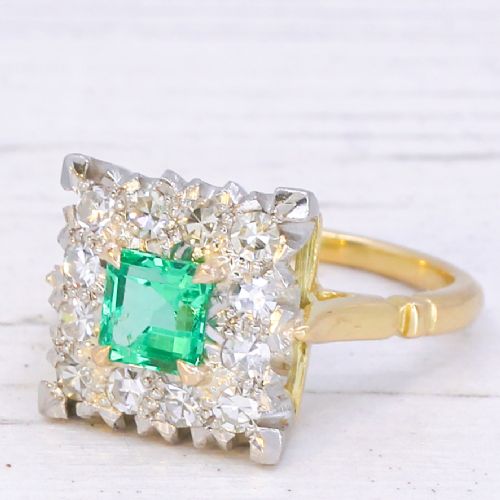
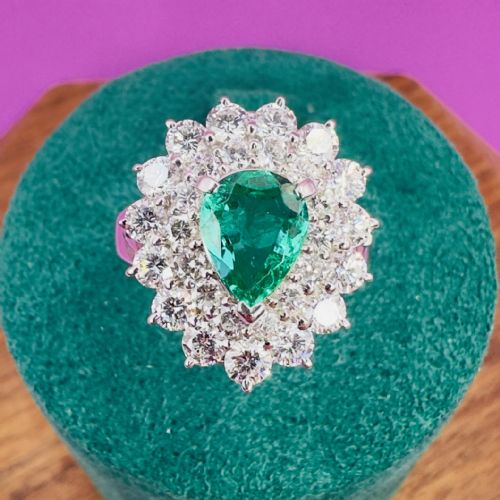
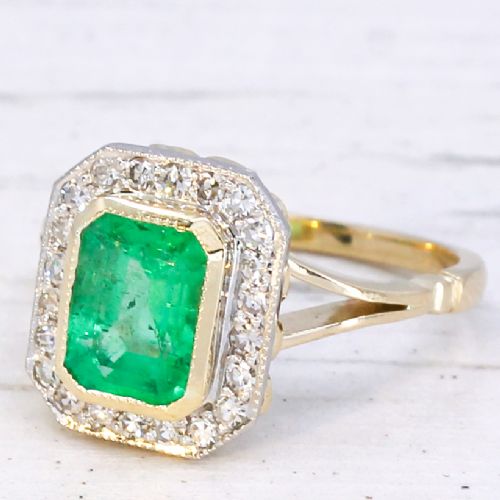


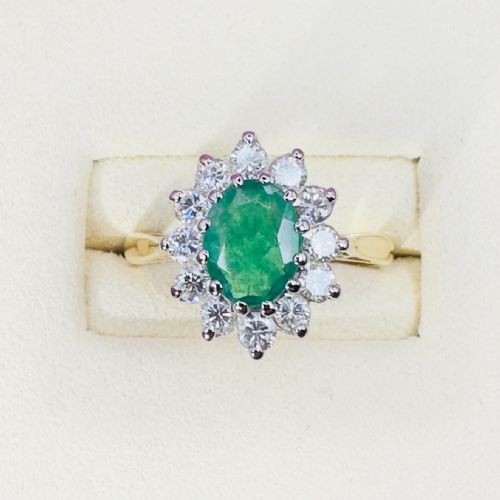


Emerald Halo Engagement Ring
An emerald halo engagement ring brings together a vivid green centre stone and a surrounding border of diamonds, offering an enduring statement of distinction.
Emerald Halo Engagement Ring
An emerald halo engagement ring centres on a vivid beryl variety encircled by sparkling diamonds, creating a design that draws the eye directly to the central stone. This search phrase encompasses cluster and halo configurations spanning several decades, from early twentieth-century examples to mid-century creations.
The most common versions met here include platinum and 18ct gold mounts framing oval, pear, or princess cut emeralds. These pieces reflect traditional fine jewellery craftsmanship alongside distinct period styles such as Edwardian delicacy and geometric Art Deco layouts.
How They Were Made
The fabrication of an emerald halo engagement ring relies heavily on precious metals like platinum and 18ct white or yellow gold to securely house the stones. Platinum offers strength for delicate settings, while gold provides a warm contrast to the green beryl and colourless diamonds.
Goldsmiths set the central emerald using claw or bezel techniques, surrounded by pavé or bezel-set diamond borders designed to catch the light. Hand-working and traditional cutting methods, including old cut and transitional diamond facets, define the construction of these period rings.
Several rings feature adjustable shanks, proving that Victorians and mid-century romantics also wrestled with seasonal finger size changes.
What Varies in Quality
Quality in an emerald halo engagement ring rests upon the origin, clarity, and treatment level of the central beryl, alongside the saturation of its green hue. Stones accompanied by laboratory reports detailing minor or negligible oil enhancement stand apart from heavily treated examples.
The calibre of the surrounding diamond work and the precision of the metal smithing also dictate the overall standard. Fine grain work, well-matched diamond brilliance, and substantial platinum or gold mountings separate exceptional items from standard production.
The Emerald Halo Engagement Ring Glossary
- Halo
- A setting style where a central gemstone is encircled by a ring of smaller accent stones, usually diamonds. This arrangement maximises overall visual presence and light reflection.
- Cluster Ring
- A ring design featuring a prominent central stone grouped closely with surrounding smaller gems. This configuration was especially favoured during the Edwardian and Art Deco periods.
- Old Cut
- A historic diamond cutting style characterised by a high crown, small table, and deep culet, typical of pieces made before the middle of the twentieth century. These cuts display a softer, candlelit sparkle compared to modern brilliants.
- Colombian Emerald
- Beryl originating from the mines of Colombia, renowned globally for a characteristic warm and intense green hue. These stones often command particular attention from collectors.
Emerald Halo Engagement Ring: Frequently Asked Questions
How do I care for my emerald halo engagement ring?
Emeralds are a softer gemstone than diamonds, requiring gentle cleaning with warm soapy water rather than ultrasonic machines. Avoid exposing the ring to harsh chemicals or sudden temperature changes to protect the natural stone.
Regular checks by a jeweller ensure the platinum or gold claws holding the centre stone and halo diamonds remain secure. Removing the ring during heavy physical work prevents unnecessary wear to the delicate mounting.
Can I wear an emerald halo ring every day?
Daily wear is entirely possible provided the ring receives thoughtful care and appropriate maintenance. Choosing a setting with a robust platinum or 18ct gold gallery helps protect the edges of the central emerald.
Many owners reserve these rings for daily wear while taking simple precautions like removing them for gardening or exercising. This balance preserves the longevity of antique and vintage mountings.
What does oil treatment mean for emeralds?
Natural emeralds commonly contain internal fissures that are routinely treated with colourless oil or resin to improve clarity and appearance. Laboratories grade these treatments ranging from none to minor, moderate, or significant.
piedras with minor or negligible oil enhancement are scarcer and generally more desirable to collectors. This treatment is a standard industry practice established over centuries to stabilise the gemstone.