





Emerald Drop Pendant
An emerald drop pendant hangs with the unmistakable focus of a single, vivid green stone catching the light at the base of the neck.
Emerald Drop Pendant
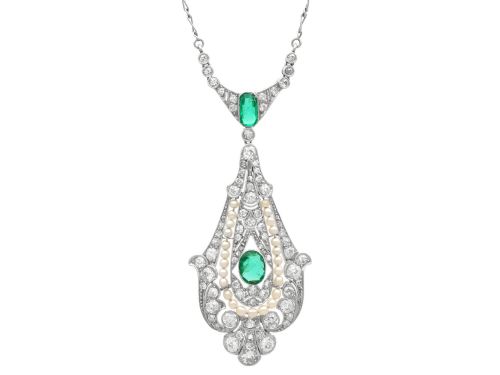
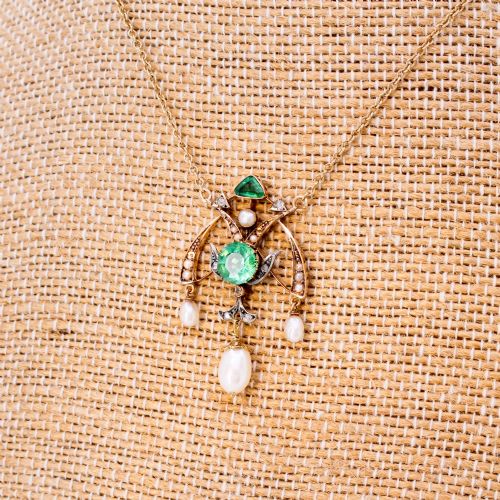
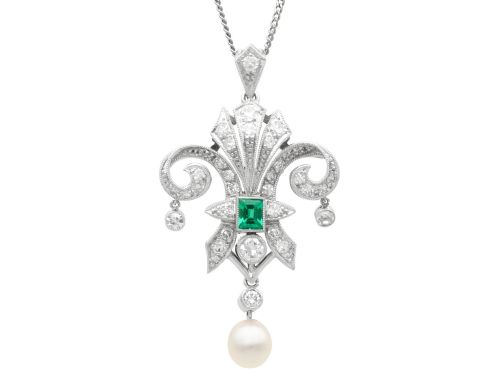
When you search for an emerald drop pendant, you enter a field spanning from eighteenth-century designs to mid-century modern iterations. These pieces focus attention on a suspended green gemstone, often paired with diamonds or pearls to enhance the central colour.
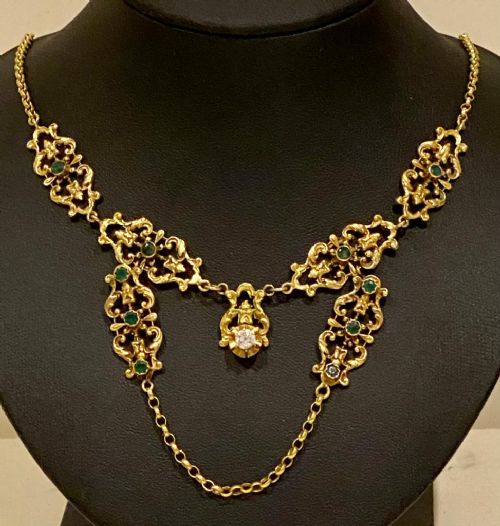
The most common examples you will encounter here date from the Victorian, Edwardian, and Art Deco periods. They employ metals ranging from yellow and white gold to platinum and silver, reflecting the shifting aesthetic preferences of their respective eras.
Forms vary from delicate lavaliere necklaces to substantial platinum clusters and geometric drops. Each piece uses the drop format to let the emerald move independently, creating dynamic play with light.
Materials and construction
Construction relies heavily on precious metals like platinum, white gold, yellow gold, and sterling silver to set the stones securely. Platinum gains favour in Edwardian and Art Deco pieces for its strength in fine, lacy wirework, while earlier items lean on yellow gold and silver.
Goldsmiths and lapidaries combine emeralds with supporting diamonds, pearls, aquamarines, and paste stones. Settings utilise claw mounts, bezel wraps, and delicate millegrain edges to hold the gems while minimising visible metal.
Emerald Drop Pendant Retail Price Guide 2026
Typical asking prices for emerald drop pendant among the pieces listed under this phrase on Sellingantiques today, from the lower quarter to the upper quarter. They describe what is for sale here now, not the wider market.
Some nineteenth-century makers hid tiny hinged compartments inside pendant backs, presumably for secret locks of hair or miniature painted portraits.
Factors of quality
Quality rests primarily on the character of the central emerald and the integrity of its setting. Fine examples display strong, even colour saturation and careful hand-cut faceting that maximises brilliance without masking natural inclusions.
The artistry of the mount separates standard work from exceptional pieces. Superior items show refined millegrain detailing, balanced proportions between the emerald drop and its surrounding diamonds, and robust yet invisible structural joins.
The Emerald Drop Pendant Glossary
- Emerald drop pendant
- A necklace featuring a suspended green beryl gemstone as its primary focal point. This configuration allows the stone to swing freely.
- Millegrain
- A decorative technique involving a row of tiny metal beads along the edge of a setting. It softens the transition from metal to stone.
- Lavaliere
- A pendant necklace featuring a central stone or drop suspended below a smaller motif. This style gained immense popularity during the Edwardian era.
- Paste
- Hand-cut lead glass used as a gemstone substitute in historic jewellery. It mimics the light play of precious stones with considerable skill.
Emerald Drop Pendant: Frequently Asked Questions
How do I date an emerald drop pendant?
Dating relies on the cut of the stones, the choice of metal, and stylistic clues within the mount. Edwardian and Art Deco pieces often use platinum and geometric lines, while Victorian items typically employ yellow gold or silver settings.
Examining the reverse of the pendant and the clasp style reveals further clues about manufacturing techniques specific to the nineteenth or twentieth century.
Are emeralds treated in antique pendants?
Many emeralds undergo traditional clarity enhancement using oils or resins to fill microscopic fissures. This practice has centuries of precedent in lapidary work.
Laboratory reports, where present, specify whether an emerald shows traditional enhancement or no evidence of treatment.
How should I wear an antique emerald pendant?
These pendants pair well with evening wear or simple necklines that allow the drop to rest against fabric without obstruction. Matching the metal tone of the chain to the pendant ensures a cohesive look.
Due to the softer nature of emeralds compared to diamonds, avoid wearing them during physical activities or exposing them to harsh chemicals.
What is the difference between an art deco and edwardian pendant?
Edwardian pendants lean towards garland styles, featuring platinum filigree, seed pearls, and softer, flowing floral motifs. They emphasise lightness and delicate grace.
Art Deco pendants introduce strict symmetry, strong vertical lines, and bold geometric contrasts between emeralds and diamonds.