




Emerald Diamond Cocktail Ring
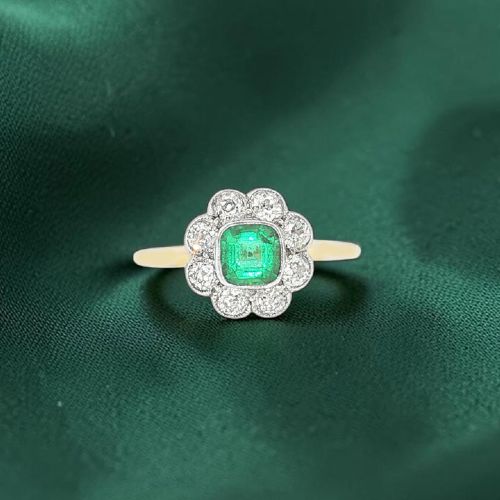
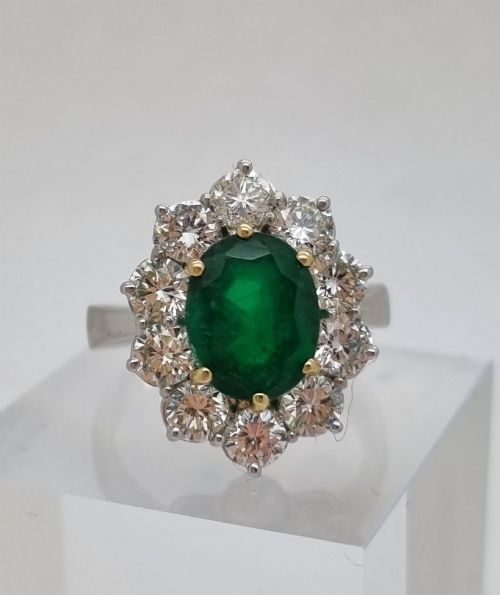
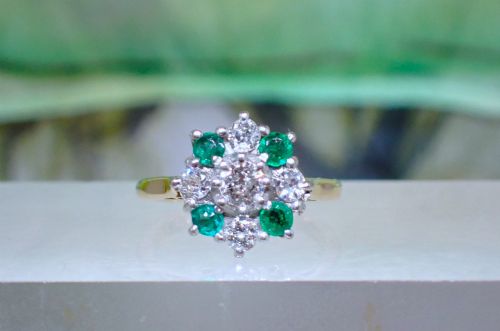
An emerald diamond cocktail ring brings together vibrant green beryl and brilliant stones in bold settings designed to command attention from across a room.
Emerald Diamond Cocktail Ring
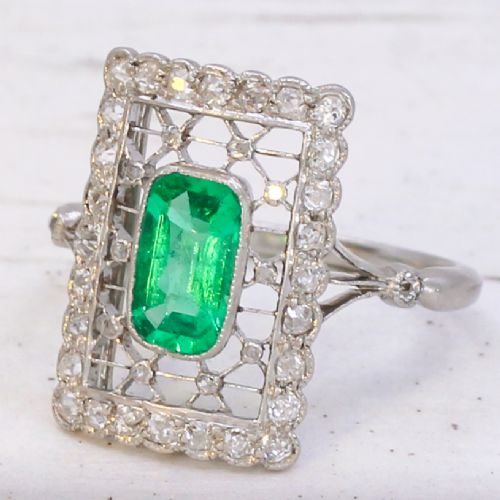
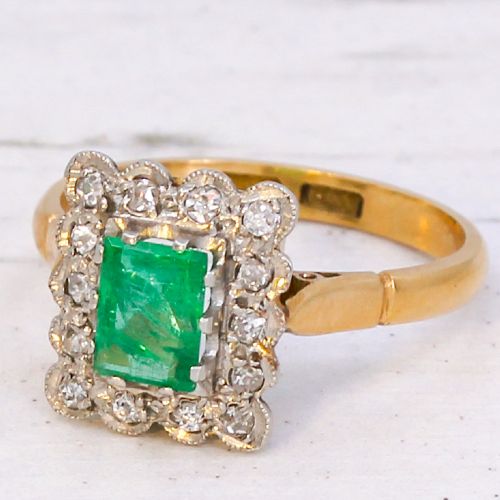
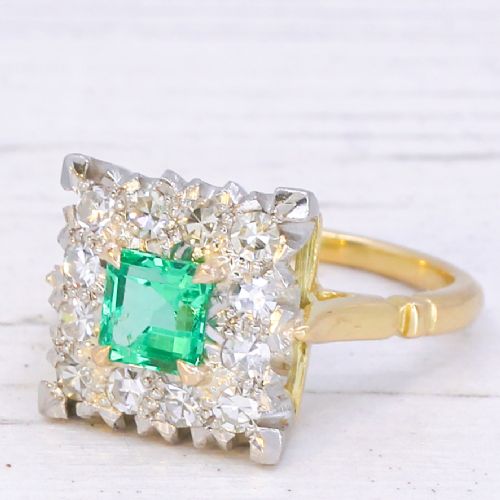
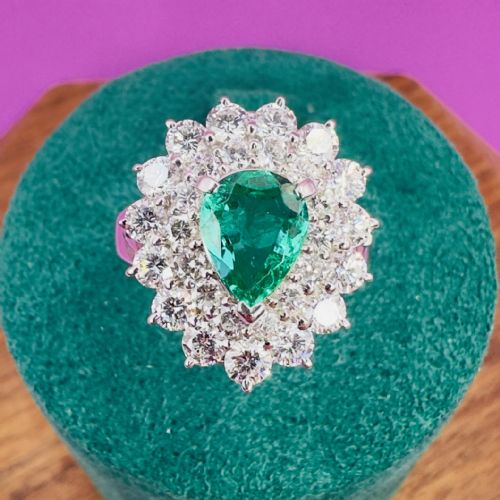
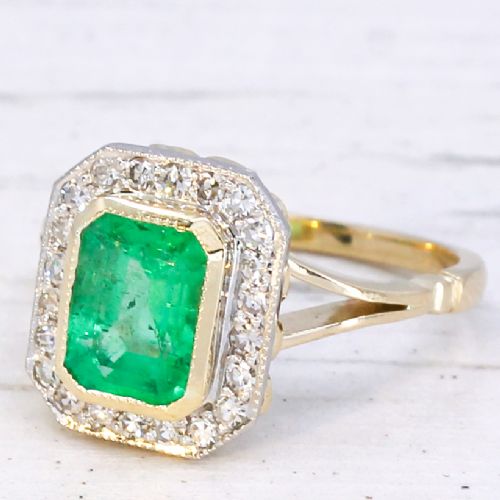
An emerald diamond cocktail ring typically takes the form of a cluster, halo, or geometric statement piece created to be worn at evening gatherings. These jewels draw the eye through high-contrast pairings of deep green emeralds and sparkling diamonds set into precious metal.
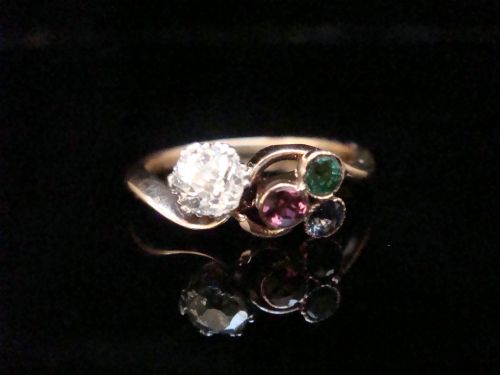
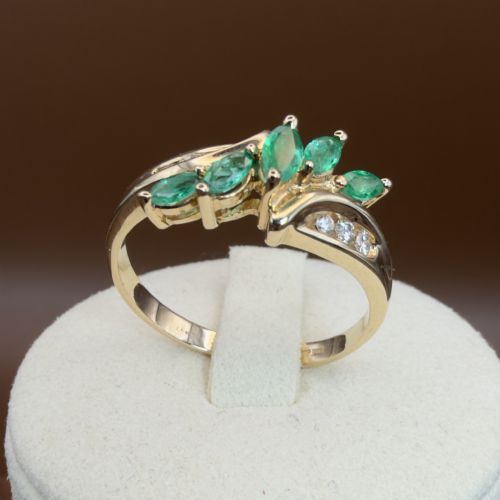
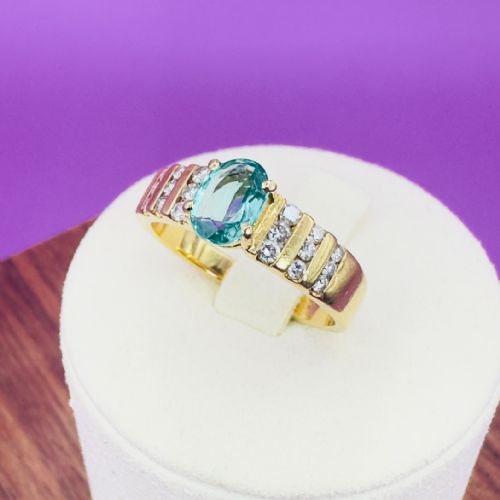
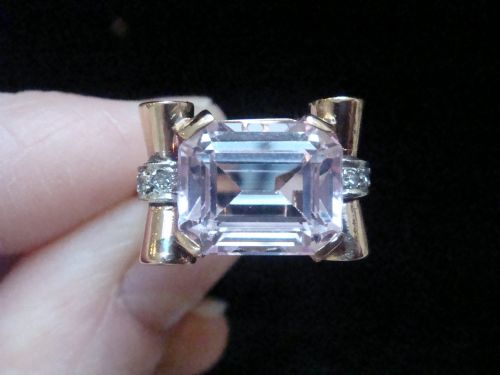
The selections span from early twentieth century Edwardian examples and geometric Art Deco creations to mid-century modern designs. Cluster configurations dominate the available spread, though linear dress rings and substantial cocktail forms also appear regularly.
Origins stretch across British, French, and international workshops, reflecting changing aesthetic preferences through successive decades. Buyers encounter both delicate early cluster arrangements and heavy, sculptural mid-century mountings.
Materials and Construction
Master jewellers employed platinum and various karats of gold, including yellow, white, and standard 18ct alloys, to house the gems securely. Platinum gained particular favour during the Art Deco period for its ability to support intricate openwork while holding stones firmly.
The central green beryl is typically surrounded by old cut, brilliant, or rose cut diamonds that enhance the optical depth of the principal gem. Gemstones are secured using claw settings, flush mountings, or precise channel work depending on the stylistic period.
Some mid-century cocktail creations weigh in past thirty grams, demanding strong fingers and considerable confidence from the wearer.
Assessing the Pieces
Quality rests significantly on the origin, clarity, and treatment level of the central emerald, with Colombian stones often commanding particular attention alongside certified natural specimens. The presence of minimal oil treatments or fine natural coloration elevates a piece above standard commercial examples.
The overall artistry of the metalwork, the matching and cut quality of the surrounding diamonds, and the structural integrity of the prongs and shank define the tier of the jewellery. Superior craftsmanship ensures that heavy cluster and cocktail formats remain balanced and comfortable on the hand.
The Emerald Diamond Cocktail Ring Glossary
- Cluster ring
- A design featuring a central gemstone encircled by a ring of smaller stones, typically diamonds framing a coloured centre.
- Cocktail ring
- A large, dramatic ring worn to draw attention, popularised during the mid-twentieth century for evening social events.
- Old cut
- A diamond facet style popular before modern brilliant cutting standards, characterised by higher crowns and smaller tables.
- Platinum
- A dense, durable white metal utilised in fine jewellery making for its strength in delicate Edwardian and Art Deco settings.
- Colombian emerald
- Emerald material originating from specific South American mines renowned for producing stones with exceptional colour depth.
Emerald Diamond Cocktail Ring: Frequently Asked Questions
How do I care for my ring?
Emeralds are softer than diamonds and require gentle cleaning with warm soapy water rather than ultrasonic machines. Regular checks by a jeweller ensure the claws holding the central green stone remain tight.
Store the ring in a dedicated velvet-lined box away from harder jewellery to prevent scratching the softer beryl facets during storage.
Can these rings be resized?
Many platinum and gold mountings allow for resizing by a skilled bench jeweller, though intricate gallery work or continuous gemstone shoulders can complicate the process. Consulting a specialist ensures the structural integrity of the band is maintained.
Adjustable shanks sometimes appear on vintage items, offering a temporary solution for changing finger sizes without immediate alteration.
What defines an Art Deco design?
Art Deco pieces rely on strict geometrical symmetry, sharp lines, and strong contrasts between white platinum and deep green gemstones. This aesthetic emerged following the First World War and favoured stylised motifs over naturalistic curves.
Cluster formations from this era often feature stepped shoulders and calibrated stones cut specifically to fit tight architectural channels.
Are certificates important?
Gemmological certificates provide independent verification of an emerald's origin and the presence or absence of clarity enhancements. Such documentation clarifies whether a stone is of Colombian descent and details any oil treatments used.
Uncertified pieces still offer beauty and historic value, but paperwork adds certainty regarding natural stone characteristics and treatment levels.