
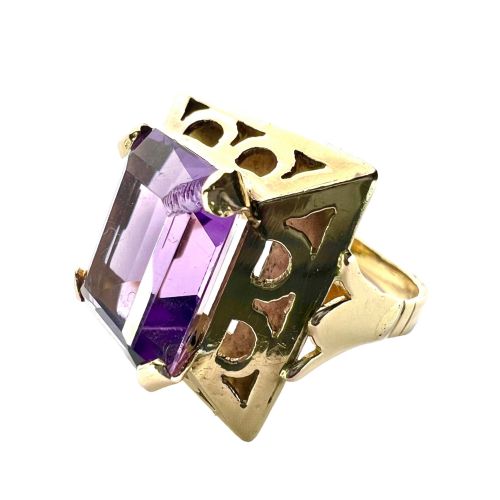
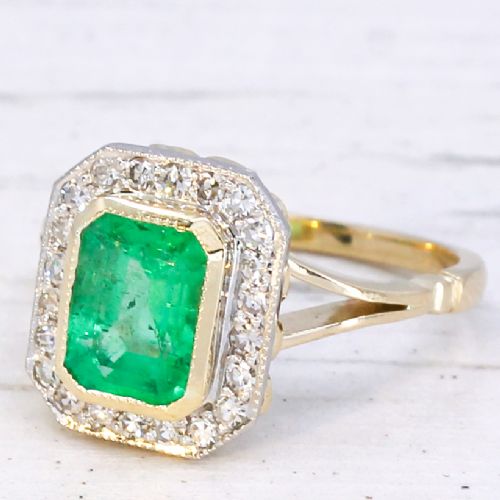

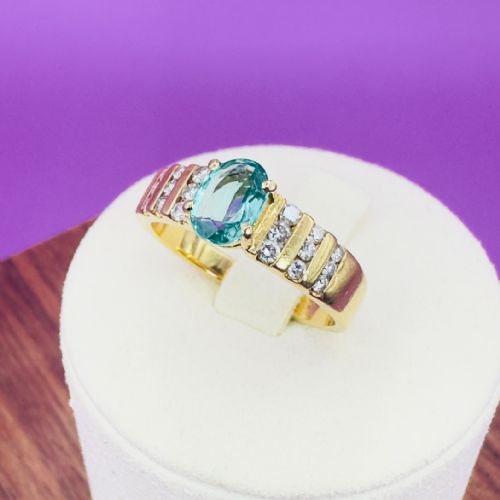

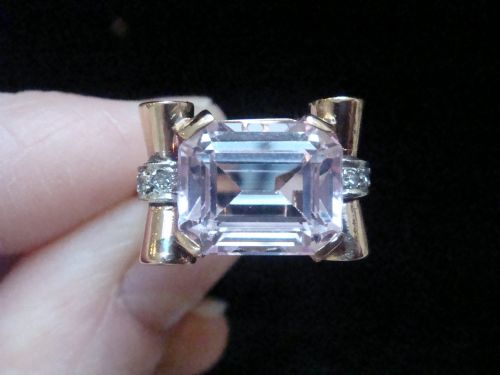


Emerald Cut Cocktail Ring
An emerald cut cocktail ring is a striking statement piece of vintage jewellery designed to command attention from across the room.
Emerald Cut Cocktail Ring
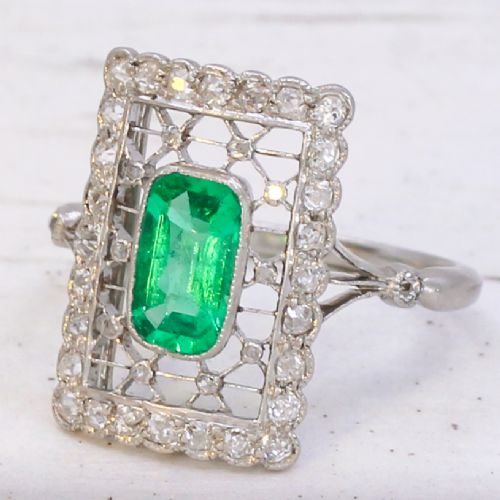
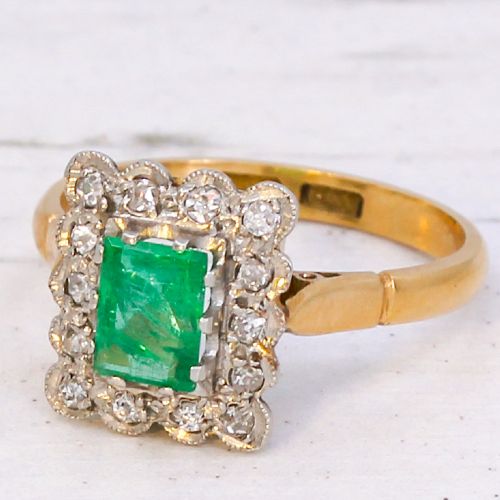
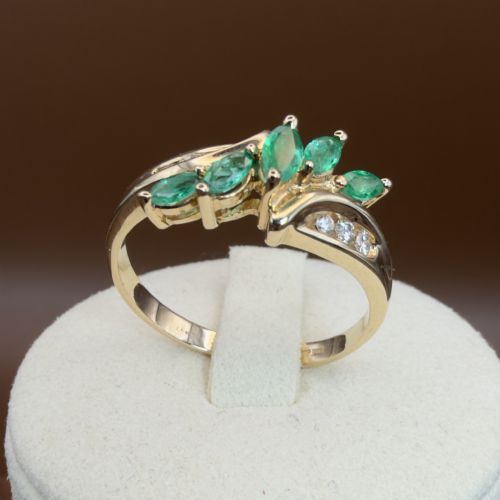
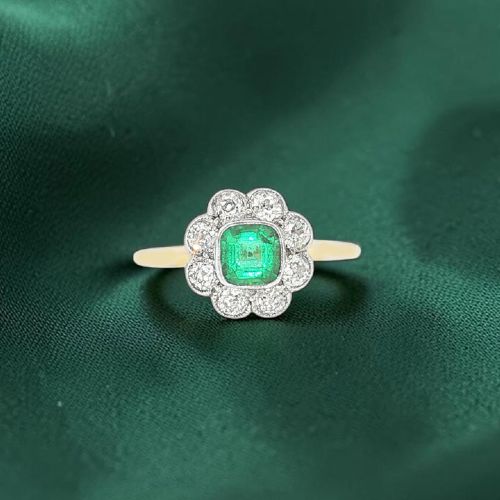
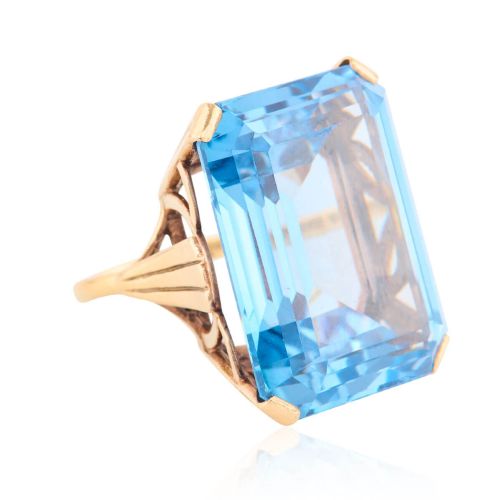
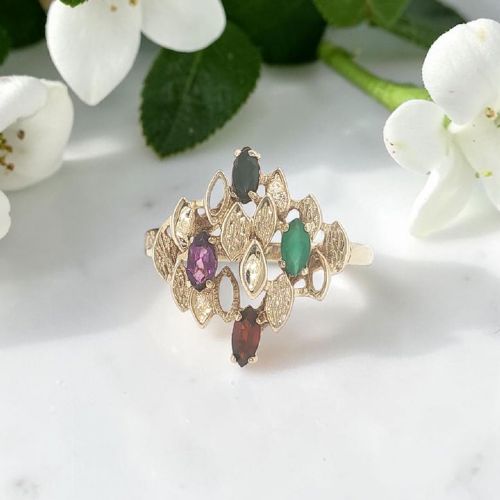
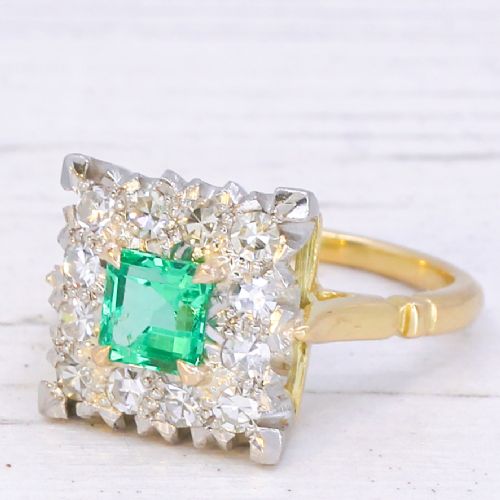
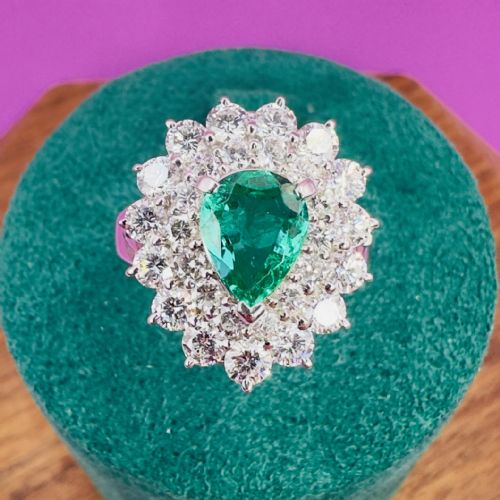
When searching for an emerald cut cocktail ring, collectors encounter bold statement jewellery spanning the Edwardian, Art Deco, retro and mid-century periods. These designs range from high-carat aquamarine solitaires to intricate diamond and emerald clusters.
The most frequent examples on this page are substantial cocktail rings featuring step-cut stones in platinum or gold settings, characteristic of the mid-twentieth century.
How they were made
Goldsmiths and platinum-smiths constructed these pieces using durable precious metals such as platinum, 18ct yellow gold and 18ct white gold to securely hold large central stones. Intricate cluster formations surround the main gems with smaller old-cut or rose-cut diamonds.
Settings frequently incorporate geometric Art Deco motifs or sweeping retro curves, balancing massive gemstone weight with structural integrity.
Listings feature yellow gold, white gold and platinum settings housing emeralds, aquamarines, amethysts and diamonds across mid-century and Art Deco periods.
What varies in quality
The standard of an emerald cut cocktail ring rests on the natural origin, clarity and treatment level of the central emerald, alongside the total carat weight and brilliance of accompanying diamonds. Colombian stones with minimal oil treatment represent a pinnacle in the market.
Metalwork execution also differentiates pieces, where substantial platinum or high-carat gold mountings with precise stone alignment outrank lighter, simpler alloy settings.
The Emerald Cut Cocktail Ring Glossary
- Emerald cut
- A rectangular gemstone cut with stepped facets and cropped corners that emphasises clarity over brilliance. This geometric shape is traditional for emeralds and large diamonds.
- Cluster ring
- A ring featuring a prominent central stone surrounded by a border of smaller gems. This configuration maximises visual impact on the hand.
- Platinum
- A dense, durable white precious metal favoured for high-end twentieth-century jewellery. It allows for delicate yet secure claw settings.
- Columbian emerald
- An emerald sourced from Colombia, historically prized for an intense green hue. These stones often command higher regard among collectors.
- Step-cut
- A stone-cutting style characterised by long, parallel facets resembling stairs. It showcases colour and internal purity.
Emerald Cut Cocktail Ring: Frequently Asked Questions
What defines an emerald cut cocktail ring?
An emerald cut cocktail ring is defined by its substantial size and the presence of a stepped, rectangular centre stone designed for evening wear. These pieces are built to catch the eye during social gatherings.
They emerged strongly during the twentieth century, combining heavy precious metals with significant gemstones like aquamarine, amethyst and emerald.
How do I care for my ring?
Caring for these rings requires gentle cleaning with warm soapy water and a soft brush, avoiding harsh chemical dips that can damage treated emeralds or softer stones. Regular checks by a jeweller ensure the claw settings remain tight.
Because many pieces feature delicate antique gold or platinum work, storing them individually prevents scratching from other jewellery.
Are these rings suitable for daily wear?
While platinum and 18ct gold provide robust settings, the massive central stones and high profiles of cocktail rings make them vulnerable to knocks during heavy manual tasks. Many owners reserve them for special occasions rather than everyday use.
Selecting a design with a lower profile or a durable aquamarine can make daily wear more practical.
How do I identify the period of a ring?
Period identification relies on observing the distinct design language, such as geometric platinum filigree from the Art Deco era or bold, sculptural yellow gold curves from the retro period. Hallmarks stamped inside the shank also provide vital clues to the manufacturing date and metal purity.
Comparing stone-setting techniques helps narrow down the decade of creation.