





Emerald and Diamond Pendant
An emerald and diamond pendant combines vivid green beryl with sparkling stones, offering a rich flash of colour that collectors prize.
Emerald and Diamond Pendant
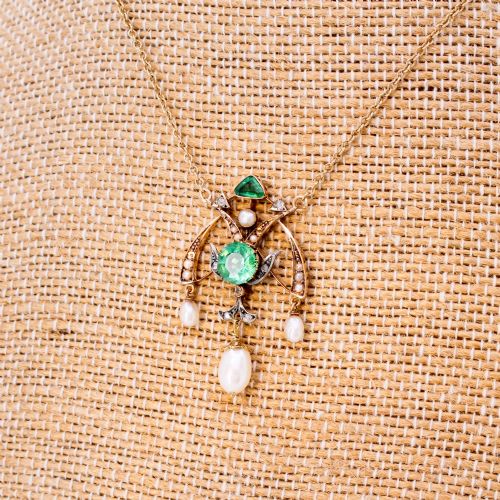
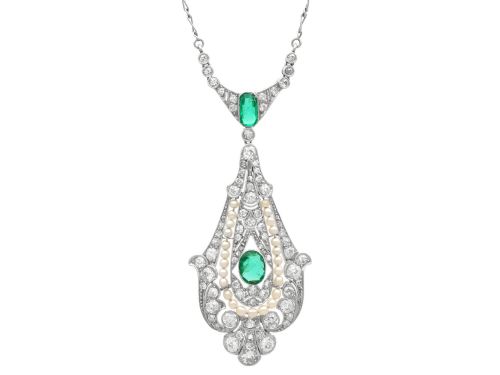
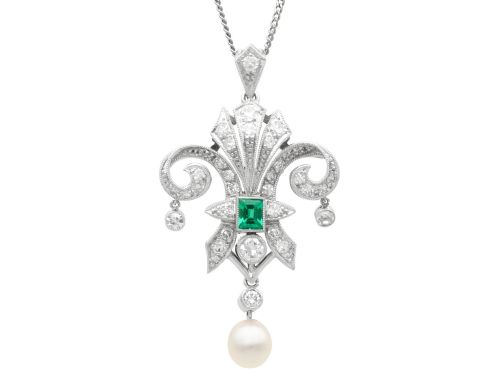
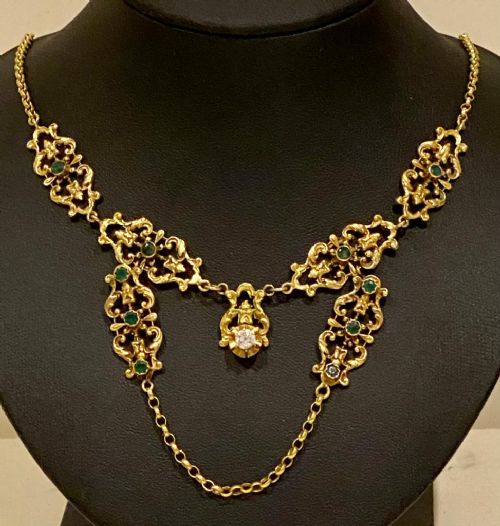
When you search for an emerald and diamond pendant, you encounter pieces spanning from the Victorian and Edwardian eras through Art Deco, Art Nouveau and Mid-Century Modern designs. The selection includes delicate drop necklaces, cluster pendants and elaborate lavaliere necklaces featuring central green gems flanked by brilliant or single-cut stones.
You are most likely to meet pieces set in platinum or yellow gold, often incorporating pearls alongside the primary gems. While many items strictly follow the pendant and necklace format, the inventory also occasionally encompasses brooch conversions or alternative forms like drop neckchains.
The origin of these jewels stretches across various decades, showing how jewellers adapted the pairing of emerald and diamond from the late nineteenth century through to the nineteen-sixties. Each era brings distinct metal choices, from fifteen-carat yellow gold in earlier decades to white gold and platinum in later twentieth-century pieces.
Materials and Construction
The construction relies heavily on precious metals, predominantly platinum and various grades of gold including fifteen-carat yellow gold, eighteen-carat white gold and fourteen-carat gold. Master jewellers mounted emeralds and diamonds into these metals using traditional claw, bezel or pave settings suited to the period.
Alongside the primary stones, many pieces incorporate natural pearls, seed pearls and occasionally sapphires or aquamarines to complement the main gems. Handcrafted elements appear frequently, showing fine attention to detail in wirework, cluster arrangements and articulated drop sections.
Emerald and Diamond Pendant Retail Price Guide 2026
Typical asking prices for emerald and diamond pendant among the pieces listed under this phrase on Sellingantiques today, from the lower quarter to the upper quarter. They describe what is for sale here now, not the wider market.
Among the delicate emeralds and diamonds, a mischievous monkey brooch and an elephant cluster necklace quietly join the lineup.
Assessing Quality and Craftsmanship
The distinction between ordinary and exceptional pieces rests upon the clarity and origin of the emeralds, such as documented Colombian stones, alongside the carat weight and cut of the accompanying diamonds. Superior examples display precise gemstone matching and secure, refined metalwork that withstands regular wear.
Handcrafted execution and period-specific design integrity elevate certain items above standard mass-produced or later iterations. The integration of complementary materials like natural pearls and high-purity platinum or gold further defines the upper tier of the selection.
C'est Laudier
The Emerald and Diamond Pendant Glossary
- Columbian emerald
- A gemstone originating from the mines of Colombia, historically renowned for an intense and deep green hue.
- Lavaliere necklace
- A pendant necklace featuring a central drop stone or ornament suspended from a delicate chain.
- Art Deco
- A design style prominent in the nineteen-twenties and thirties characterised by geometric lines and platinum settings.
- Seed pearl
- A very small natural pearl, often drilled and strung in clusters or used as delicate border accents in antique jewellery.
- Platinum
- A dense, durable white metal frequently utilised in fine jewellery for its strength in secure stone settings.
Emerald and Diamond Pendant: Frequently Asked Questions
How do I care for my emerald pendant?
Emeralds are relatively soft gemstones that require gentle cleaning with a soft cloth and warm soapy water, avoiding harsh chemical dips or ultrasonic cleaners.
Store the pendant separately from harder diamonds in a lined box to prevent scratching the softer emerald surface.
Are these pendants suitable for daily wear?
Many antique and vintage pieces can be worn regularly if handled with reasonable care, though delicate Edwardian or Victorian settings may need occasional inspection by a jeweller.
It is wise to remove the necklace during strenuous physical activities or swimming to protect the claws and softer stones.
How can I tell an Edwardian pendant from a Victorian one?
Victorian pieces often utilise yellow gold and heavier, romantic motifs like lavalieres or clusters, reflecting the tastes of the nineteenth century.
Edwardian items frequently transition towards platinum settings with lighter, airier garland styles and intricate piercing work.
What does a no oil emerald mean?
A no oil emerald is a natural gemstone that has not undergone clarity enhancement treatments with oils or resins to fill surface-fractures.
Such stones maintain their clarity entirely through natural formation, which is documented in specific vintage pieces.