
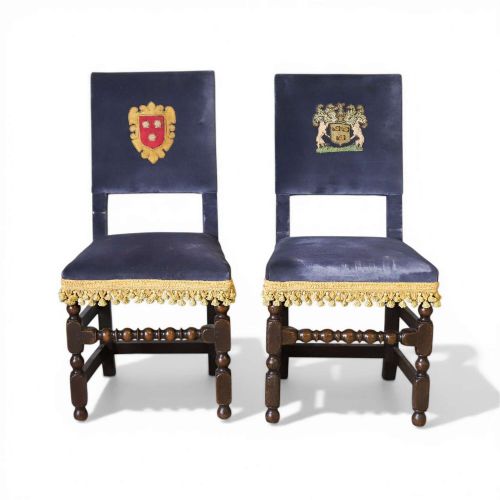
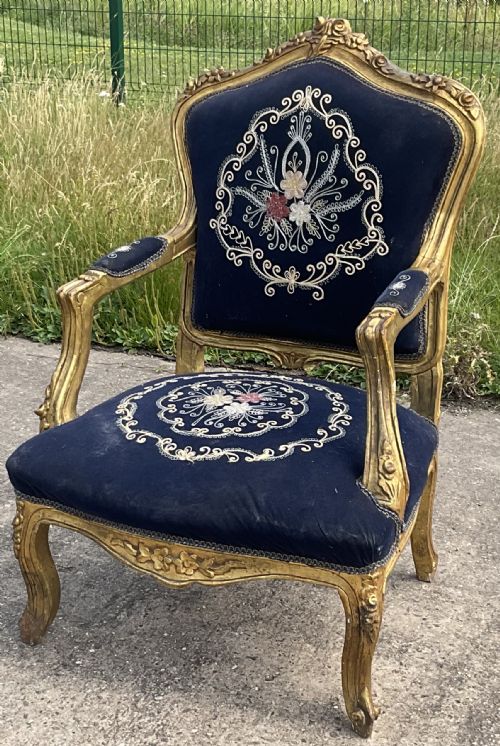
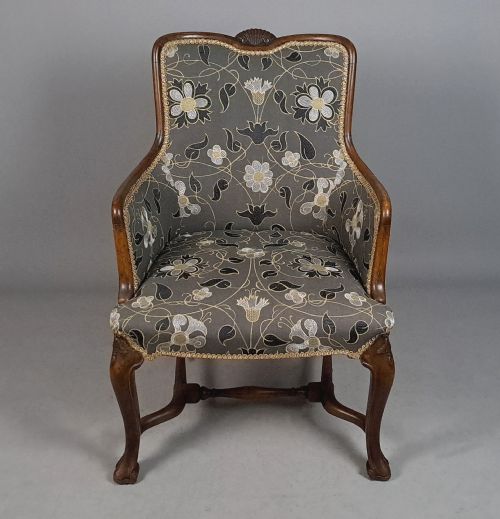
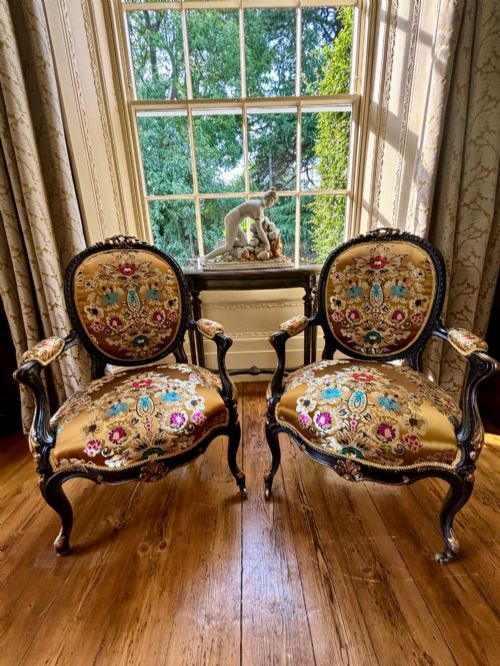





Embroidered Accent Chairs
These embroidered accent chairs bring texture and period detail to a room through needlework panels, crewelwork, and tapestries set into wooden frames.
Embroidered Accent Chairs
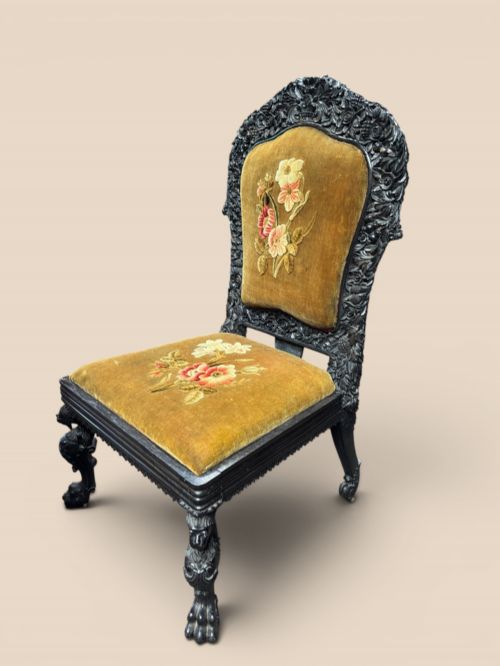
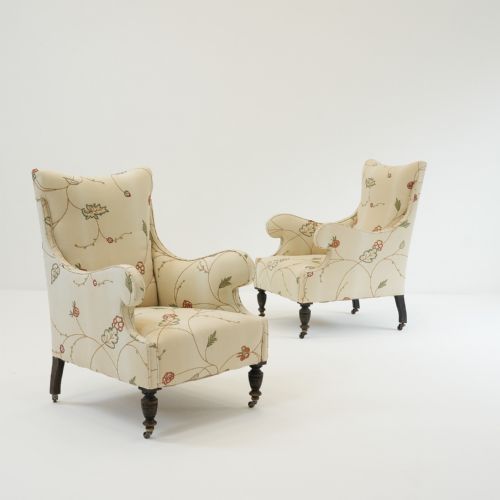
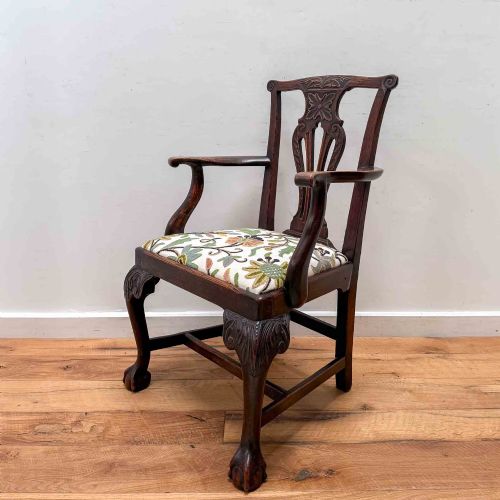
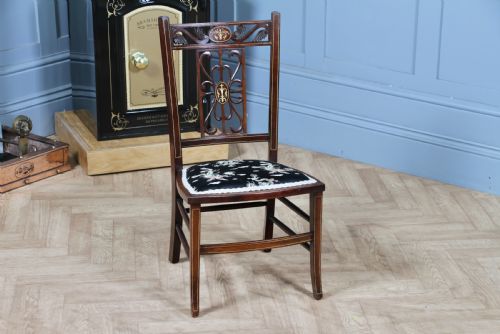
Embroidered accent chairs cover a diverse group of seating forms, ranging from side chairs and slipper chairs to fireside and open armchairs. You will encounter pieces spanning the seventeenth century through to the Edwardian period, with Victorian examples appearing frequently alongside earlier revivals.
How they were made
Construction relies on traditional cabinet timbers such as mahogany, walnut, and oak, occasionally complemented by exotic woods like ebony or finishes including giltwood. Frames are shaped through carving, joinery, and inlay techniques.
Upholstery incorporates textile arts directly into the structure, utilising needlepoint, crewelwork, and silk embroidery stitched by hand onto heavy backing fabrics or velvet.
Listings span from the 17th century to the Edwardian era, incorporating oak, mahogany, walnut, and velvet.
What varies in quality
Quality rests in the execution of the woodwork and the density of the textile work. Finely carved details, substantial timbers like mahogany and walnut, and intact early needlework distinguish superior examples from simpler ones.
The harmony between frame style and textile determines the overall success of the piece. Authentic period upholstery or skilled needlework panels demonstrate greater craftsmanship than later plain replacements.
The Embroidered Accent Chairs Glossary
- Crewelwork
- Embroidery executed with wool yarn on a plain-weave fabric, often seen on period fireside chairs and armchairs. This technique creates textured, organic patterns.
- Needlepoint
- Embroidery stitched over a stiff grid canvas using wool or silk, forming dense tapestry panels. It provides a durable surface for seat backs and armchairs.
- Slipper chair
- A low-seated upholstered chair originally designed for bedrooms, allowing women to dress comfortably. They appear in late nineteenth-century styles.
- Prie Dieu chair
- A devotional chair featuring a low seat and a tall, narrow back often topped with a ledge for kneeling. These Victorian examples incorporate upholstered needlework.
- Armorial
- A design featuring a heraldic crest or coat of arms, typically found carved into woodwork or embroidered onto textiles. Such details indicate specific lineage or clan origin.
Embroidered Accent Chairs: Frequently Asked Questions
How do I date an embroidered chair?
Dating relies on combining the timber, construction methods, and stylistic cues of the frame with the technique used in the textile. Oak frames with carved details often point to earlier centuries, while mahogany and satinwood inlay frequently indicate Georgian or Edwardian periods.
Needlework and crewelwork styles also shift over time, though textiles are sometimes replaced later. Examining the underside and joinery helps clarify the original period of the piece.
Are these chairs comfortable for daily use?
Comfort varies significantly depending on the form, whether it is a low slipper chair, an open armchair, or a fireside seat. Many historical chairs feature firmer padding and more upright postures than modern seating.
Smaller side chairs and nursing chairs function best as accent pieces in hallways or bedrooms rather than primary lounging seats. Open armchairs and wing chairs generally offer more substantial support for regular sitting.
What is the difference between crewelwork and needlepoint?
Crewelwork involves wool yarn hand-embroidered directly onto a woven foundation fabric, creating flowing floral and pictorial motifs. It is traditionally associated with Jacobean and revival pieces.
Needlepoint uses counted stitches over a stiff canvas grid, filling the entire ground to form a dense tapestry panel. This method yields a stiff, highly durable surface frequently utilised on Victorian upholstery.
Can I place an antique embroidered chair in direct sunlight?
Direct sunlight poses a risk to antique textiles, causing hand-dyed wools, silks, and velvets to fade over time. Natural fibres are sensitive to prolonged ultraviolet exposure.
Positioning these chairs away from bright windows preserves the colour and integrity of the embroidery. Rotating the seating periodically also helps ensure even exposure to ambient light.