

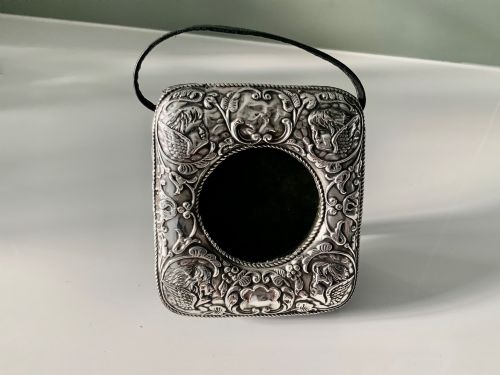
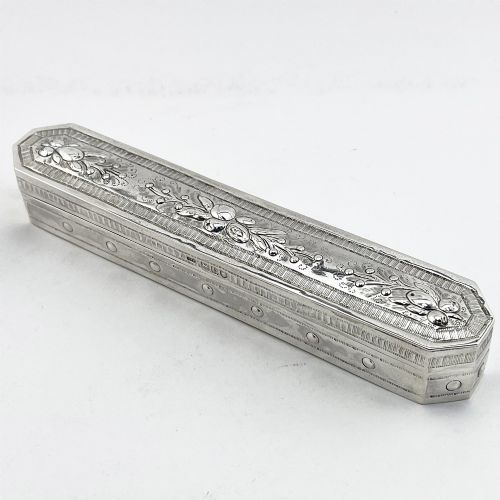
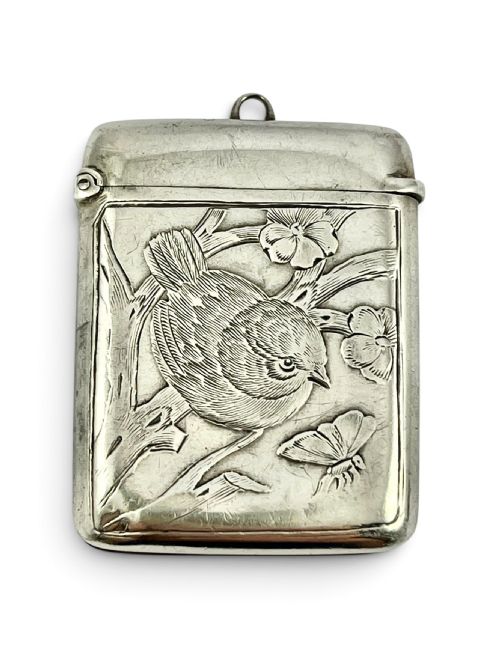
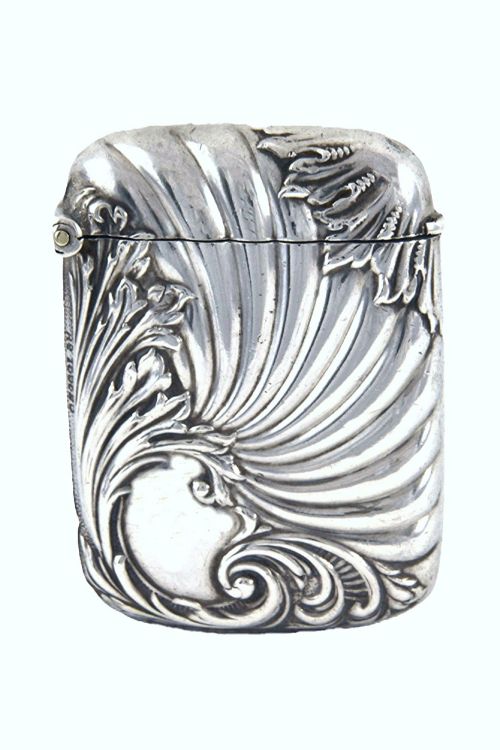




Embossed Silver Case
An embossed silver case is a tactile personal accessory or fitted container carrying hammered ornamentation, prized for intricate metalwork and historical utility.
Embossed Silver Case
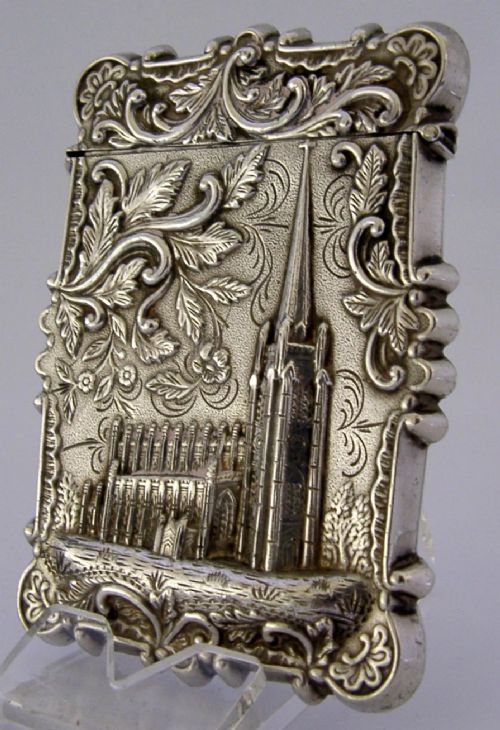
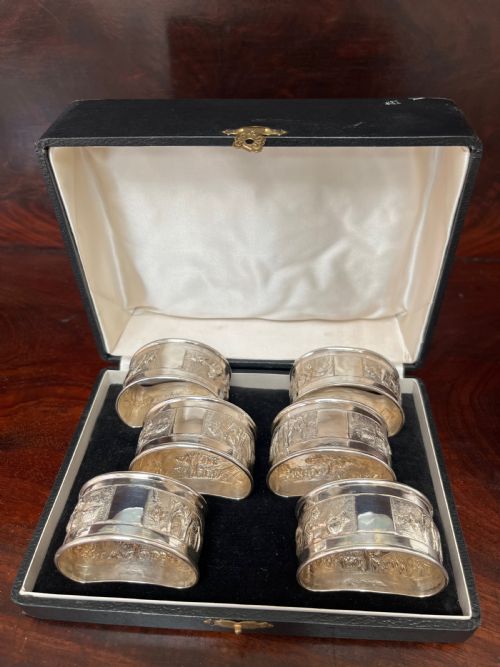
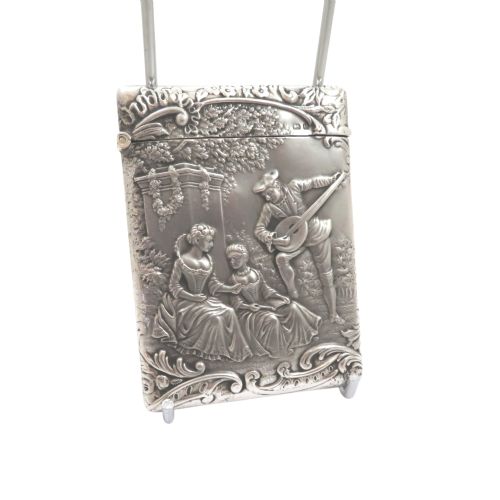
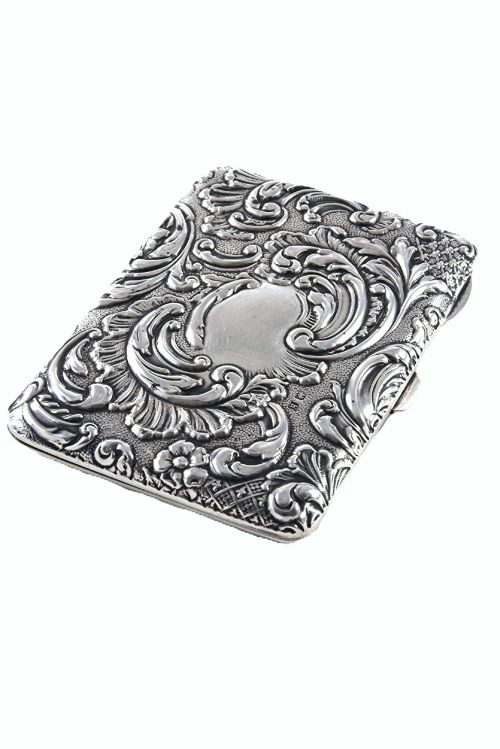
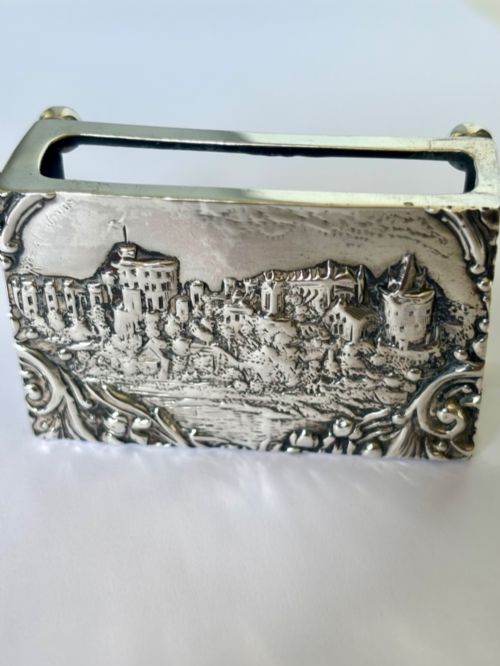
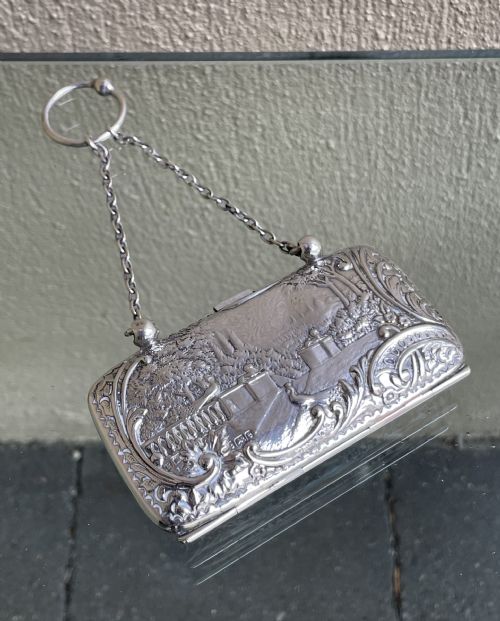
When searching for an embossed silver case, buyers encounter a diverse selection of personal and domestic receptacles spanning the Georgian, Victorian, and Edwardian eras. These items include card cases, vesta cases, matchbox covers, snuff boxes, and aide memoires designed for daily carriage or domestic storage.
Origins range from British assay offices in Birmingham and Chester to international workshops including Asian export and American makers. Forms vary from hinged matchbox sleeves and curved purses to rigid telegram folders and stamp dispensers.
Materials and construction techniques
Makers utilised sterling silver, silver plate, and silver gilt as the primary metallic foundations, occasionally combining the metal with steel mechanisms or internal linings of velvet and silk. Exterior decoration relied heavily on repoussé and embossing techniques, where artisans hammered the metal from the reverse side to create raised pictorial reliefs on the surface.
Cast components provided structural weight and rigidity for heavier snuff boxes and carriage clocks, while fine engraving added detail to handles and borders. Fitted presentation sets often incorporated glass bottles, silk-lined interiors, and secure metal hinges designed to protect delicate contents.
Embossed Silver Case Retail Price Guide 2026
Typical asking prices for embossed silver case among the pieces listed under this phrase on Sellingantiques today, from the lower quarter to the upper quarter. They describe what is for sale here now, not the wider market.
The listings span the Victorian, Edwardian, and Georgian periods, incorporating materials such as velvet, silk, glass, and sterling silver.
Assessing craftsmanship and condition
Quality in an embossed silver case rests upon the crispness of the chased or hammered relief and the depth of the metalwork. Superior examples retain sharp contours in the raised figural scenes and foliage without smoothing from excessive polishing or wear.
The integrity of the construction, including the precise alignment of hinged lids, the snug fit of slip-on covers, and the legibility of hallmarks, separates standard production items from finer workshop pieces. Interior fittings such as intact silk linings, original velvet bases, and well-preserved glass inserts further elevate the standard of a piece.
Stokes And Ireland Ltd·Henry Matthews
The Embossed Silver Case Glossary
- Repoussé
- A metalworking technique where the artisan hammers the design from the reverse side to form a raised pattern on the front. This method creates tactile, three-dimensional surface decoration.
- Vesta case
- A small pocket container designed to hold matches and keep them dry. These pieces typically feature a striking strip on the base and a spring-loaded hinged lid.
- Aide memoire
- A small pocket notebook or memorandum tablet equipped with leaves for jotting notes. They often feature an attached pencil and a decorative silver exterior.
- Hallmark
- An official stamp or series of marks applied to precious metals indicating the purity, the maker, and the assay office of origin. These marks provide definitive evidence of date and place.
- Silver gilt
- Sterling silver that has been coated with a thin layer of gold on its surface. This treatment provides a rich two-tone appearance and protects the interior metal.
Embossed Silver Case: Frequently Asked Questions
What was a vesta case used for?
A vesta case was an everyday pocket companion designed to safely store short matches known as vestas. Users relied on them to keep matches dry while carrying them in pockets or handbags.
The textured bottom of the case served as a striking surface to ignite the match before use. Wealthy Victorians carried ornate sterling silver versions as fashionable personal accessories.
How do I identify an Edwardian silver case?
Edwardian silver pieces date from the reign of King Edward VII between 1901 and 1910. Assay office date letters stamped on the metal provide the exact year of manufacture.
Stylistically, these items often exhibit flowing Art Nouveau influences, lighter construction than heavy Victorian pieces, and crisp embossed motifs ranging from portraits to pastoral landscapes.
How should I clean embossed silver?
Embossed silver requires gentle cleaning to preserve the dark contrast in the recessed areas of the design. Harsh chemical dips strip away the natural patina that highlights the hammered details.
Use a soft microfibre cloth and a mild, non-abrasive silver polish applied sparingly. Avoid rubbing directly against delicate high-relief edges to prevent unnecessary metal wear.