




Elm Wooden Carver Chair
An elm wooden carver chair is a sturdy vernacular seat built for daily use, combining local woods with robust joinery.
Elm Wooden Carver Chair
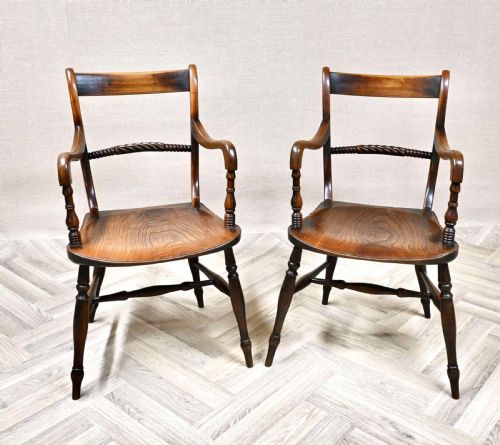
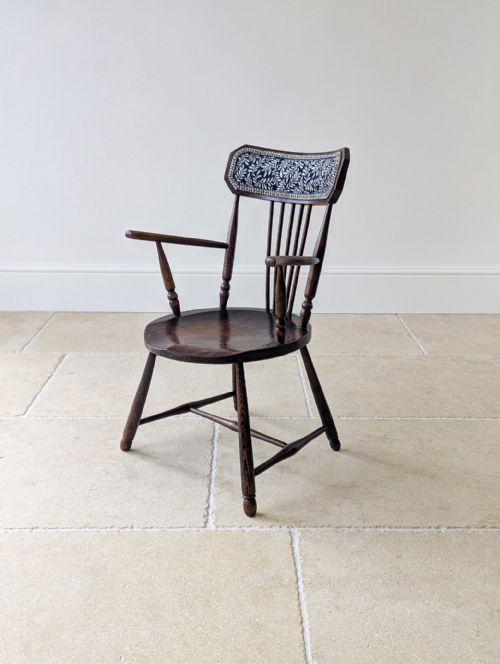
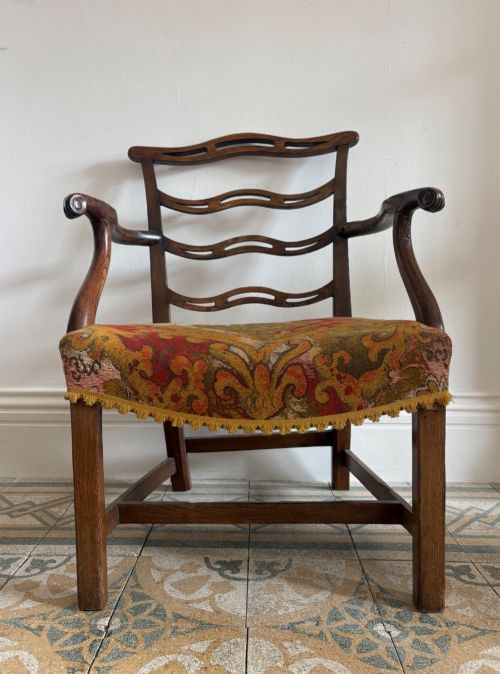
An elm wooden carver chair represents the traditional seating of English country workshops, built with arms for a desk, table head or fireplace. Most examples found here date from the eighteenth and nineteenth centuries, originating from regional traditions such as the Thames Valley, Lincolnshire or Nottinghamshire.
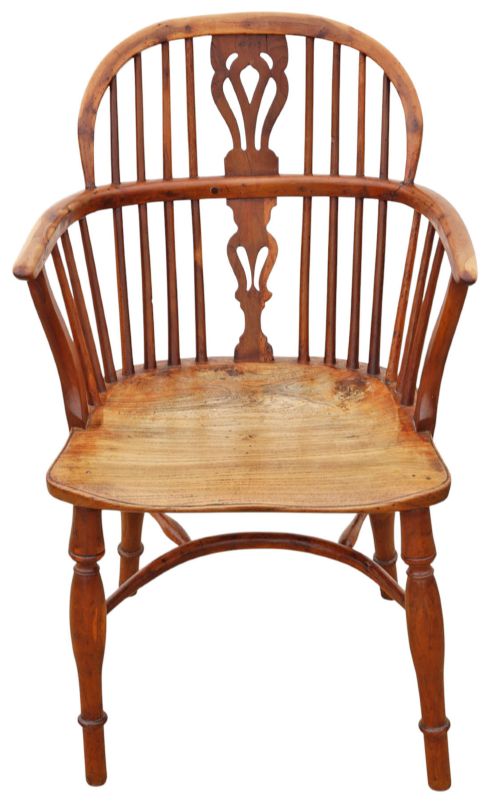
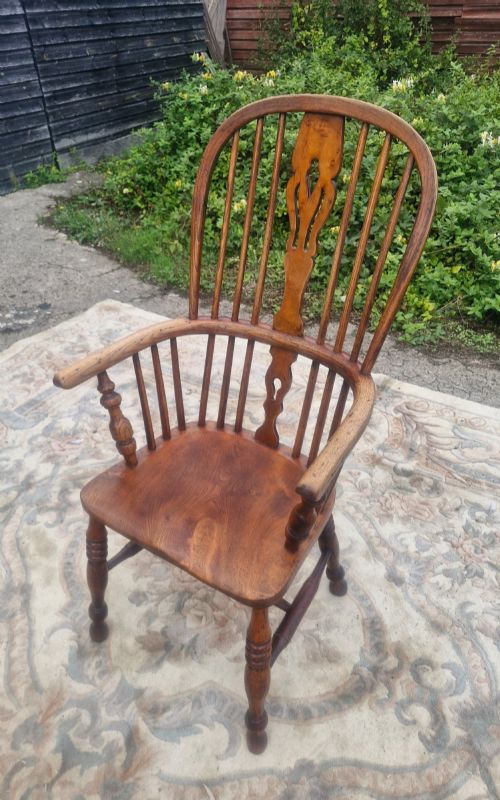
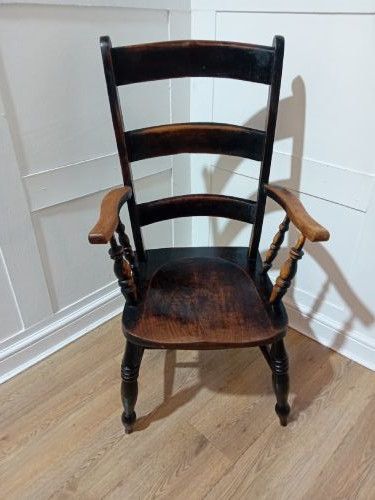
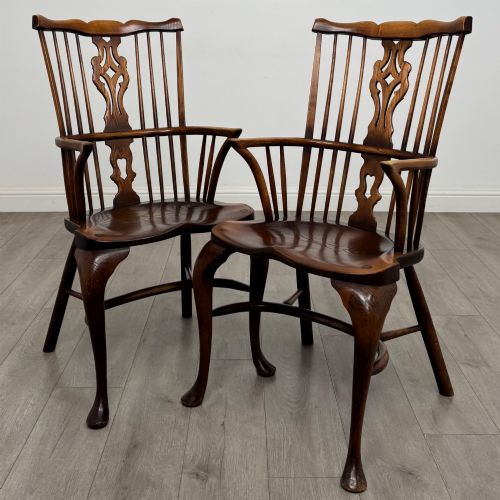
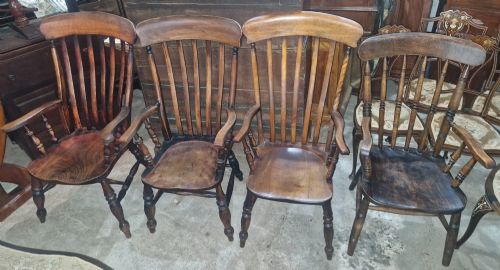
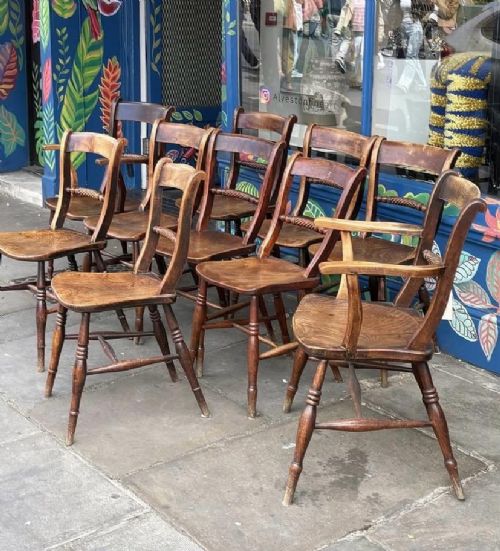
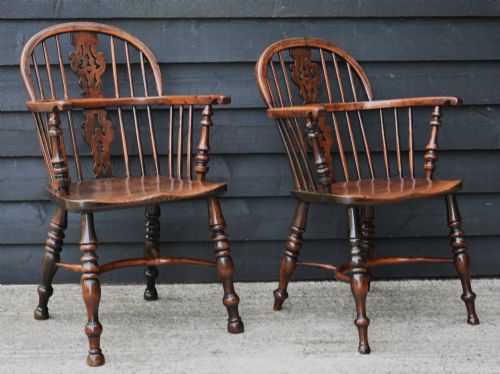
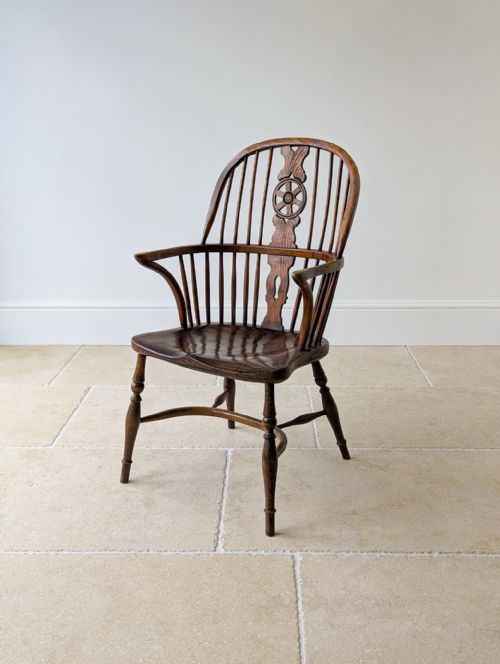
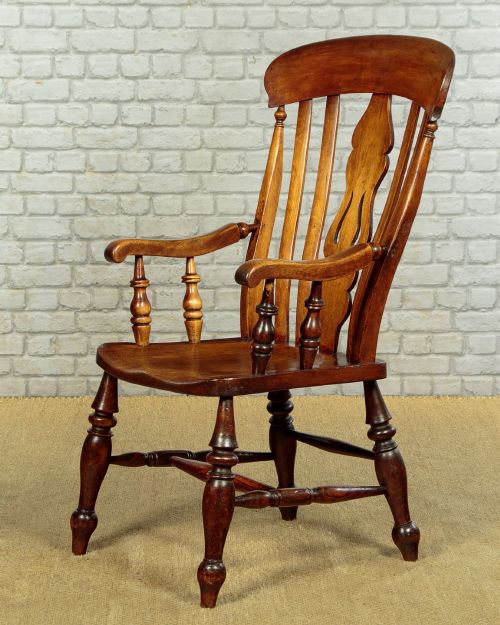
The form encompasses various vernacular designs, including Windsor armchairs with comb backs, wheelbacks or bar backs, alongside ladderback and spindle back variants. These heavy, functional seats were designed for farmhouses, kitchens and country homes rather than formal drawing rooms.
Makers utilised native timber, pairing elm seats with contrasting woods for spindles, legs and bentwood bows. The resulting armchair provides a tactile connection to historical domestic life through visible grain and honest construction.
How they were made
Makers carved solid elm into thick, saddle-shaped seats, chosen because the interlocking grain resists splitting when drilled and wedged. Underneath, turned legs of ash, beech or fruitwood enter the seat base through tapered holes, locked firmly in place with wooden wedges.
Upper frameworks rely on steam-bending green wood, particularly ash or yew, to form the curved bows and arm rests characteristic of Windsor chairs. Spindles and stretchers were shaped on pole lathes, then assembled into rigid structures using traditional mortise and tenon joints.
Surfaces were often left bare or finished lightly with natural oils, acquiring a deep patina over decades of handling. Seats were sometimes fitted with woven rush or upholstered pads, though many survive as plain timber boards.
Listings feature elm wooden carver chairs spanning the Georgian, Regency and Victorian periods, alongside twentieth-century country vernacular pieces.
What varies in quality
The distinction between standard utility seating and finer examples lies in the selection of timbers and the grace of the turning. Regional variations, such as the distinctive bentwood arm sweeps of Thames Valley chairs or the figured grain of combined yew and elm, separate local vernacular work from mass-produced workshop output.
Proportion and structural integrity dictate the presence of elegance in a rustic form. A well-balanced bow, slender yet strong spindles, and minimal replacement parts show that the chair was built by a skilled regional craftsman rather than a jobbing carpenter.
The Elm Wooden Carver Chair Glossary
- Carver chair
- An armchair designed to stand at the head of a dining table or serve as a desk seat. The term distinguishes an armed chair from matching side chairs.
- Windsor chair
- A chair built with a solid wooden seat into which the legs and back spindles are directly inserted. The back is constructed from bentwood bows or vertical slats.
- Crinoline stretcher
- An arched metal or wooden stretcher connecting the legs of a chair in a horseshoe shape, providing lateral stability. It takes its name from the hooped petticoats worn in the nineteenth century.
- Comb back
- A Windsor chair design where the top rail resembles the spine of a comb, featuring vertical spindles rising through a horizontal arm bow. This form often appears on eighteenth-century country examples.
- Bar back
- A chair back featuring one or more horizontal wooden slats running between the upright posts. It frequently incorporates turned spindles or decorative central roundels.
Elm Wooden Carver Chair: Frequently Asked Questions
What is an elm wooden carver chair?
An elm wooden carver chair is a sturdy armchair featuring a solid timber seat, commonly produced by regional English makers during the eighteenth and nineteenth centuries. These chairs served practical roles in farmhouses and country homes.
They combine heavy elm seats with turned wooden legs and bentwood backs, offering durability and comfort.
Where were these chairs made?
These chairs originated in regional workshops across England, with distinct styles developing in areas like the Thames Valley, Lincolnshire and Nottinghamshire. Local timber availability dictated the specific combination of woods used.
Craftsmen relied on native trees such as ash, beech, yew and fruitwood to build each component.
How do I care for an elm wooden carver chair?
Maintain the timber by keeping the chair away from direct heat sources and sudden humidity changes, which can cause wood to split. Dust regularly with a dry cloth and apply occasional clear wax to nourish the grain.
Avoid harsh chemical cleaners that strip the historic surface finish.
How do I date an antique chair?
Dating relies on observing construction marks, tool methods, timber wear patterns and overall design evolution from Georgian to Victorian periods. Hand-turned spindles, wedged joints and timber shrinkage indicators help place the piece in its era.
Comparing regional styles confirms whether a chair belongs to the eighteenth or nineteenth century.