
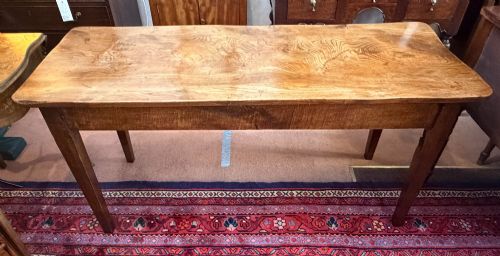
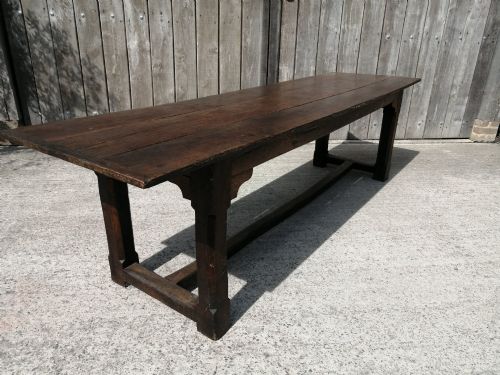
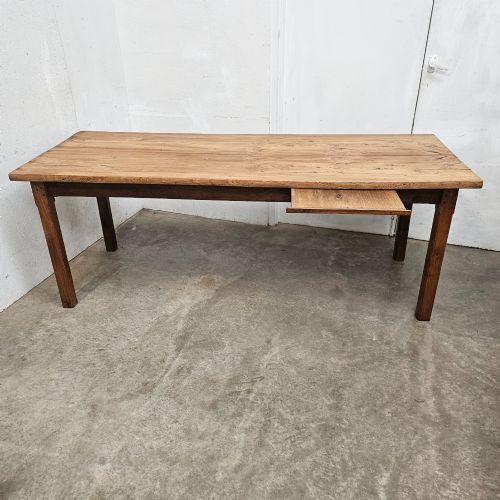
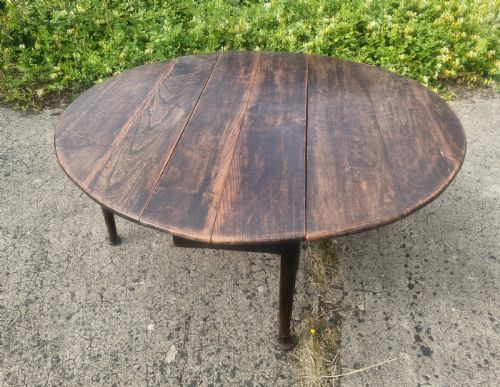


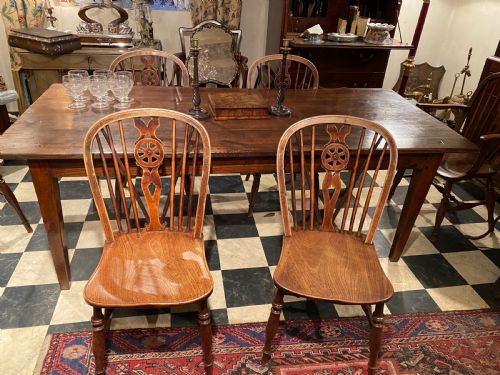

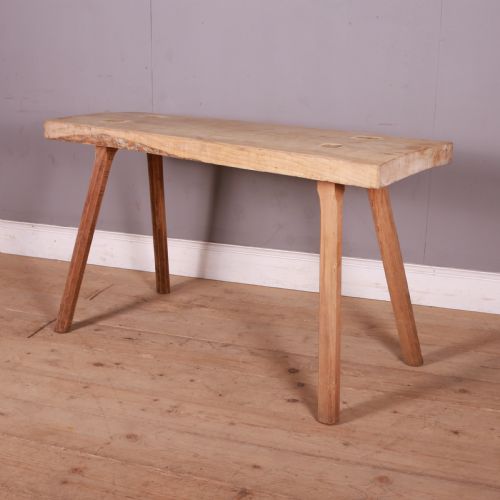


Elm Wood Dining Table
These elm wood dining table pieces bring honest timber and solid domestic utility into the room, built for daily gathering.
Elm Wood Dining Table
An elm wood dining table brings together provincial character and functional dining space, drawing on 18th century, Georgian, Victorian, and later periods. You will encounter rustic farmhouse forms, French provincial designs, and refectory styles suited to larger interiors.
The pieces on offer range from two board tops and dropleaf examples to long harvest tables and refectory constructions. Regional origins span English country workshops to South West France and Spain, often showing the sturdy proportions typical of rural furniture.
Associated seating and serving pieces such as benches, Windsor chairs, and console tables frequently appear alongside the core tables. These objects share the robust timber construction and straightforward craftsmanship characteristic of domestic country houses.
Materials and construction
Elm provides the primary surface material, valued for its interlocking grain and resistance to splitting under heavy use. Cabinet makers frequently combined elm with oak, sycamore, fruitwood, and occasional hardwood frames to build stable table tops and supportive underframes.
Construction techniques include turned legs, trestle supports, and plank-top joints secured by traditional pegging. Secondary elements incorporate brass fittings and metal hardware where drop-leaf mechanisms or extending frames require mechanical support.
Materials documented across the inventory include elm, burr elm, oak, sycamore, fruitwood, and occasional brass hardware.
Assessing quality and character
Quality rests in the selection of the timber, particularly figured burr elm or wide single boards that display natural grain movement. Superior examples exhibit balanced proportions and integrated structural joins that maintain stability across large spans.
The handling of the surface finish distinguishes standard utilitarian pieces from finer country workshop production. Scrubbed timber surfaces and patinated tops reflect decades of honest domestic service rather than heavy modern intervention.
Heals Of London
The Elm Wood Dining Table Glossary
- Elm
- A durable hardwood noted for its twisted, interlocking grain that resists splitting. It forms the characteristic robust top boards of traditional country furniture.
- Refectory Table
- A long, narrow dining table originally built for monastic dining halls. These pieces feature sturdy stretcher bases and generous lengths designed to seat many people.
- Trestle Table
- A table consisting of two or more supports connected by a horizontal beam holding a loose or fixed plank top. This form allows maximum legroom along the length of the surface.
- Drop Leaf Table
- A table with a fixed central section and hinged flaps on either side that fold down. This design offers flexibility in floor space and seating capacity.
- Burr Elm
- A growth deformity on the elm tree that produces highly figured, swirling grain patterns. Cabinet makers prized this timber for decorative table tops and circular breakfast pieces.
Elm Wood Dining Table: Frequently Asked Questions
How do I care for an elm wood dining table?
Keep the timber away from direct heat sources and sudden humidity shifts to prevent the grain from splitting.
Apply natural beeswax periodically to nourish the surface and maintain the natural patina of the wood.
Are these tables suitable for daily family use?
Elm is a notoriously tough hardwood that resists splitting, making these tables exceptionally well suited for daily meals and heavy domestic activity.
Most examples were originally built for hard service in farmhouses and kitchens, so they handle normal daily wear with ease.
How can I tell the period of a country table?
Examine the construction methods beneath the top, looking at how the legs join the frame and whether pegged tenons are present.
Tool marks, timber shrinkage, and the type of secondary woods used provide strong clues to whether a piece originates in the 18th or 19th century.
What is the difference between a refectory and a harvest table?
Refectory tables traditionally feature formal stretcher bases and stem from monastic or large hall dining traditions.
Harvest tables are typically lighter French or English country pieces designed to be moved easily for seasonal gatherings and large meals.