





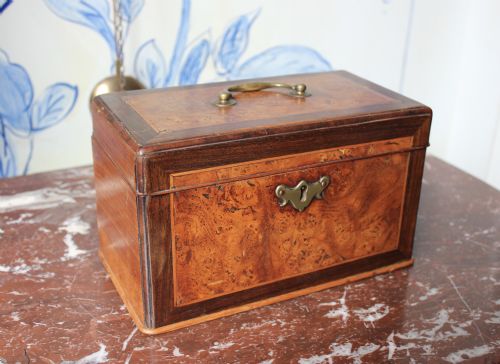

Elm Wood Box
These elm wood box pieces range from Georgian six-plank coffers to Chinese lacquer marriage cabinets, offering robust timber storage with distinct regional character.
Elm Wood Box
An elm wood box spans utilitarian blanket chests, Georgian six-plank coffers, and compact table-top storage from domestic workshops. Buyers searching this phrase encounter both British country vernacular work and Eastern pieces.
The regional variety stretches from eighteenth-century Georgian and Regency pieces to Qing Dynasty Chinese cabinets and Swedish teapoys. Forms range from large coffers and settles to small cigar humidors and tea caddies.
Plain domestic elm and highly figured burr elm dominate the British domestic examples, whilst red lacquer and distinct joinery mark the imported Asian pieces. Each serves as a functional storage vessel with pronounced grain patterns.
Materials and construction
Makers utilised solid elm and burr elm for their tough, interlocking grain, often pairing the timber with brass or iron hardware such as hinges and carrying handles. This structural toughness suited heavy-duty domestic storage like blanket boxes and coffers.
Surface treatments vary from simple waxed finishes on vernacular country pieces to pigmented red lacquer on nineteenth-century Chinese marriage cabinets. Secondary timbers like oak appear in framing, whilst glass and metal feature on specialised items like cellarettes and humidors.
Elm Wood Box Retail Price Guide 2026
Typical asking prices for elm wood box among the pieces listed under this phrase on Sellingantiques today, from the lower quarter to the upper quarter. They describe what is for sale here now, not the wider market.
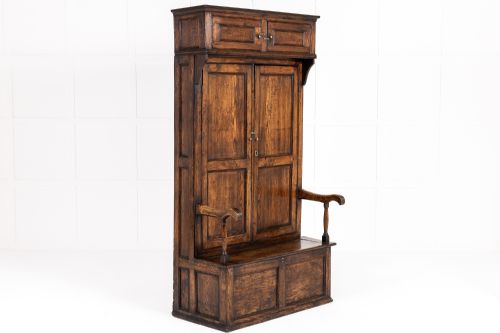
An eighteenth-century bacon settle combines structural timber seating with enclosed box storage underneath, keeping dry-cured meats safely out of the dog's reach.
Assessing quality and character
Quality rests primarily in the figure of the wood, particularly where burr elm displays rich, swirling grain patterns across the primary surfaces. Plain timber relies on honest, sturdy board construction and minimal later alterations.
Original hardware and fittings elevate a piece significantly, as replaced brasses or altered hinges alter the historical integrity. The refinement of the original joinery, from simple six-plank boards to sophisticated dovetails, dictates the tier of the piece.
The Elm Wood Box Glossary
- Six-plank coffer
- A primitive chest constructed from six individual boards joined simply at the edges. This method represents some of the earliest and most robust vernacular box construction.
- Burr elm
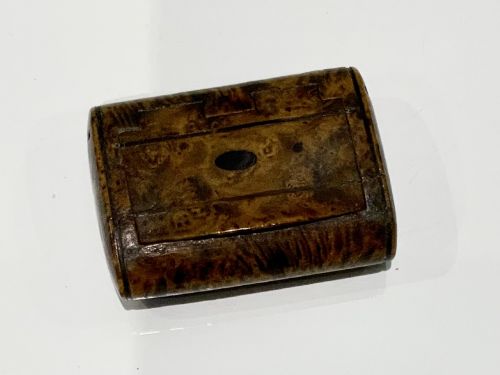
- A woody growth on an elm tree that produces intricate, knotted grain patterns. Cabinet makers prized this timber for high-status decorative surfaces on tea caddies and cabinets.
- Cellarette
- A fitted storage cabinet designed for holding wine bottles or decanters. These lockable containers frequently feature lead linings or internal wooden divisions.
- Teapoy
- A small stand or box historically used to store loose tea leaves. They often feature internal compartments and caddies to keep expensive tea secure.
- Marriage cabinet
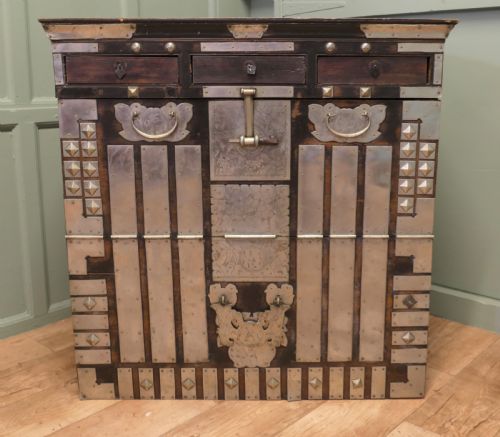
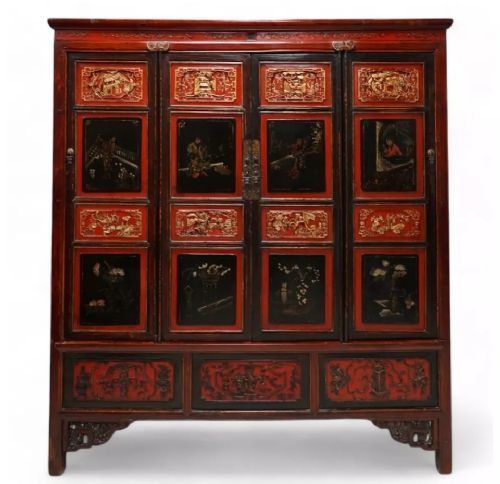
- A large storage cupboard traditionally given as part of a bride's dowry in China. These pieces frequently display bright lacquered finishes and elaborate metalwork.
Elm Wood Box: Frequently Asked Questions
What is a six-plank coffer?
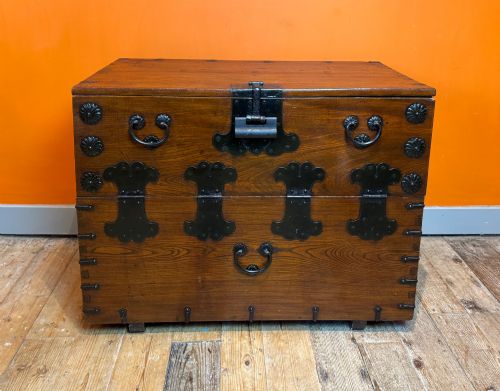
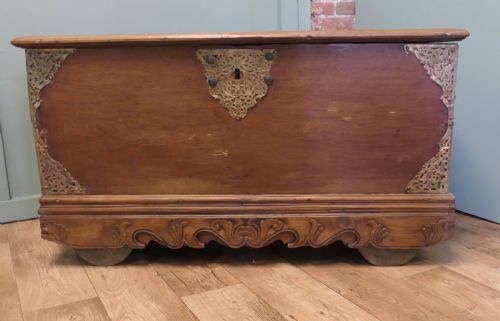
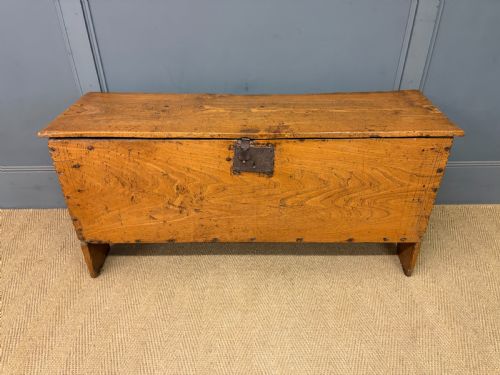
A six-plank coffer is a simple chest built from six boards of timber forming the base, sides, ends and lid. These pieces rely on basic board construction rather than complex framing.
They date primarily to the eighteenth and nineteenth centuries in British country vernacular furniture. Their straightforward utility made them common in homes for storing blankets and household goods.
How do I care for elm furniture?
Elm responds well to occasional waxing with a traditional beeswax polish to nourish the timber. Avoid placing these boxes near direct heat sources or in fluctuating humidity.
Keeping the timber away from extreme temperature shifts prevents the dense grain from splitting. Gentle dusting with a dry cloth is sufficient for daily maintenance.
What is burr elm?
Burr elm is a specialised grain pattern taken from a growth on the tree. It creates a swirling, highly decorative surface texture prized by cabinet makers.
This material appears on decorative items like tea caddies, humidors and cellarettes. The intense figuring makes each piece entirely unique visually.
Where were these boxes made?
The selection includes British country vernacular pieces alongside nineteenth-century Eastern and Chinese imports. British workshops utilised local elm, while overseas pieces brought distinct regional lacquers.
This geographical spread means forms range from Swedish teapoys to Qing Dynasty marriage cabinets. Each origin dictates the specific decorative style and hardware used.
How do I distinguish regional styles?
British vernacular pieces typically show exposed dovetails, iron strap hinges and plain waxed elm surfaces. Eastern pieces often feature red lacquer, brass pin hinges and distinct internal shelving.
Looking at the construction methods and secondary materials reveals the workshop tradition. Joinery techniques vary significantly between European country makers and Asian cabinet shops.