


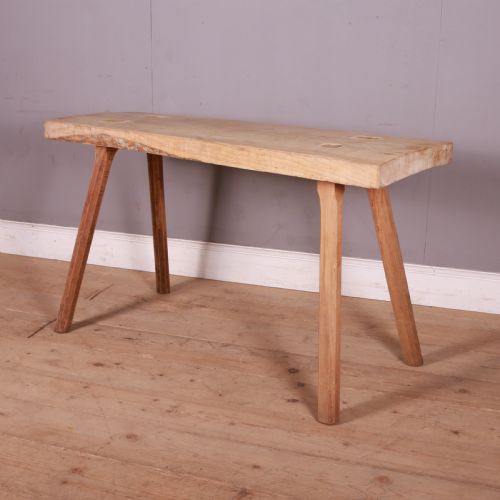


Elm Trestle Bench
An elm trestle bench brings honest grain and sturdy construction into a room, offering simple seating built to last generations.
Elm Trestle Bench
An elm trestle bench serves as a practical seat or long surface, drawing on traditions of utility found across English, French, and Chinese workshop designs. When buyers search for an elm trestle bench, they encounter forms ranging from late nineteenth-century West Country pig benches to French provincial seating and tavern tables.
The pieces listed here lean heavily towards nineteenth-century examples, alongside early twentieth-century French items and Georgian tavern tables. Construction varies from simple timber planks to pairs of long benches designed to accompany communal tables.
How they were made
Makers relied on solid hardwoods, pairing durable elm tops with supportive oak or sycamore structures to handle daily weight and wear. Timber planks were selected for strength and finished with scrubbed surfaces that highlighted the natural grain.
Joinery remained straightforward and robust, utilising trestle supports and pegged joints rather than decorative veneers. This method ensured stability across long seating spans, whether in a West Country workshop or a French provincial kitchen.
Elm Trestle Bench Retail Price Guide 2026
Typical asking prices for elm trestle bench among the pieces listed under this phrase on Sellingantiques today, from the lower quarter to the upper quarter. They describe what is for sale here now, not the wider market.
Listings feature elm combined with oak, sycamore, and hardwood across French provincial, Arts and Crafts, and Georgian styles.
What varies in quality
The distinction between ordinary utility work and superior examples lies in the depth of the timber's patina and the integrity of the original surface. Pieces that retain their scrubbed texture and rich colour show the honest results of age and use.
Proportion and balance also set finer items apart, as well-balanced trestle supports provide steady weight distribution without clumsy timber additions. The character of the grain on the plank top dictates the visual presence of each bench.
The Elm Trestle Bench Glossary
- Trestle bench
- A long seat supported by two or more upright frames connected by a horizontal stretcher. This format allows maximum legroom alongside a table.
- Pig bench
- A low, sturdy utilitarian bench historically used in rural farmhouses for butchery or heavy domestic tasks. These pieces are prized today for their low profile and rustic charm.
- Scrubbed finish
- A timber surface washed repeatedly with water and soap to clean the grain, leaving a pale, matte texture. French country furniture frequently displays this characteristic treatment.
- Patina
- The surface sheen and darkening developed by wood over decades of handling, polishing, and exposure to light. A rich patina indicates untouched age.
Elm Trestle Bench: Frequently Asked Questions
Where should I put an elm trestle bench?
These benches sit comfortably along a dining table, in a wide hallway, or beneath a window as a low seat. Their narrow footprint makes them useful in spaces where chairs might crowd the room.
Because the construction is sturdy, they handle daily sitting without trouble. Pair one with a rustic table for an informal dining arrangement.
Are these benches comfortable for sitting?
Most historic benches were built for utility rather than upholstered ease, offering firm wooden seating. Adding a simple linen cushion softens the seat for longer dinners.
The height and depth vary depending on whether the piece served as a tavern table seat or a low farm bench, so check dimensions against your table.
How can I tell the age of the timber?
Age shows in the tool marks, timber shrinkage, and the softness of the grain where years of use have worn the edges. Hand-cut joints and uneven plank widths point to nineteenth-century or earlier workshop practices.
Examine the underside for signs of old fixings and natural oxidisation that modern machinery cannot easily replicate.