


Elm Kitchen Stools
Elm kitchen stools bring honest, tactile utility into modern rooms, offering robust seats shaped by generations of practical use.
Elm Kitchen Stools
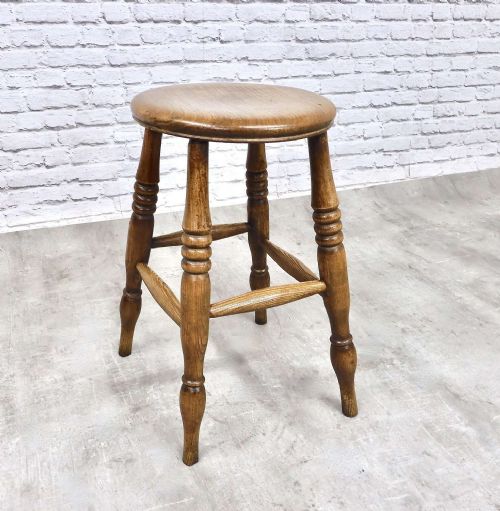
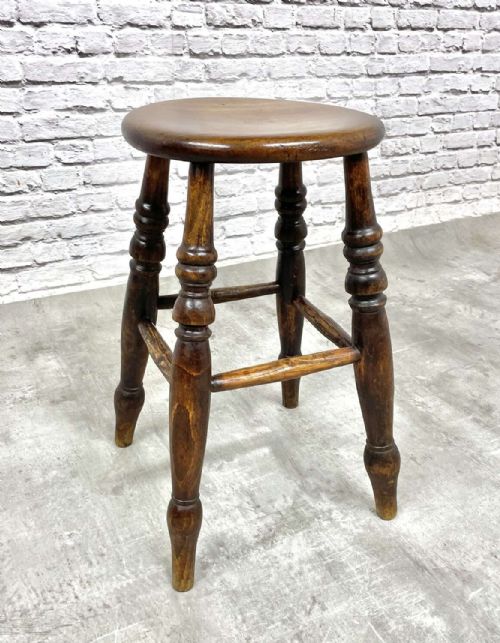
Elm kitchen stools encompass rustic seating forms built for utilitarian service in domestic, dairy, and industrial settings across the nineteenth and twentieth centuries. These pieces reflect vernacular English country traditions where local timbers served specific functional demands.
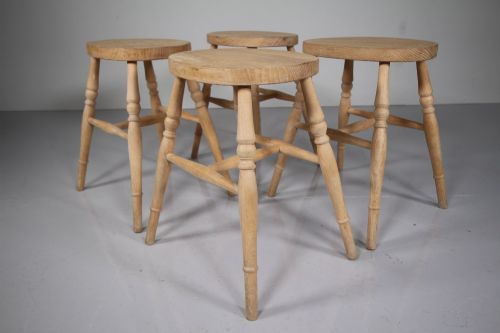
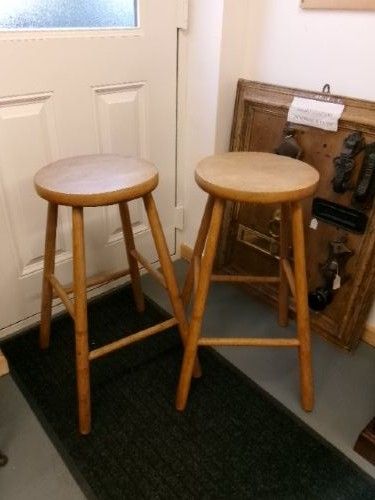
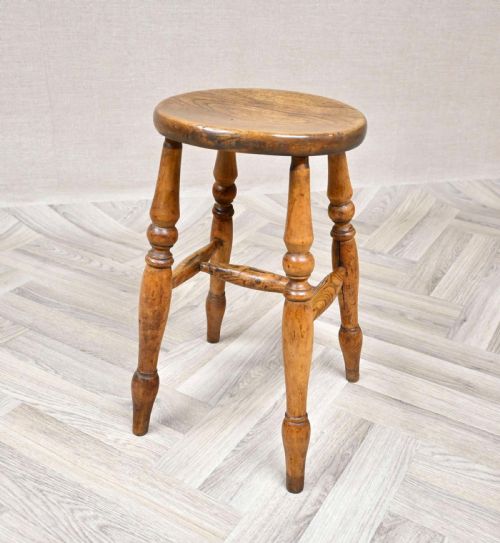
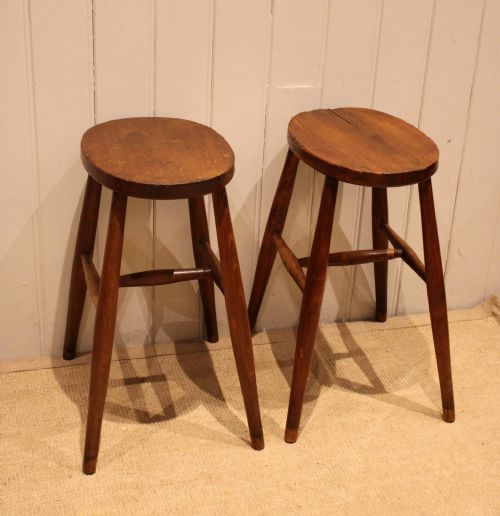
The varieties on this page range from low dairy and Windsor forms to tall bar stools and dining sets. Buyers will most frequently encounter nineteenth century pieces and Edwardian examples featuring characteristic turned legs and thick timber tops.
How they were made
Makers utilised solid elm for seats because the interlocking grain resists splitting under heavy daily use. This hardwood was commonly paired with beech, ash, or oak for turned legs and stretchers to provide rigid structural support.
Construction relied on traditional joinery methods, notably through-tenoned joints and wedged legs inserted directly into shaped timber slabs. Certain workshop examples also survive in original paint finishes applied to protect the wood.
Listings feature items built from solid elm, beech, ash, and oak across the nineteenth and twentieth centuries.
What varies in quality
The distinction between ordinary utility items and superior examples lies in the character of the timber and the harmony of the turning. A deeply figured elm seat with rich patination shows greater age and careful selection by the original maker.
Structural integrity and proportion also dictate worth, as stools retaining their original height without excessive wear to the footrests demonstrate careful preservation. The balance between the turned undercarriage and the saddle-shaped seat reveals the skill of the rural carpenter.
The Elm Kitchen Stools Glossary
- Windsor stool
- A traditional seating form characterised by legs wedged directly into a solid, shaped wooden seat. These pieces often feature skilled turning on the undercarriage.
- Vernacular
- Everyday objects made by local tradesmen using regional materials and traditional designs rather than high-style workshop patterns. This approach prioritises function and local availability above all else.
- Dairy stool
- A low, three-legged or four-legged seat used historically for milking cows by hand. Their simple construction made them easily moveable around farm buildings.
- Patina
- The deep surface sheen and colour developed by wood over decades of handling, cleaning, and exposure to light. It serves as a visual indicator of age and genuine use.
Elm Kitchen Stools: Frequently Asked Questions
Are elm kitchen stools sturdy enough for daily use?
These pieces were originally built for demanding environments like dairies, mills, and farmhouses. Their solid hardwood construction makes them exceptionally durable for modern kitchen seating.
The interlocking grain of elm prevents the seat boards from splitting under regular weight. Modern owners can safely use them daily without concern for structural failure.
How do I identify a nineteenth century elm stool?
Nineteenth century examples typically exhibit hand-turned legs showing minor irregularities from lathe work. The undersides often reveal traditional wedged tenon joints where the legs pass right through the seat.
Tool marks left by adzes or drawknives on the surface of the seat further distinguish older handmade pieces from later factory reproductions.
What is the difference between dairy stools and bar stools?
Dairy stools are built low to the ground for seated tasks performed at close quarters. They usually feature simple slab seats and short, sturdy legs designed for stability on uneven floors.
Bar stools and tall mill worker variants stand significantly higher, incorporating structural footstools or stretchers around the base. These taller formats were designed for standing workers or elevated counters.
Should I oil or wax an antique elm stool?
Maintaining the dry, honest surface of old timber requires minimal intervention. Applying a traditional beeswax preserves the wood without creating an artificial gloss that obscures the grain.
Avoid modern synthetic varnishes or heavy oils that alter the historic colour and moisture balance of the wood. Gentle cleaning with a dry cloth keeps the surface stable.