

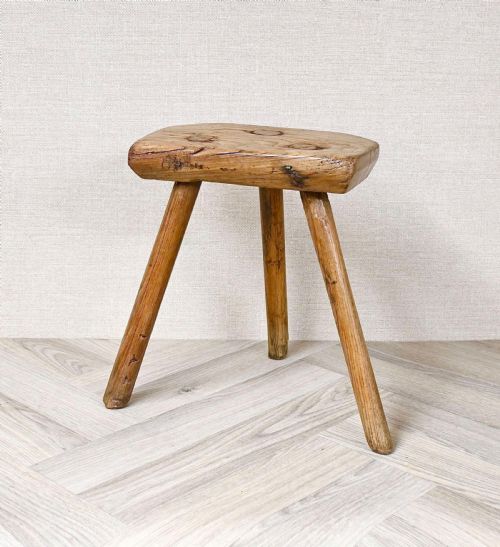


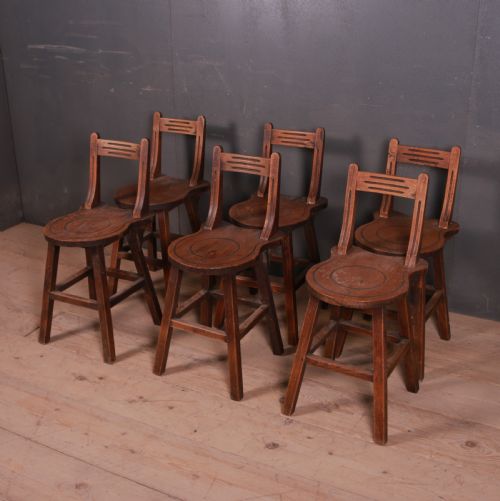
Elm Carved Stool
An elm carved stool brings solid domestic utility and rustic grain directly into a room.
Elm Carved Stool
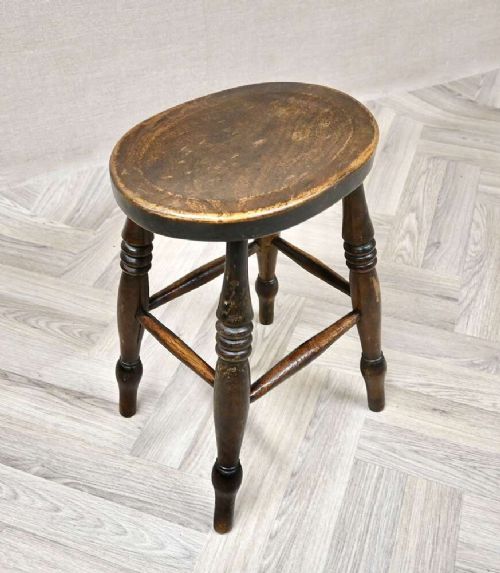
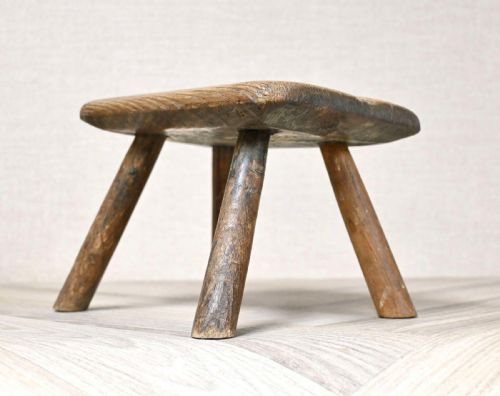
An elm carved stool is a seating piece shaped from native timber, appearing across country, primitive, and period styles. These items range from simple low milking designs and Windsor oval seats to close stools and architectural hearth benches.
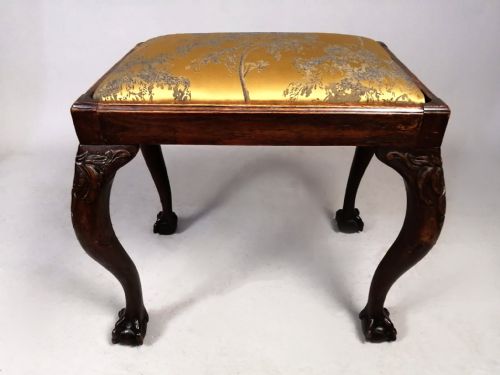
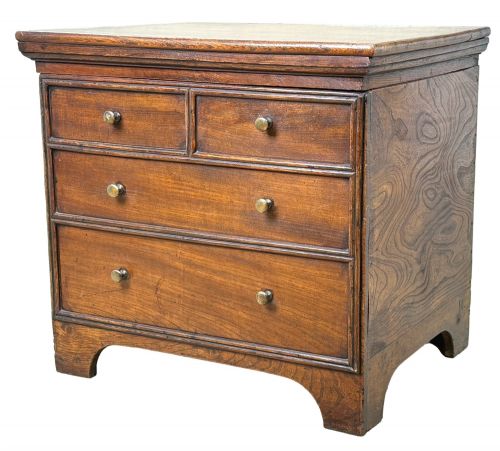
Buyers meet pieces originating from the eighteenth and nineteenth centuries, alongside Chinese vernacular and Swiss examples. Forms vary from simple three-legged milking seats to panelled close stools disguised as small Georgian bedside chests.
The category extends beyond basic domestic seating to include bar stools and matched pairs of low tables or benches that share timber construction. Such pieces offer compact utility suited to both traditional and eclectic interiors.
Materials and construction methods
Makers relied primarily on elm, supplemented by oak, pine, and various hardwoods selected for their strength and distinctive grain. Timber was shaped into solid oval seats, panelled sides, and turned legs using traditional joinery.
Brass hardware occasionally appears on more complex forms such as close stools, while silk details or secondary woods like pine support specific internal configurations. Construction techniques lean heavily on vernacular carpentry traditions practiced by regional craftsmen.
The listings show elm combined frequently with oak, pine, and brass across rustic country, Chinese vernacular, and Reformed Gothic styles.
Assessing quality and character
Quality rests in the choice of timber and the depth of the carving on the seat or apron. Highly figured burr elm or dense hardwood displays superior figure compared to plain utility timber.
Proportion and the integrity of the original joints dictate desirability. Pieces showing honest domestic wear retain greater visual weight than later adaptations or heavily restored examples.
The Elm Carved Stool Glossary
- Elm
- A durable hardwood known for its interlocking grain and resistance to splitting, making it ideal for solid seats. It frequently shows rich figuring and deep patination.
- Close stool
- An enclosed wooden box seat designed to house a chamber pot, often disguised as a small chest or bedside cabinet. These pieces combine domestic utility with concealed joinery.
- Windsor
- A style of seating characterised by turned spindles and a solid carved wooden seat fitted with legs wedged directly into the base. This method provides robust structural stability.
- Vernacular
- Architecture and furniture built by local craftsmen to meet regional practical needs using accessible materials. These objects reflect local tradition rather than grand court design.
- Hearth stool
- A low bench placed near a fireplace for sitting close to the heat. They often feature simple proportions and sturdy timber construction.
Elm Carved Stool: Frequently Asked Questions
What is an elm carved stool used for?
These pieces served practical household roles ranging from milking and fireside seating to bedside sanitation in the form of close stools.
Today, buyers utilise them as low occasional seats, bedside tables, or decorative stands within a room.
How do I tell an 18th century elm stool apart?
Eighteenth-century examples often display simpler, heavier primitive construction, deeper surface patination, and hand-tooled peg joinery.
Nineteenth-century variants frequently incorporate turned components, sophisticated Windsor framing, or stylistic influences such as Reformed Gothic and Arts and Crafts.
Where did country elm stools originate?
Country stools were produced locally by regional carpenters across Britain, Switzerland, and China using native hardwoods available to the workshop.
Each regional tradition dictates the turning style, leg splay, and seat shaping found on the finished piece.
How do I care for antique elm furniture?
Keep elm furniture away from direct heat sources and sudden temperature shifts to prevent the timber from drying out or splitting.
Apply traditional wax sparingly and buff gently with a soft cloth to maintain the natural lustre of the wood.