




Elm Bow Back Chair
An elm bow back chair brings substantial country character to a room through its sturdy timber construction and time-honoured Windsor form.
Elm Bow Back Chair
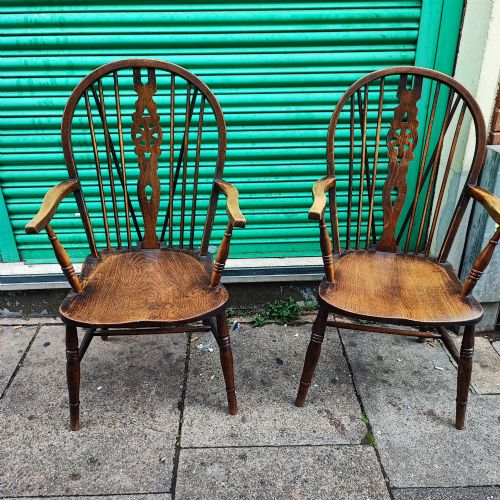
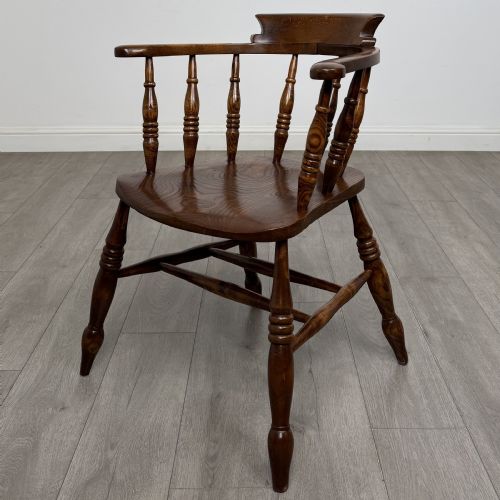
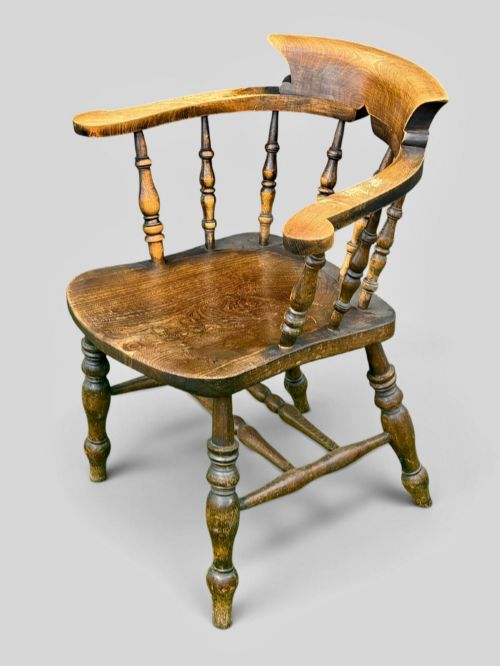
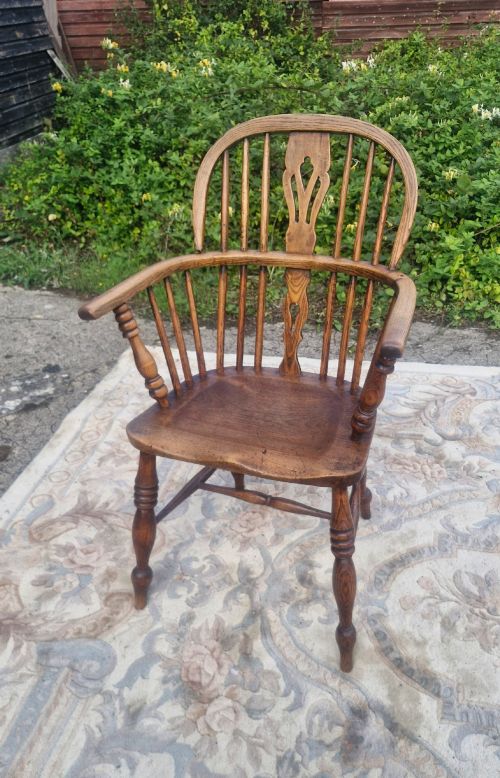
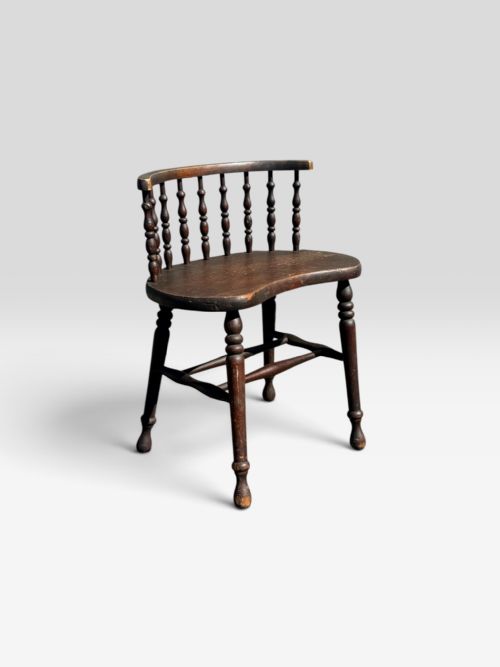
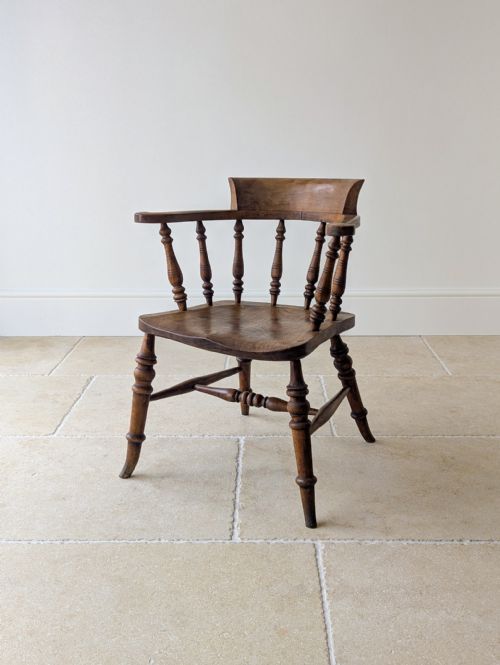
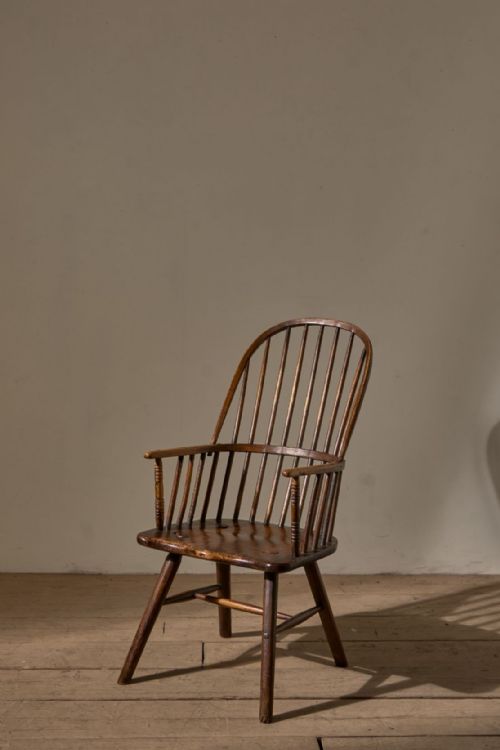
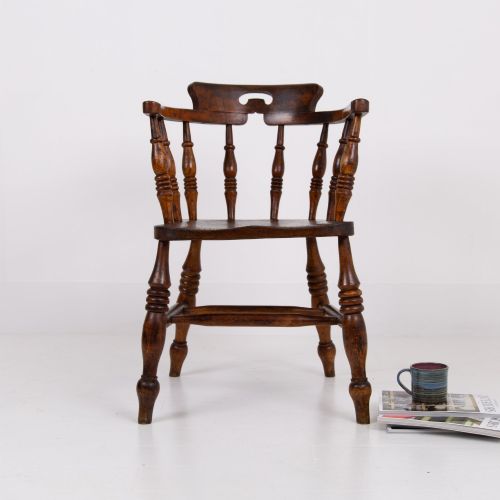
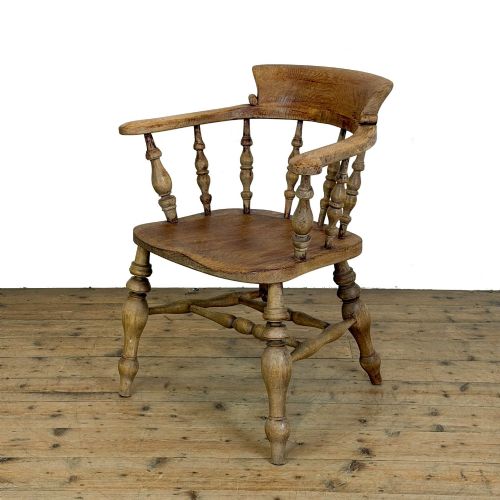
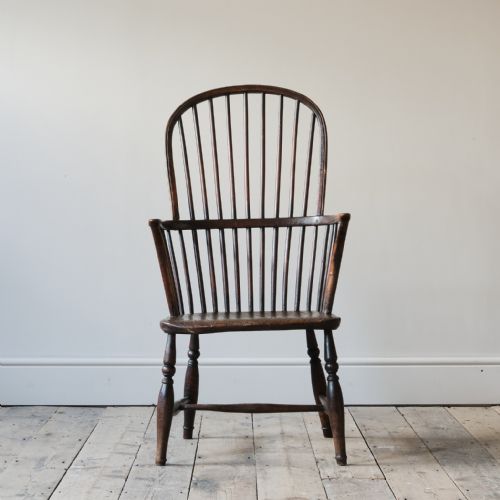
An elm bow back chair is a robust country seating form primarily encountered in low back, smoker's bow, and hoop back designs. These traditional pieces span from the eighteenth century through the Victorian period and into the early twentieth century.
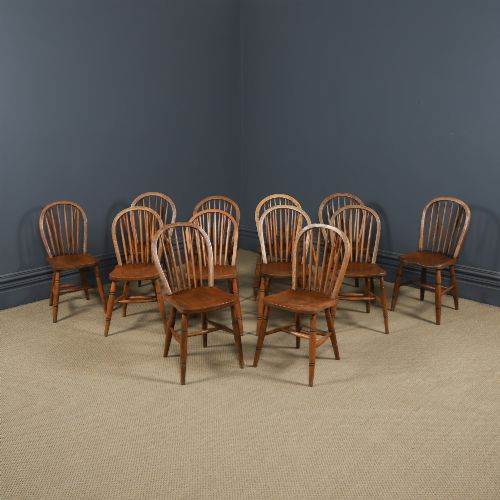
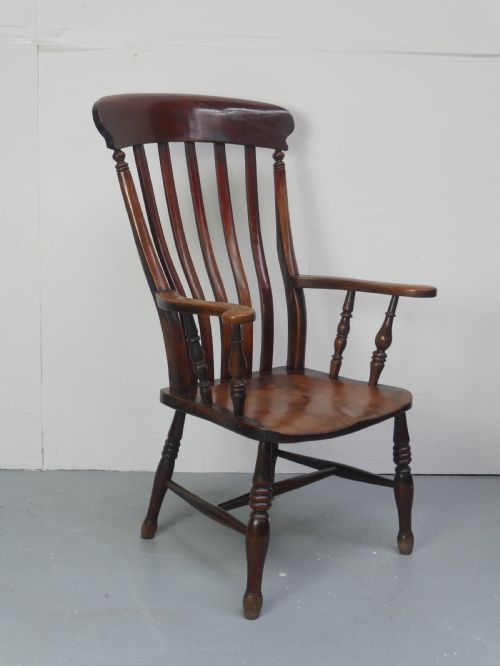
The selection here comprises armchairs, desk chairs, dining chairs, and rocking chairs built in English vernacular traditions. Examples frequently combine elm seats with ash, beech, or yew components.
Makers produced these functional chairs for farmhouses, kitchens, and studies using regional vernacular styles. Buyers typically find sturdy armchairs designed for daily utility rather than formal parlour display.
How They Were Made
Craftsmen built these chairs by joining solid timber components, shaping elm into thick, comfortable saddle seats. They turned ash, beech, or oak on lathes to form the spindles and legs.
Constructed using traditional frame-making methods, the backbones rely on bent wooden bows secured into drilled seats. Artisans wedged spindles and legs tightly into place to ensure lasting structural strength without relying on metal fixings.
Elm Bow Back Chair Retail Price Guide 2026
Typical asking prices for elm bow back chair among the pieces listed under this phrase on Sellingantiques today, from the lower quarter to the upper quarter. They describe what is for sale here now, not the wider market.
Many smoker's bows earned their glossy surfaces simply from decades of elbows resting comfortably on the wooden arms.
What Varies in Quality
Quality rests upon the choice of timber and the depth of the seating plank. Chairs utilising burr yew or richly grained elm display superior visual character compared to plain utility timber.
The harmony of the turned spindles and the grace of the bent bow separate standard utilitarian chairs from finer country examples. Original surface patination and minimal structural replacement maintain the integrity of an antique piece.
The Elm Bow Back Chair Glossary
- Smoker's bow
- A low-backed armchair with a continuous curved wooden rail forming the armrests and back, popular in nineteenth-century smoking rooms and inns.
- Windsor chair
- A chair built with a solid wooden seat into which the legs and back spindles are directly fitted. This construction provides exceptional stability.
- Hoop back
- A continuous bentwood rail that forms the upper back of a chair, often supported by vertical spindles.
- Vernacular
- Objects designed by local tradesmen for practical everyday use rather than following strict academic architectural styles.
- Patina
- The surface sheen and colour developed over decades of handling, polishing, and natural ageing.
Elm Bow Back Chair: Frequently Asked Questions
Where were these chairs used?
These chairs served hardworking roles in farmhouse kitchens, rural cottages, offices, and country inns. Their robust construction suited daily seating demands.
They moved easily between dining tables, writing desks, and firesides depending on household needs.
How do I date a chair?
Dating relies on observing construction techniques, tool marks on the underside of the seat, and timber ageing. Earlier eighteenth-century examples often display broader proportions and different spindle arrangements.
Victorian and Edwardian pieces frequently incorporate beech alongside elm and show more standardised turning.
Are these chairs comfortable?
The thick elm seats are carved into shallow saddle shapes that accommodate the body surprisingly well. Supportive low or high bows offer reliable arm and back placement.
Generous proportions allow for extended sitting during meals or desk work.
Can I mix these with modern furniture?
The warm tones of elm, ash, and beech blend naturally with contemporary interior materials. A single country armchair adds texture against clean architectural lines.
Sets of dining chairs bring historical depth around modern dining tables without looking out of place.