



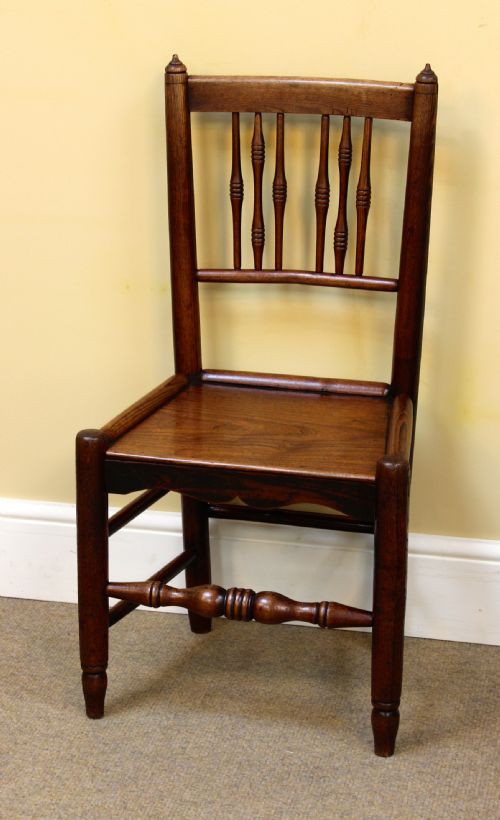


Elm and Ash Kitchen Chairs
Elm and ash kitchen chairs bring the honest grain and functional strength of 19th-century domestic life directly into modern dining spaces.
Elm and Ash Kitchen Chairs
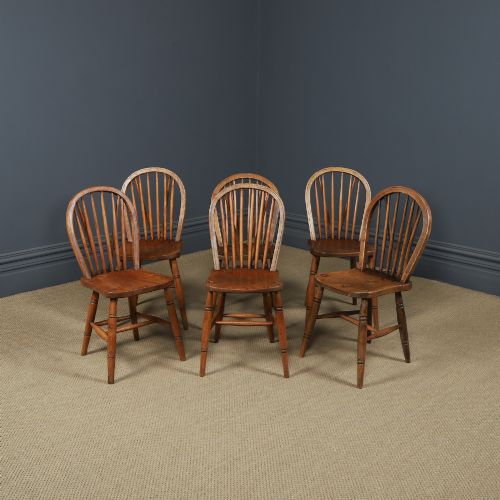
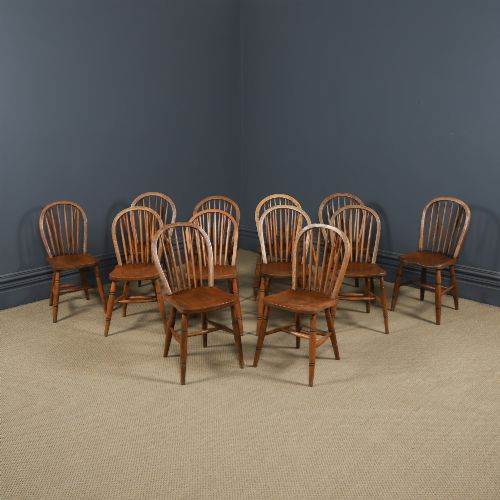
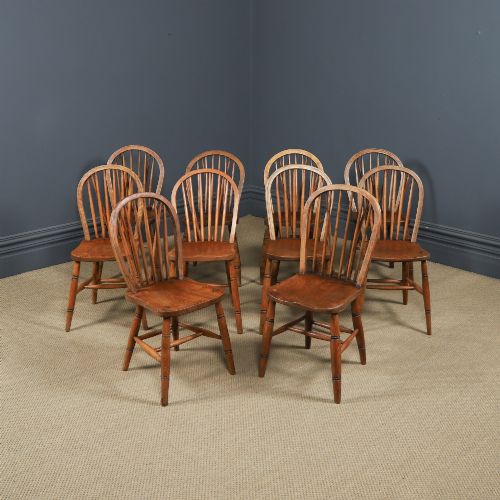
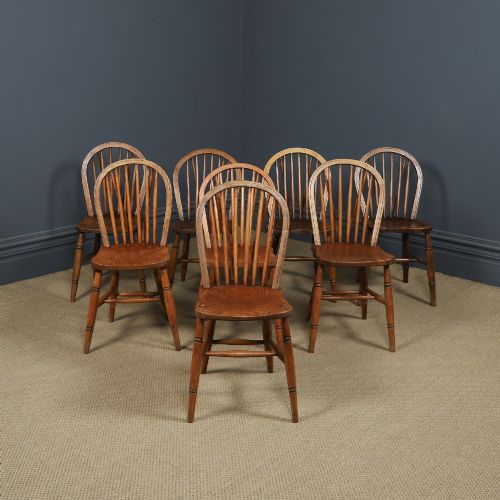
Elm and ash kitchen chairs are vernacular seats designed for practical daily use in farmhouses and domestic kitchens. These pieces span periods from the mid-19th century through to the early 20th century, emerging in styles such as English Country, Victorian Country, and Edwardian Country.
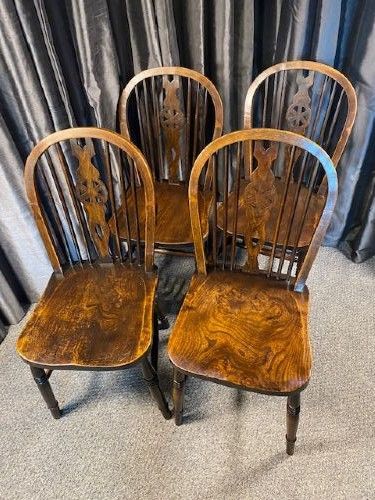
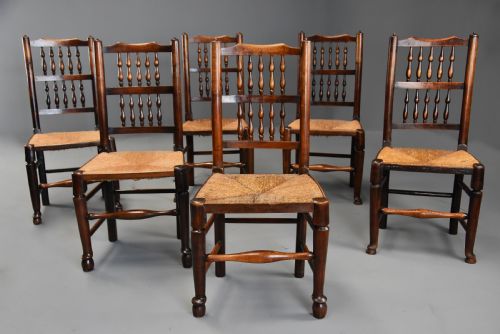
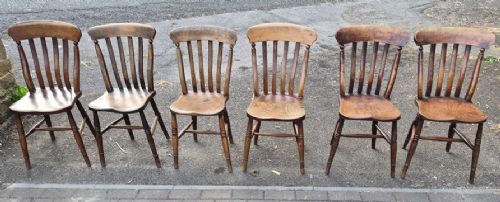
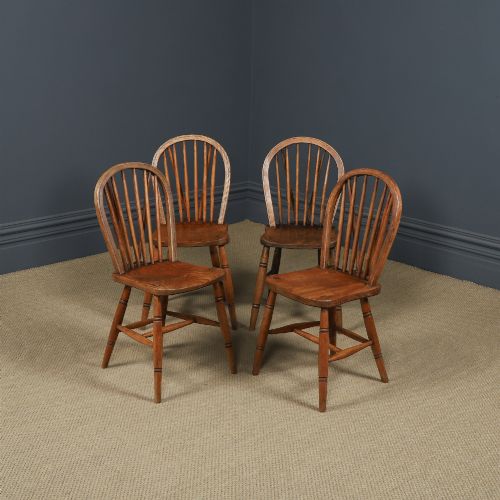
Buyers most frequently encounter sets of Windsor hoop and stick back chairs, alongside ladderback and spindle back variants. The selection ranges from single armchairs and carvers to large matched sets of twelve dining chairs.
Regional variations include Thames Valley kitchen chairs and Lancashire ladderbacks, reflecting local traditions in rural workshop production. These forms prioritize sturdy construction, combining upright utility with ergonomic comfort.
What varies in quality
Quality rests upon the depth of the timber's patina and the integrity of the original construction rather than decorative ornamentation. The thickness of the solid elm seat and the balance of the turned spindles dictate the overall robustness of the piece.
Superior examples display harmonious proportions across entire sets, maintaining consistent wood grain and matching turning details. The fluidity of the steam-bent back rail and the comfort of the saddle-shaped seat separate everyday utility work from finer regional pieces.
Elm and Ash Kitchen Chairs Retail Price Guide 2026
Typical asking prices for elm and ash kitchen chairs among the pieces listed under this phrase on Sellingantiques today, from the lower quarter to the upper quarter. They describe what is for sale here now, not the wider market.
The inventory records both dining chairs and low back armchairs in English Country, Victorian Country, and Edwardian Country styles.
The Elm and Ash Kitchen Chairs Glossary
- Windsor
- A chair built with a solid wooden seat into which the legs and back bows are fitted directly. This construction method provides exceptional stability.
- Spindle back
- A chair featuring a series of thin, turned wooden uprights forming the back support. These uprights are tenoned into horizontal rails.
- Carver
- An armchair, traditionally placed at the head of a dining table or utilised as a desk seat. These pieces feature supportive armrests integrated into the back structure.
- Patina
- The surface sheen and colour developed by wood over decades of handling and polishing. This quality reveals the age and history of the timber.
- Ladderback
- A chair back constructed from horizontal wooden slats resembling the rungs of a ladder. This style dates back through various regional country traditions.
Elm and Ash Kitchen Chairs: Frequently Asked Questions
How do I date an elm and ash chair?
Dating relies on observing construction methods, tool marks, and the degree of wear on the wooden seat. Earlier 19th-century pieces often display broader proportions and hand-turned spindle work.
Later Victorian and Edwardian examples show increasing standardisation in turning lathes while retaining traditional timber combinations.
Are these chairs suitable for daily dining?
These pieces were originally built for hard domestic service in farmhouse kitchens and dining spaces. Their robust timber construction makes them well-suited for everyday modern use.
Regular care and stable indoor humidity help maintain the original joints and timber strength over time.
What is the difference between a Windsor and a stick back?
A Windsor chair typically incorporates a steam-bent bow or hoop attached directly to a solid wooden seat. Stick backs focus on vertical turned or plain uprights tenoned into the seat base.
Both styles belong to the broader vernacular tradition of country seating.
Why are elm and ash used together?
Elm possesses an interlocking grain that resists splitting, making it ideal for solid, comfortable saddle seats. Ash offers high tensile strength and flexibility, rendering it perfect for steam-bent bows and slender turned spindles.
Together, these native woods created durable furniture that withstood generations of daily domestic strain.