


Elephant Side Tables
These elephant side tables bring figurative carving and colonial craftsmanship into a room, offering practical surfaces held up by sculpted pachyderms.
Elephant Side Tables
Elephant side tables combine functional furniture with figural woodwork, forming a distinct group within the wider category of occasional tables. When you search for elephant side tables, you encounter pieces intended for use as lamp stands, coffee tables, or small centre tables.
The versions most frequently met on this page originate from the nineteenth and early twentieth centuries, spanning Victorian, Edwardian, and Art Deco periods. Regional origins include India, Burma, Kashmir, and Ceylon, encompassing Anglo-Indian, Anglo-Burmese, and Asian folk art styles.
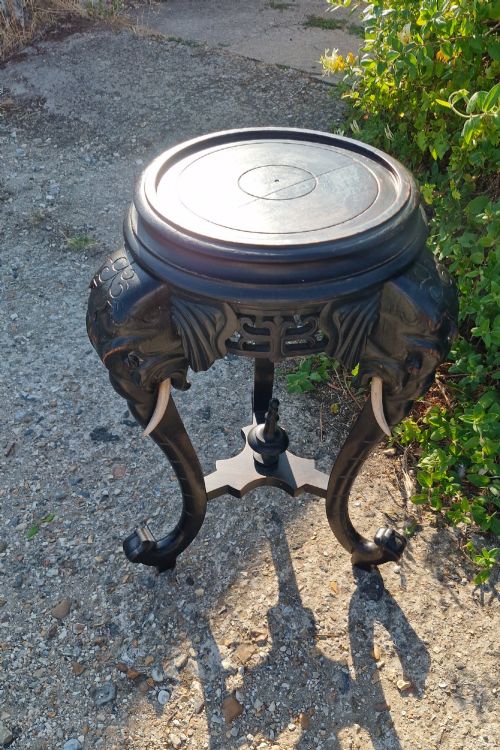
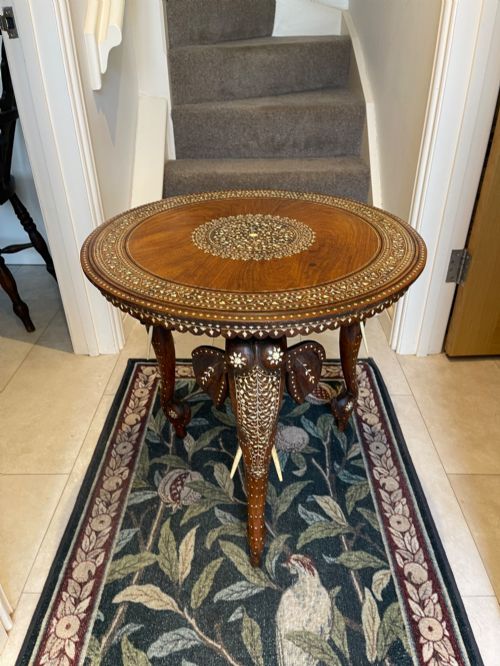
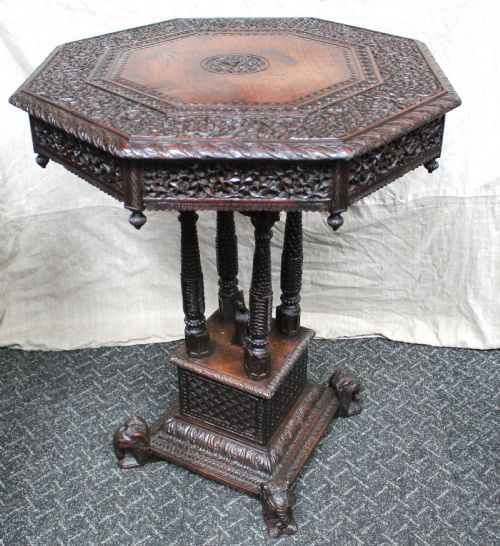
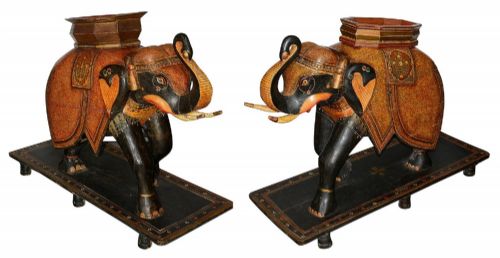
Forms vary from small circular occasional tables and octagonal tops to nests of coffee tables and sculptural seats. The figures take shape as elephant heads, tusks, or complete bodies forming the legs and supports of the furniture.
How they were made
Makers utilised dense timbers such as teak, rosewood, ebony, and hardwood to construct the tops and structural frames of the tables. These woods provided the durability required for deep, intricate carving across the legs and borders.
Decoration relied on specialised techniques including bone inlay, painted wooden tusks, and lacquer work applied to the carved forms. Artisans in centres such as Hoshiarpur and the Bombay Presidency combined surface patterning with relief sculpture.
Listings feature pieces spanning the Victorian era through to the 1930s, constructed in teak, rosewood, bone, and ebony.
What varies in quality
The standard of carving defines the distinction between pieces, particularly in the depth of relief and the naturalism of the animal forms. Fine examples display sharp detail in the eyes, ears, and trappings, whereas simpler items feature flatter, more schematic execution.
Material selection also dictates the grade of the piece, with solid rosewood, ebony, and complex bone inlay sitting apart from plain painted wood or simpler softwood construction. The integration of the elephant supports into the overall design determines the cohesion of the furniture.
The Elephant Side Tables Glossary
- Anglo-Indian
- Describing furniture made in India during the British colonial period, often combining European forms with local carving traditions. These pieces frequently employ dense regional hardwoods.
- Bone Inlay
- A decorative technique where small pieces of bone are set into recesses within a wooden surface to create geometric or floral patterns. It appears frequently on tables from northern regions.
- Hoshiarpur
- A town in Punjab known for intricate woodwork and inlay, particularly using shesham wood and bone. Tables from this area often feature dense surface ornamentation.
- Specimen Wood
- Furniture constructed from a variety of different timbers arranged to showcase natural colour contrasts. This technique appears in pieces originating from Ceylon.
- Occasional Table
- A small, moveable table designed for specific, intermittent use within a room, such as holding a lamp or book. The category includes plant stands and small coffee tables.
Elephant Side Tables: Frequently Asked Questions
How do I date an elephant side table?
Dating relies on combining timber choice, regional style markers, and known production periods. Pieces range from Victorian examples through to 1930s Art Deco interpretations.
Examination of the construction methods, secondary woods, and wear patterns helps place an item within the nineteenth or early twentieth century.
Where were these tables made?
Production centred primarily across the Indian subcontinent and Southeast Asia, including Burma, Kashmir, and Ceylon. Workshops operated within colonial trade networks, creating items for export to British homes.
Regional distinctions appear in the carving style and the choice of materials, such as teak, rosewood, or ebony.
Are the tusks real bone?
Tusks on these tables are fashioned from various materials depending on the piece, including carved wood, painted wood, or bone. Makers selected materials that suited the regional crafting tradition and the scale of the sculpture.
Close inspection reveals whether the tusk is an integral carved wooden extension or an applied element.
How do I clean a carved table?
Maintenance requires gentle dusting with a soft brush to reach into the recesses of the deep carvings. Avoid harsh liquid cleaners that might damage lacquer, painted details, or bone inlay.
Application of appropriate furniture wax preserves the finish of dense timbers like teak and rosewood without building up a heavy residue.
What is the difference between a plant stand and a side table?
Plant stands generally feature taller, narrower proportions and smaller top surfaces designed specifically to elevate flora. Side tables offer broader surfaces intended for lamps, books, or general use.
Both forms utilise elephant figures as structural supports, blurring the distinction between decorative sculpture and functional furniture.