





Eighteenth Century Accent Table
An eighteenth century accent table brings practical surface space and period timber into a room, offering both utility and distinct historic presence.
Eighteenth Century Accent Table
An eighteenth century accent table encompasses versatile small furniture forms designed for occasional use in domestic rooms, including Pembroke tables, drop-leaf tables, dumbwaiters, and side tables. Buyers seeking an eighteenth century accent table will encounter pieces originating primarily from the Georgian and George III periods, alongside later nineteenth century interpretations and revivals.
The physical evidence shows a prevalence of mahogany as the dominant timber, frequently enriched by satinwood, kingwood, walnut, and boxwood banding or inlay. These tables serve diverse functional roles within traditional interiors, from tea tables and wine tables to tiered serving pieces and console tables.
Materials and Construction
Cabinetmakers constructed these tables using dense hardwoods such as mahogany and walnut, frequently employing contrasting timbers like satinwood, boxwood, and kingwood for decorative banding and fine stringing. Painted finishes also appear on select satinwood pieces, reflecting the sophisticated surface treatments favoured during the Georgian era.
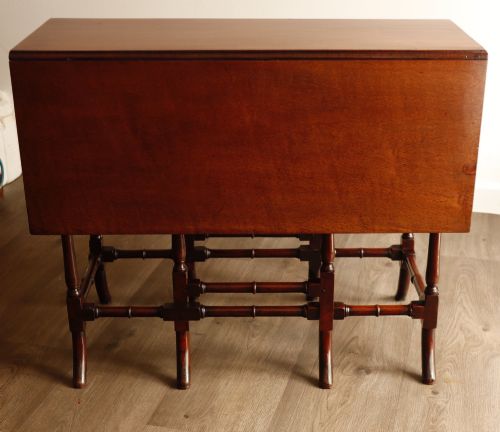
Structural engineering relied on clever space-saving mechanisms, evident in the hinged leaves of Pembroke and drop-leaf tables, the pivoting tiers of dumbwaiters, and the slender supports of spider leg designs. Joinery techniques ensured both stability and lightness of movement, allowing these portable surfaces to be easily shifted about a room.
Eighteenth Century Accent Table Retail Price Guide 2026
Typical asking prices for eighteenth century accent table among the pieces listed under this phrase on Sellingantiques today, from the lower quarter to the upper quarter. They describe what is for sale here now, not the wider market.
Spider leg tables offer surprising stability despite legs as thin as pencils.
Gradations of Craftsmanship
Quality in these tables is determined by the selection of figured timber, the precision of inlaid banding, and the crispness of any carved details. Superior examples display harmonious proportions and careful matching of grain across hinged leaves and tabletops.
The integrity of mechanical elements, such as drop-leaf actions, spider leg frames, and multi-tiered pivoting trays, distinguishes finer workshop production from simpler utilitarian pieces. Original brass hardware and sound structural joinery further elevate the standing of an individual table.
The Eighteenth Century Accent Table Glossary
- Pembroke table
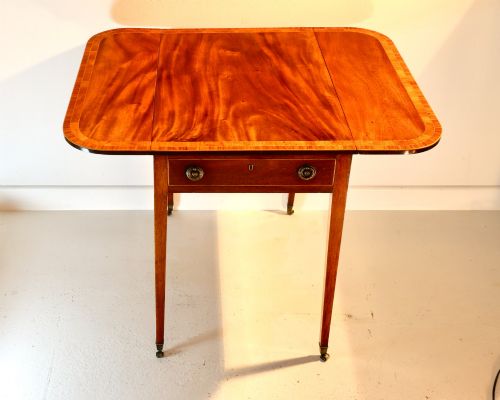
- A small, drop-leaf table with hinged flaps on either side, typically featuring a single drawer and slender legs. This form became particularly popular during the eighteenth century for breakfast or light writing use.
- Dumbwaiter
- A freestanding piece of furniture featuring multiple graduated tiers supported on a central column, used for serving food or holding tableware without the aid of servants. Georgian versions often incorporate drop-leaf sections on their tiers.
- Bandings
- Narrow strips of contrasting wood veneer inlaid around the edges of tabletops or drawers to create a decorative border. Sheraton and Georgian cabinetmakers utilised this technique to define geometric panels.
- Spider leg table
- A slender, delicate table supported by numerous thin turned legs connected by stretchers, offering maximum legroom and a light visual footprint. They are frequently associated with tea service.
- Tilt top
- A tabletop mounted on a catch mechanism that allows the surface to be tilted into a vertical position when not in use. This clever design saved valuable floor space in smaller eighteenth century rooms.
Eighteenth Century Accent Table: Frequently Asked Questions
What is a Pembroke table?
A Pembroke table is a compact occasional table featuring two hinged drop-leaves and one or more small drawers. They were designed for flexible use in private sitting rooms and bedrooms.
First appearing in the mid-eighteenth century, these tables gained widespread popularity due to their ability to expand for service and contract against a wall when space was tight.
How were dumbwaiters used?
Dumbwaiters served as tiered utility stands in dining rooms, holding dishes, wine bottles, and glasses near the table. The revolving or stationary shelves allowed diners to help themselves.
By placing food and drink on these multi-level stands, households could enjoy meals with greater privacy and fewer interruptions from domestic staff.
What woods were commonly used?
Mahogany served as the primary structural timber for high-quality tables throughout the eighteenth century. Walnut also appeared on earlier pieces.
Cabinetmakers embellished these core timbers with decorative veneers and stringing lines made from satinwood, kingwood, boxwood, and painted satinwood for contrast.
How do I date a Georgian table?
Dating relies on examining construction methods, timber choices, and stylistic markers such as leg form and inlay patterns. Pieces from the George III period often display refined classical proportions and precise stringing.
Comparing the secondary woods used for drawer linings and internal framing alongside the overall design vocabulary helps confirm the era of manufacture.