
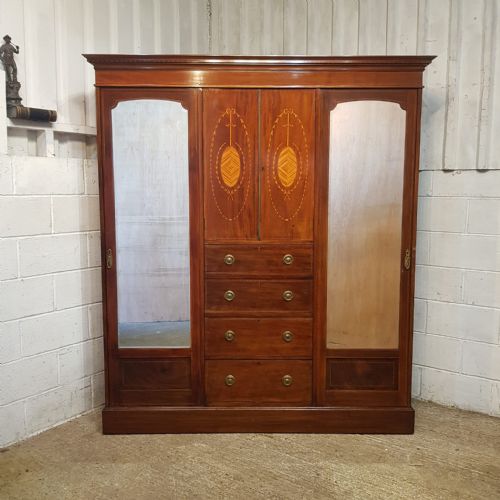
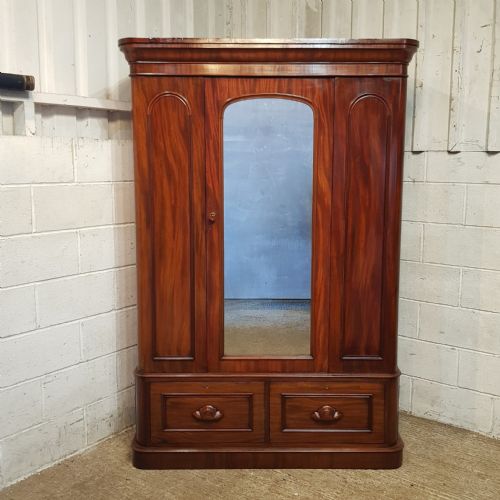
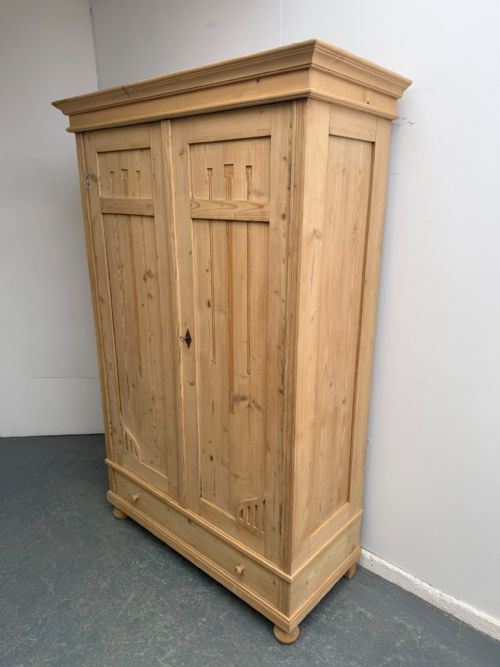
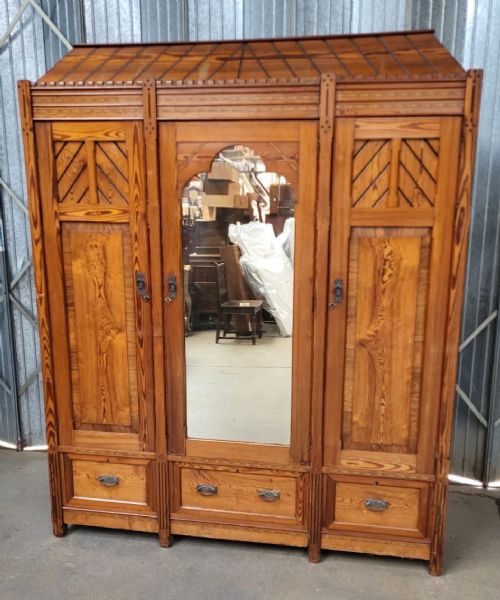
Edwardian Wooden Armoire
When you search for an edwardian wooden armoire, you seek a large storage piece combining period craftsmanship with practical domestic scale.
Edwardian Wooden Armoire
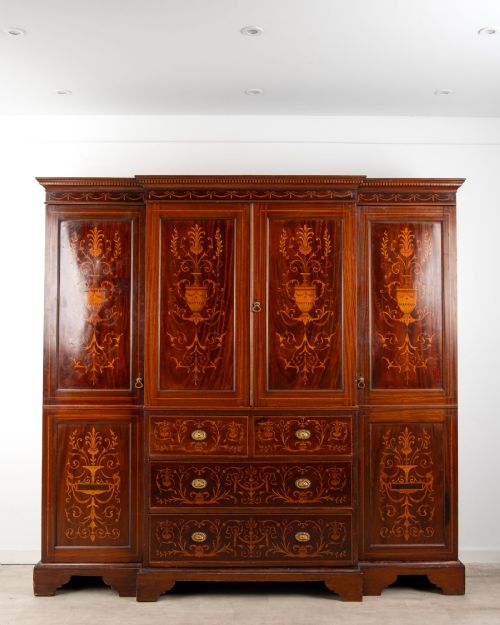
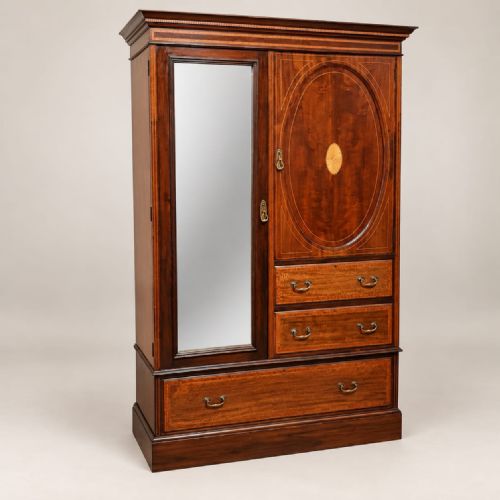
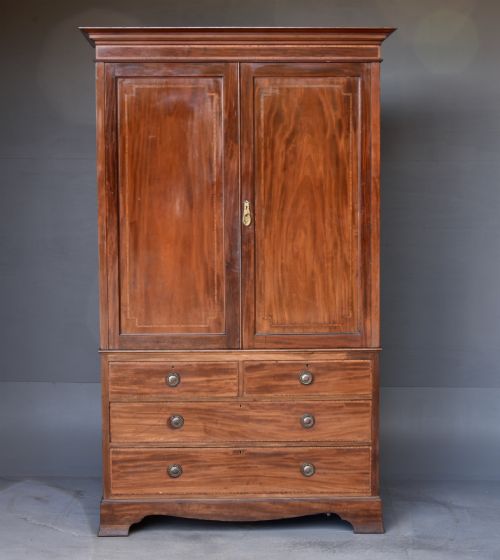
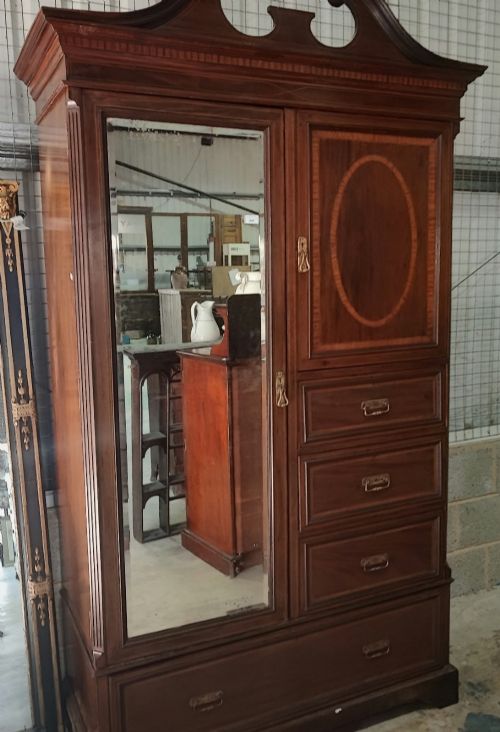
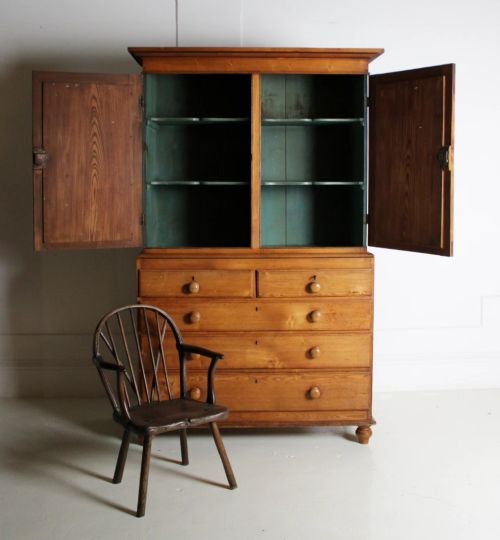
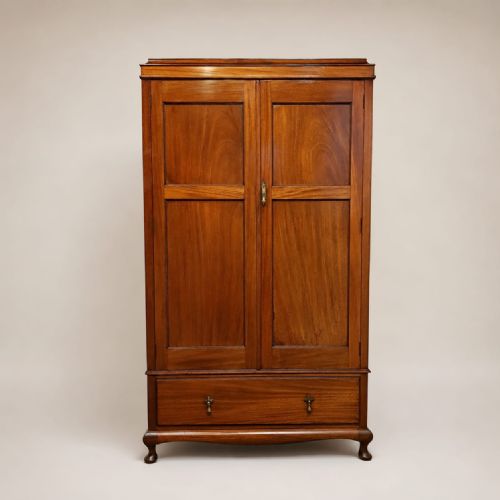
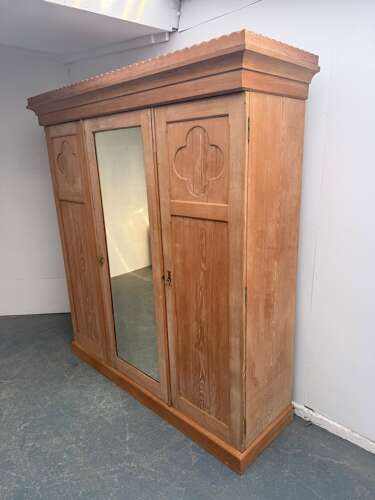
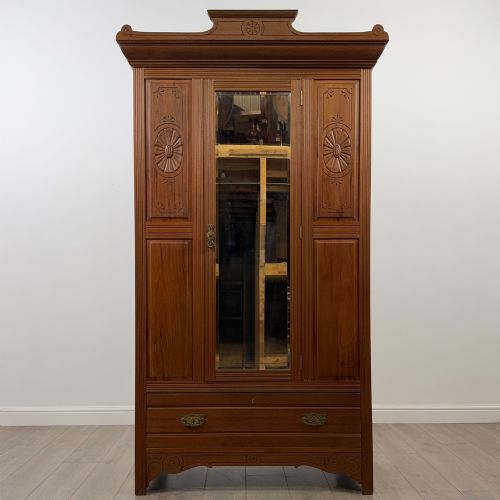
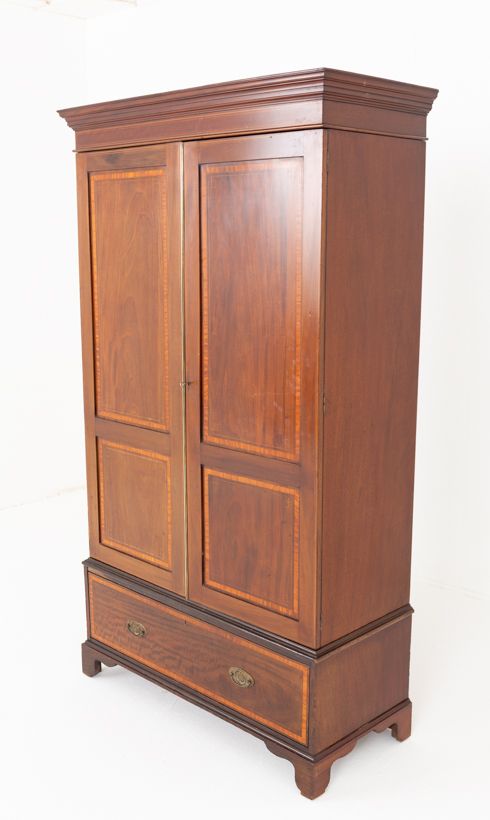
An edwardian wooden armoire primarily takes the form of wardrobes, compactums, and linen presses constructed during the early twentieth century and late nineteenth century. These pieces serve large bedroom storage needs through hanging space, drawers, and shelving housed within single, double, or triple door configurations.
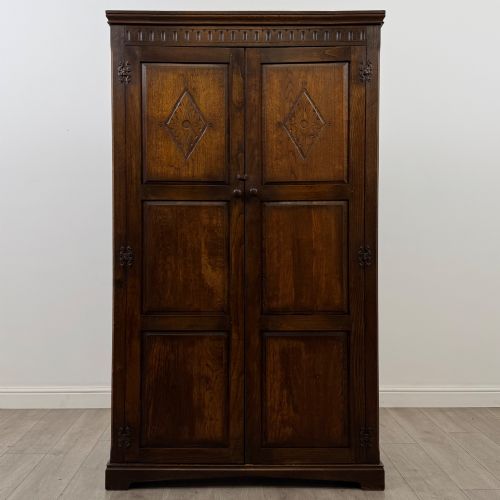
Mahogany and oak dominate the surviving examples, often enriched with satinwood, ash, pine, and walnut veneers or solid construction. Stylistic influences span straightforward Arts and Crafts designs to Sheraton Revival and Edwardian Neo-Classical revivals.
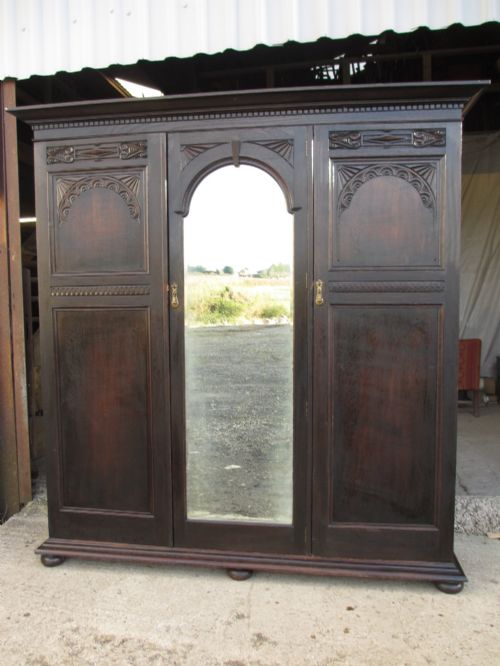
Buyers will frequently encounter combination wardrobes and compactum formats that integrate multiple internal compartments alongside mirrored doors. These large storage items reflect the domestic requirements of their original period.
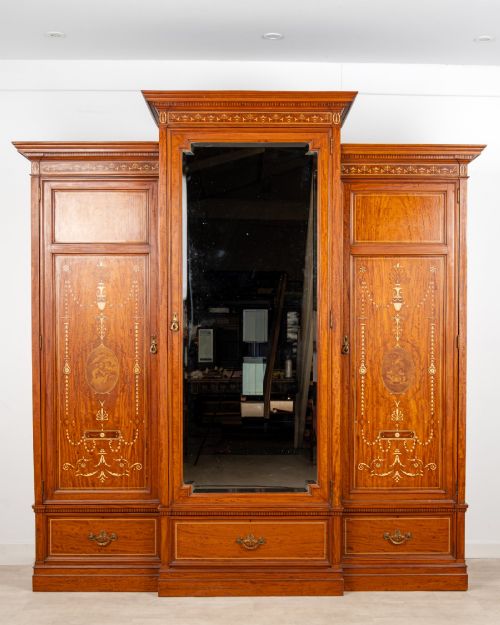
The selection ranges from dark carved oak items to satinwood painted triple wardrobes and simpler ash farmhouse pieces. Each variant demonstrates the distinct furniture forms produced around nineteen hundred.
What Varies in Quality
Quality separates along the ambition of the design and the precision of the timber selection, from standard utility pieces to architect-designed items by workshops like Maple and Company or Wylie and Lochhead. Finer examples display carefully matched grain patterns in burr walnut or mahogany alongside intricate marquetry and inlay.
Construction depth dictates long term durability, seen in heavy panelled doors, solid backboards, and integrated internal drawer arrangements within compactum models. Lesser pieces rely on simpler pine carcases with minimal decorative detailing.
Materials recorded across the inventory include brass, mahogany, glass, satinwood, oak, iron, ash, and pine.
Edwards and Roberts·Maple and Co·Wylie Lochhead·E. A. Taylor·Heals
The Edwardian Wooden Armoire Glossary
- Compactum
- A multi-compartment wardrobe combining hanging space, linen shelves, and internal drawers within a single carcass. This form maximises storage efficiency in bedroom furniture.
- Satinwood
- A pale, fine-grained timber utilised for decorative veneers and painted furniture surfaces during the Edwardian period. It creates a bright contrast against darker woods.
- Linen Press
- A tall storage cupboard featuring upper sliding trays or shelves above a chest of base drawers. Originally designed for storing household linens flat.
- Marquetry
- The art of applying pieces of veneer to a structure to form decorative patterns and pictures. Craftsmen employed contrasting timbers like boxwood and mahogany for these designs.
- Cornice
- The moulded projection that crowns the top of a large wardrobe or armoire. It provides architectural definition to the upper boundary of the piece.
Edwardian Wooden Armoire: Frequently Asked Questions
What is a compactum wardrobe?
A compactum wardrobe integrates multiple storage functions into one unified carcass, typically combining a hanging section, shelving, and internal drawers.
These pieces provide comprehensive bedroom storage by keeping garments, linen, and accessories organised within a single footprint.
How do I identify an Edwardian wardrobe?
Edwardian wardrobes date from roughly nineteen hundred to nineteen ten, often displaying lighter timbers, satinwood inlay, or Sheraton Revival motifs.
They frequently feature bevelled mirror doors and distinct cornice mouldings that separate them from heavier Victorian precedents.
Are these wardrobes easy to dismantle?
Many large period wardrobes and armoires were constructed to be taken apart into sections for transport and installation in upper rooms.
Checking the construction reveals whether the cornice, base, and side panels separate using internal bolts or wooden pegs.
What timber was used most often?
Mahogany and oak form the vast majority of surviving listings, complemented by walnut, ash, and pine.
Cabinet makers also incorporated exotic veneers like satinwood and amboyna for decorative surface panels.
How do Arts and Crafts wardrobes differ?
Arts and Crafts wardrobes emphasise plain solid oak construction, exposed pegged joints, and simple wrought brass hardware rather than classical revival inlay.
These pieces focus on honest materials and structural form, often associated with makers like Maple and Company.