


Edwardian Wood Tray
These pieces of edwardian wood tray design offer practical service and refined craftsmanship, combining useful surface area with the warmth of period timber.
Edwardian Wood Tray
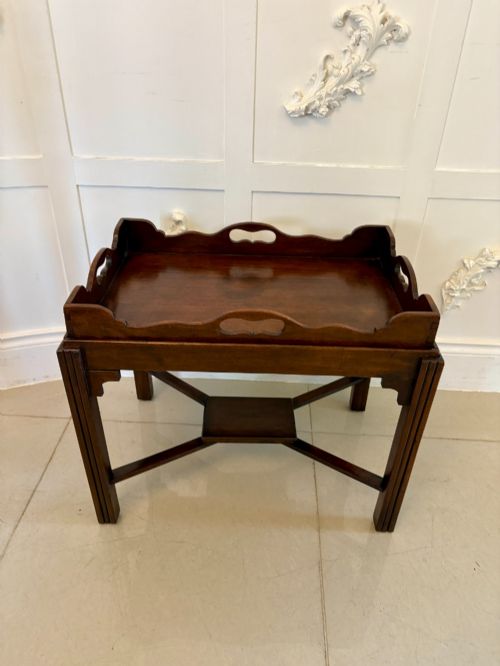
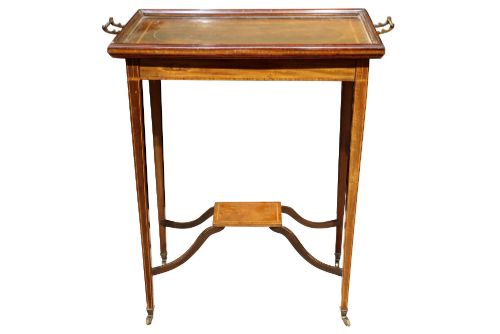
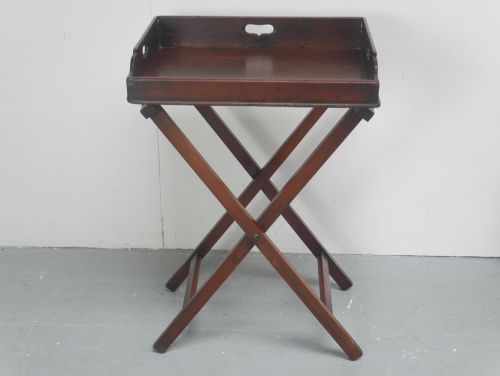
An edwardian wood tray serves as a functional portable surface or rests upon a dedicated folding stand to function as a low table. The most frequent examples encountered on this page combine mahogany or satinwood construction with inlaid details reflecting the aesthetic of the period.
Makers of this era produced both tea trays with scalloped edges and deep butler trays designed for carrying items or displaying objects. These items range from standalone serving pieces to metamorphic forms and table tops.
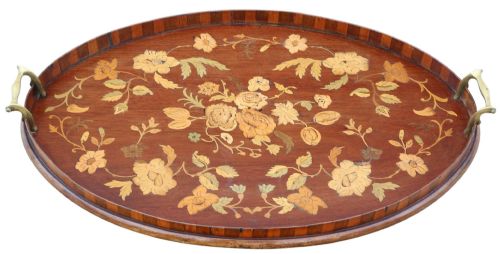
The selection reflects both formal Edwardian production and pieces influenced by earlier Georgian and Sheraton revival styles. Buyers encounter everything from oval serving trays with oyster veneers to kidney shaped trays featuring marquetry.
Materials and construction methods
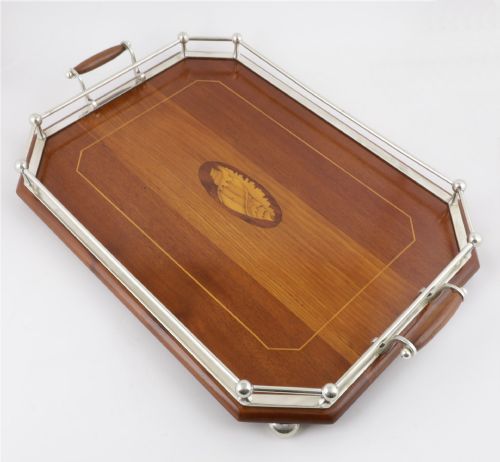
Craftsmen built these trays primarily using dense timbers such as mahogany, satinwood, and walnut, frequently selecting figured veneers to create patterned central fields. Contrasting stringing in light woods often outlines the perimeter or geometric motifs.
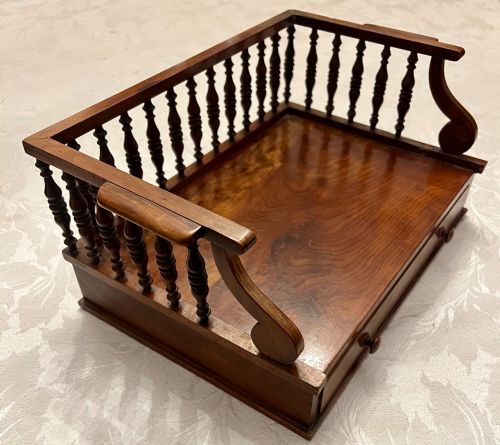
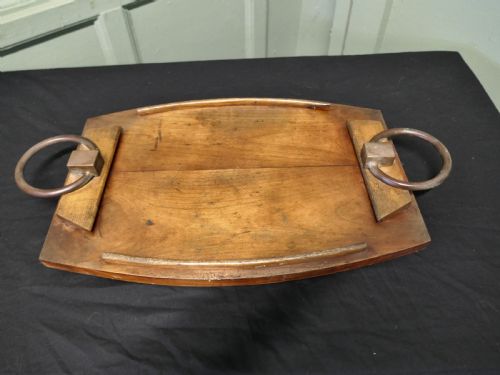
Many examples incorporate brass handles, gallery rails, or silver-plated mounts to secure the edges and assist with carrying. Joinery methods prioritise stability and durability, allowing portable trays to withstand frequent lifting and placement on folding stands.
Period styles span from Victorian and Regency revivals through to Arts and Crafts and Edwardian production.
Judging quality and execution
Distinction between pieces lies in the precision of the marquetry inlay and the choice of timber figure, where superior examples display crisp botanical or geometric motifs without lifting veneer. The crispness of scalloped edges and the integration of brass hardware signal careful workshop production.
Subtleties in the handling of timber, such as matched grain patterns across an oval or octagonal surface, separate standard utility items from finer decorative pieces intended for the drawing room.
The Edwardian Wood Tray Glossary
- Butler tray
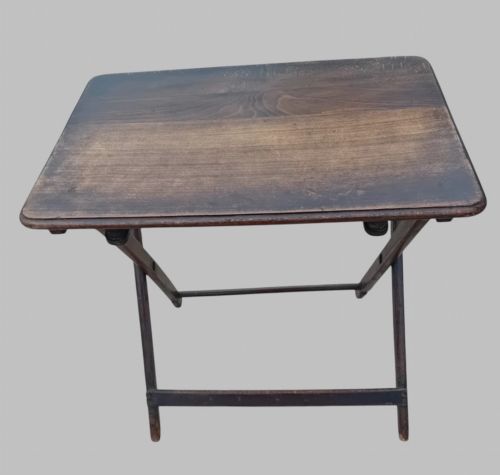
- A portable wooden tray featuring hinged sides or handholds, often paired with a folding X-frame stand. It originated as a dining accessory for transporting service items.
- Marquetry
- The art of applying pieces of veneer to a structure to form decorative patterns and pictures. It utilises contrasting woods to achieve pictorial depth on flat surfaces.
- Gallery tray
- A tray surrounded by a raised decorative border or pierced metal railing. This prevents items from sliding off during transport.
- Oyster veneer
- A method of cutting branches transversely to produce circular or oval cross-section patterns. This technique creates a distinctive mottled figure across the surface of the timber.
- Sheraton revival
- A late nineteenth and early twentieth century design movement that reinterprets eighteenth century neoclassical furniture. It employs light satinwood, delicate inlay, and tapered supports.
Edwardian Wood Tray: Frequently Asked Questions
What is an edwardian wood tray used for?
These trays served primarily for serving tea, drinks, or food within the home. Portable versions allowed servants to transport items between rooms easily.
Today, many buyers repurpose them as low coffee tables by mounting the tray onto a suitable stand. They also function as decorative display surfaces on side tables.
How do I distinguish an Edwardian tray from a Victorian one?
Edwardian trays often lean towards lighter satinwood inlay, Sheraton revival motifs, and delicate proportions. They reflect a brighter, less heavy aesthetic than many mid-nineteenth century pieces.
Victorian examples tend to use darker mahogany with simpler mouldings or robust brass galleries. However, stylistic overlap remains common due to transitional manufacturing periods.
Can I use an antique tray on a stand as a coffee table?
Many trays are already paired with folding or fixed stands designed to elevate them to table height. This configuration makes them practical for daily use in a modern living space.
Ensure the stand provides stable support beneath the base. Avoid placing heavy loads on folding versions unless the hinge mechanism is fully secure.
How do I care for a wood and brass tray?
Clean the wooden surface using a soft, dry cloth to remove dust. Avoid using abrasive cleaners or excessive moisture that could damage delicate veneer or inlay.
Polish brass handles or galleries gently with a suitable metal cleaner, taking care not to let cleaning agents touch the surrounding wood.