



Edwardian Wood Screen
These pieces known as edwardian wood screen bring practical division and rich craftsmanship to a room.
Edwardian Wood Screen
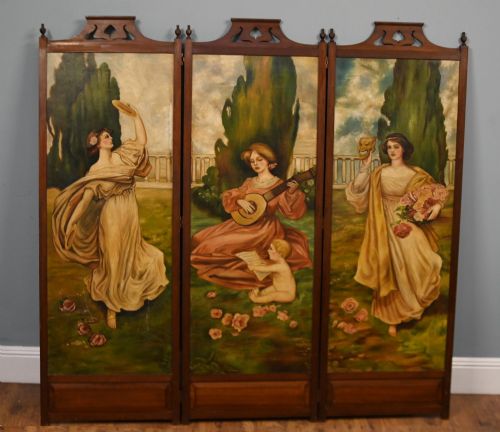
When you search for an edwardian wood screen, you encounter folding dividers and room screens originating mainly from the Victorian and Edwardian eras alongside eighteenth and nineteenth century examples. These objects serve to partition interior spaces or shield occupants from hearth heat using multi-panel constructions.
How they were made
Makers constructed these screens using timber frameworks of mahogany and walnut, frequently combined with brass hinges and structural supports. Carved details and fretwork define the wooden elements across the surviving pieces.
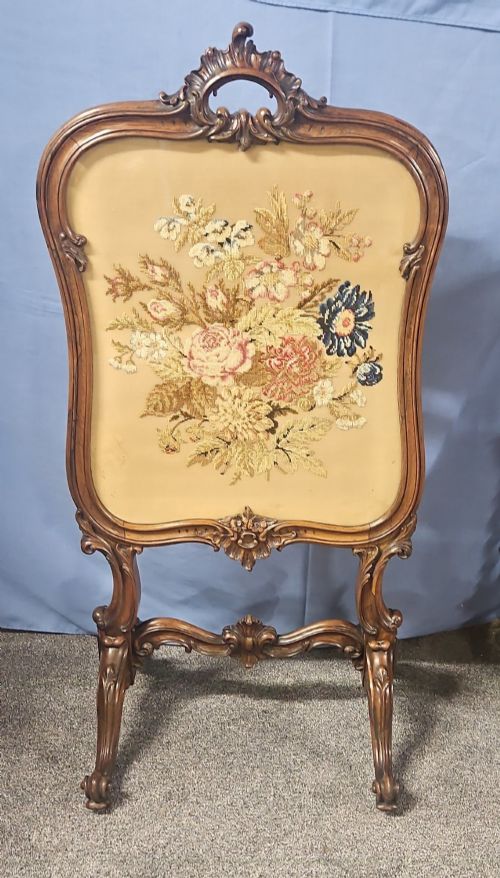
Insets of tapestry, fabric, canvas, and oil paint fill the wooden frames alongside glass and photographic apertures. These materials integrate textiles and painted surfaces directly into the hinged wooden structures.
Edwardian Wood Screen Retail Price Guide 2026
Typical asking prices for edwardian wood screen among the pieces listed under this phrase on Sellingantiques today, from the lower quarter to the upper quarter. They describe what is for sale here now, not the wider market.
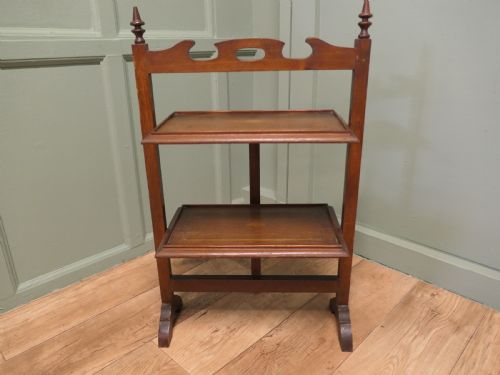
One versatile design functions as both a fire screen and an occasional butler table when transformed.
What varies in quality
The distinction between standard examples and the finest pieces rests upon the execution of the carving and the complexity of the folding mechanism. Fully reversible multi-fold designs and intricate fretwork indicate higher standards of workshop production.
Material selection further separates the range, where fine timber frames paired with specialised panels like oil paint, tapestries, or brass hardware demonstrate superior craftsmanship over simpler utilitarian builds.
The Edwardian Wood Screen Glossary
- Fire Screen
- A protective screen placed before a fireplace to block excess radiant heat when the hearth is unlit. These often feature glass, tapestry, or painted canvas panels.
- Room Divider
- A multi-panel hinged screen designed to partition a large interior space into separate areas. Examples on this page span four to six folds.
- Fretwork
- Ornamental perforated woodwork created by cutting intricate patterns through a board. This technique appears on decorative panels within the listings.
- Bobbin Turned
- Timber shaping characterised by a series of rounded wooden knobs resembling spools along the length of a support. This appears on structural framing.
Edwardian Wood Screen: Frequently Asked Questions
What is an edwardian wood screen used for?
These items divide interior spaces or shield occupants from hearth heat. Multi-fold panels allow them to adjust across a room.
They also function as decorative partitions or multi-aperture photo frames depending on the specific construction.
How do I tell different periods apart?
Periods are identified through structural styles such as Victorian Rococo Revival or Pre-Raphaelite influences alongside specific dated elements.
Materials like mahogany and walnut combined with tapestries or glass help contextualize the decade of manufacture.
Are all fire screens also tables?
Certain specialised designs combine functions, such as metamorphic pieces that convert between a fire screen and an occasional butler table.
Most traditional fire screens remain strictly vertical panel partitions designed to stand near a hearth.
How many panels do these screens have?
The listings show variations ranging from single panels up to six fold constructions. Larger examples utilise brass hinges to allow full reversibility.
Four-fold and five-fold configurations are also common among the surviving inventory.