





Edwardian Wood Barometer
When you handle an edwardian wood barometer, you hold a piece of domestic science that measured the weather with polished mahogany, oak, and inlaid rosewood.
Edwardian Wood Barometer
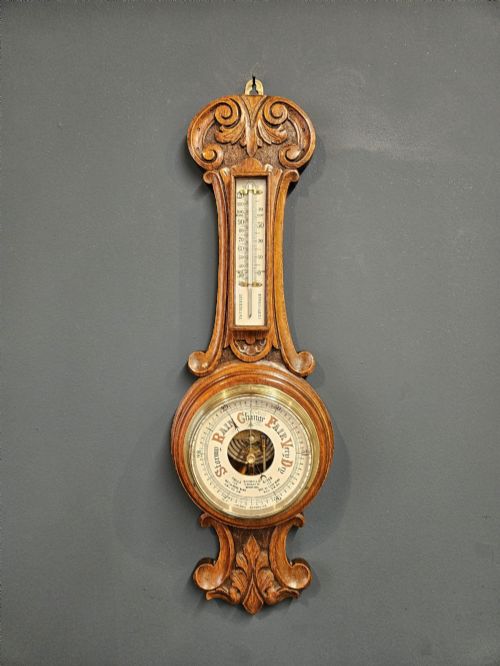
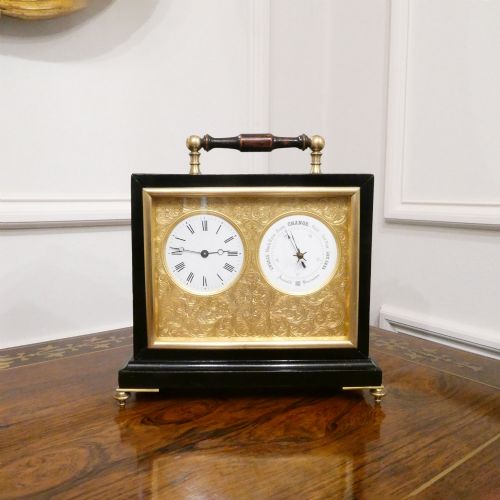
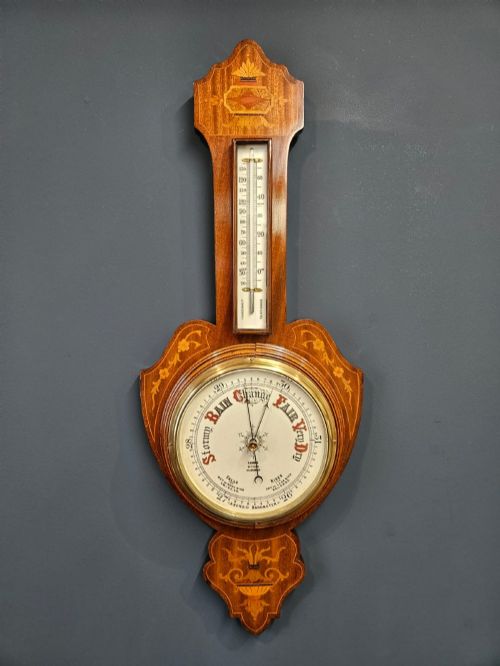
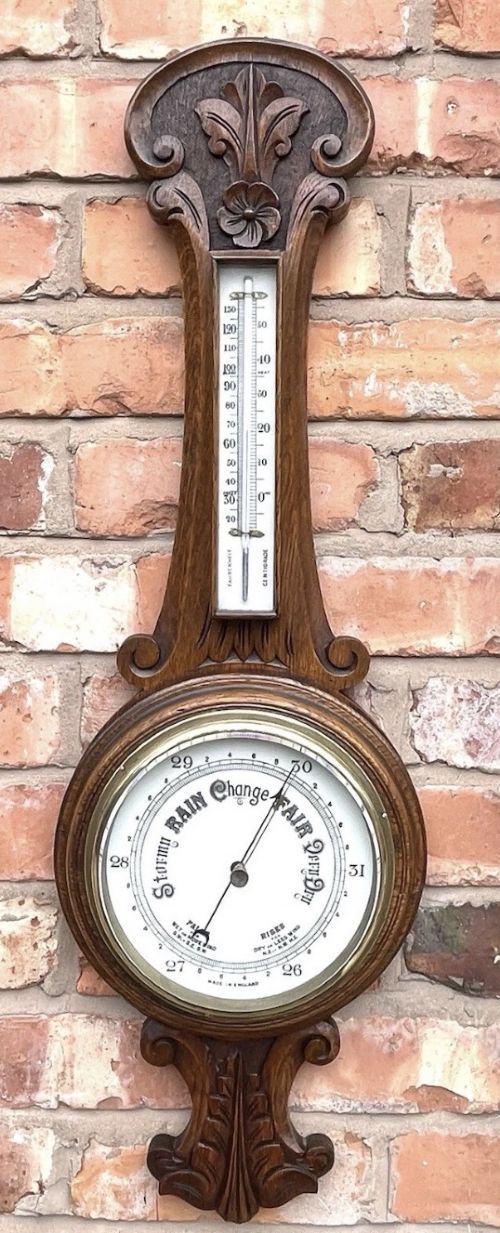
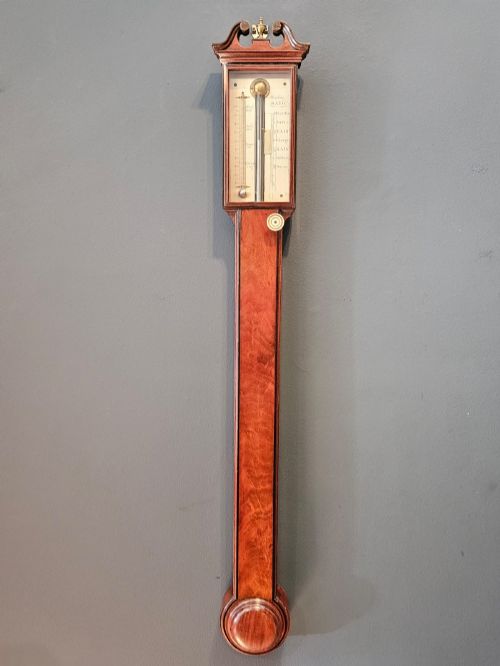
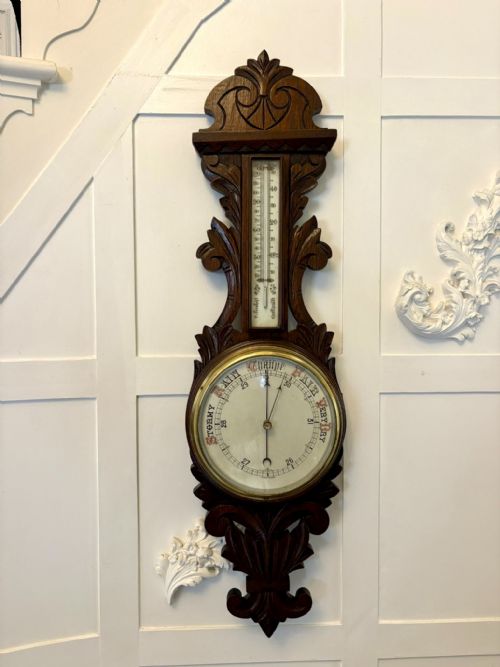
An edwardian wood barometer is a weather-measuring instrument housed in a timber case, designed to hang on a wall or sit on a mantelpiece in domestic interiors. When searching for this specific phrase, buyers encounter wall-hanging banjo barometers, stick barometers, and combined clock-and-barometer desk pieces. The selections here span the Edwardian period alongside neighbouring Victorian, Georgian, and twentieth-century examples.
What Dictates Quality
Quality rests in the crispness of the timber carving, the complexity of the wood veneers, and the reputation of the instrument maker. Pieces featuring finely figured rosewood, intricate marquetry, and balanced proportions command greater attention than plain, utilitarian versions. The presence of matching subsidiary dials, intact thermometers, and original glass bezels elevates an example.
The precision and signature of the maker inscribed on the dial or scale plate determine the standing of the piece. Makers who supplied scientific instruments to observatories or naval departments delivered superior mechanical reliability and finer metalwork. Well-preserved paper records, original brass fittings, and clean, legible dial faces separate standard production items from distinguished workshop outputs.
Edwardian Wood Barometer Retail Price Guide 2026
Typical asking prices for edwardian wood barometer among the pieces listed under this phrase on Sellingantiques today, from the lower quarter to the upper quarter. They describe what is for sale here now, not the wider market.
Some barometers share house space with tipping bucket rain gauges, proving that Victorian households took their drizzle very seriously indeed.
Hyde & Sons Sleaford·Short & Mason London·Negretti & Zambra·Alexander Wright·Callaghan & Co of London
The Edwardian Wood Barometer Glossary
- Aneroid Barometer
- An instrument measuring atmospheric pressure through the expansion and contraction of a sealed metal capsule, without using liquid. These mechanisms drive the pointer on dial barometers.
- Stick Barometer
- A tall, vertical barometer utilising a mercury-filled glass tube mounted against a wooden backboard. They allow direct observation of the mercury column height.
- Banjo Barometer
- A wall-mounted barometer shaped like a banjo, featuring a circular dial at the top above a longer stem. The stem frequently houses a thermometer and decorative wood inlay.
- Barograph
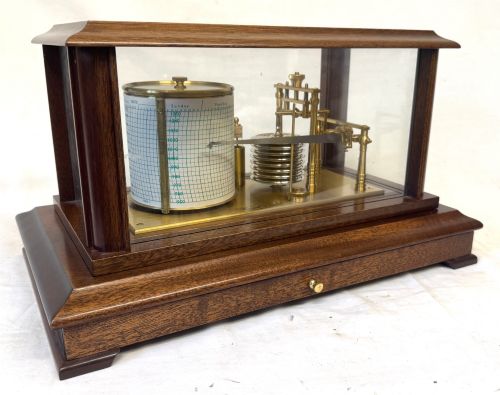
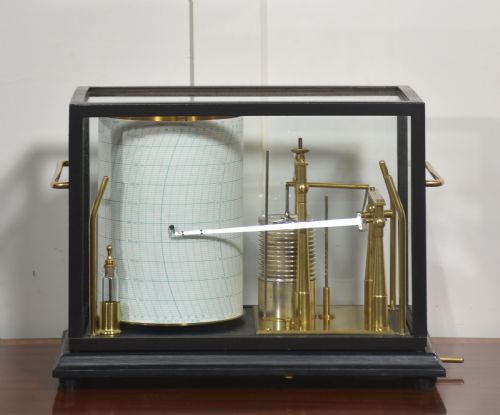
- A recording meteorological instrument that draws barometric pressure trends onto a rotating paper chart using an ink arm. They are typically housed in polished mahogany or oak cases with glass lids.
- Marquetry
- Decorative patterns formed by fitting contrasting veneers into a prepared wood surface. Craftsmen used fruitwood and satinwood to create floral or geometric motifs on barometer cases.
- Bezel
- The metal ring holding the glass face in position over the barometer dial. Brass is the standard metal used for these rims.
Edwardian Wood Barometer: Frequently Asked Questions
How do I read an aneroid barometer?
Read the main pointer against the pressure scale marked in inches or millibars, noting whether it points toward fair, change, or rain. Tap the glass lightly with a finger to settle any friction in the internal linkages before taking your reading.
Compare this position to the moveable secondary pointer set by hand earlier. Movement of the primary pointer away from the secondary indicator shows whether atmospheric pressure is rising or falling.
Can these barometers still be calibrated?
Most aneroid instruments feature a small adjustment screw accessible on the back of the case. Turning this screw shifts the internal levers to match the current local barometric pressure obtained from a reliable weather source.
Mercury stick barometers require careful handling and vertical mounting without trapping air bubbles in the tube. Professional adjustment is advised if the mercury column separates during transport.
Where should I hang a wood barometer?
Select an interior wall away from direct sunlight, radiators, and draughty doors. Rapid temperature fluctuations can affect the wood case and interfere with the mechanical response of the barometer.
Ensure the wall fixing is secure, as banjo and stick barometers carry significant weight in their lower stems and require firm support from a proper screw or wall plug.
How do I tell an Edwardian barometer from a Victorian one?
Edwardian examples tend to display lighter mahogany or inlaid satinwood and fruitwood marquetry reflecting early twentieth-century taste. Their carving is often crisper and less heavy than mid-Victorian output.
Victorian pieces frequently utilise darker oak, heavier mouldings, and deep relief carving. The presence of specific maker signatures and registration marks often helps pin down the exact decade of manufacture.