





Edwardian Weather Station
An edwardian weather station brings together multiple scientific instruments in one neat case, offering a practical way to monitor pressure, temperature and time.
Edwardian Weather Station
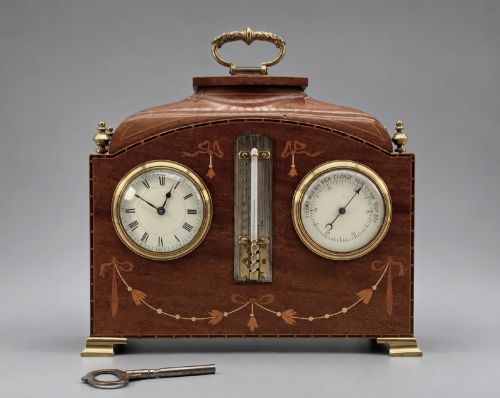
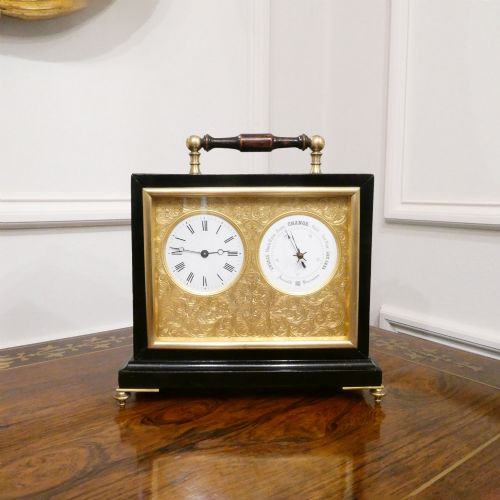
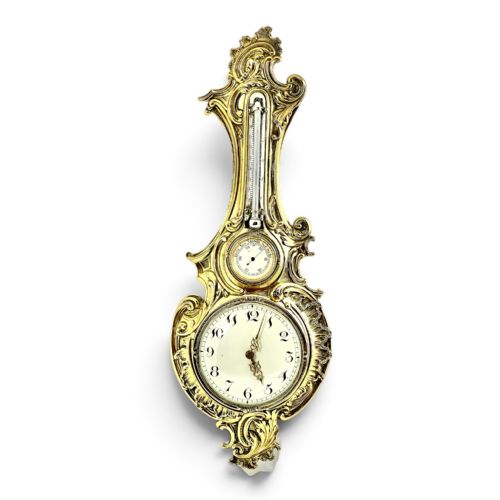
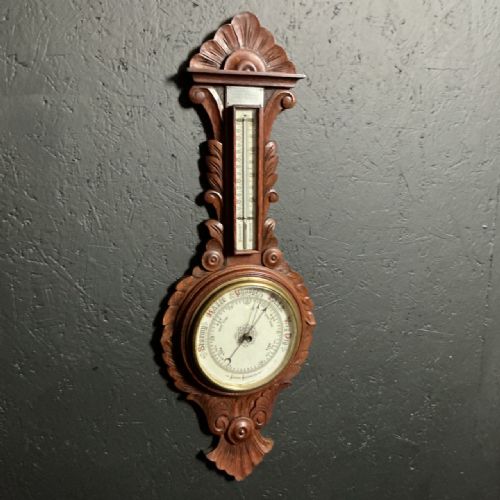
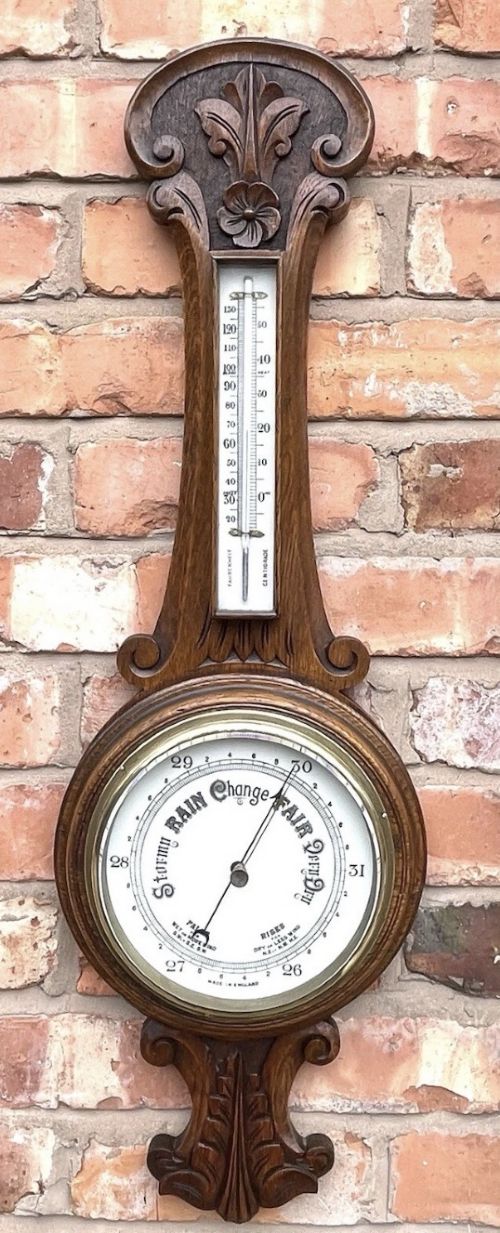
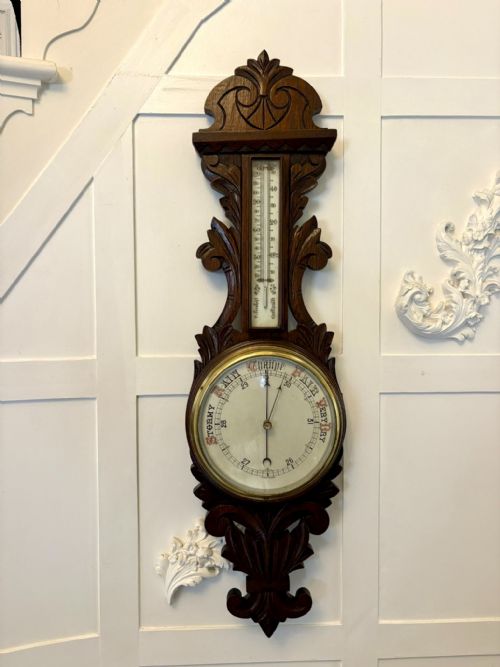
An edwardian weather station combines several tracking instruments into a single housing, most frequently taking the form of wall-hung banjo barometers, mantel clocks paired with barometers, and desk-mounted sets. These pieces bring together dials for measuring atmospheric pressure alongside thermometers and sometimes clock faces.
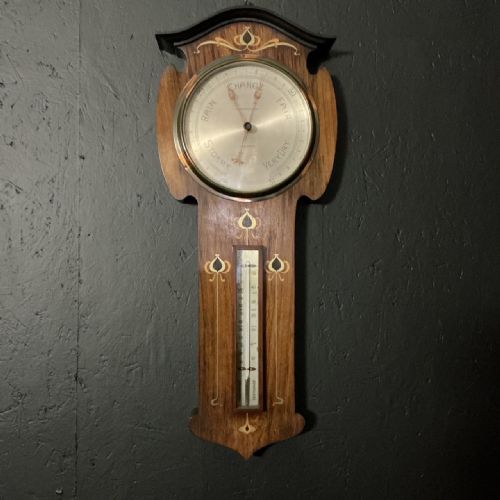
The version most commonly met on this page is the carved oak aneroid barometer, often featuring a thermometer alongside the main dial. Walnut, mahogany and wood inlay cases also appear frequently, spanning styles from late Victorian and Edwardian to Arts and Crafts and Art Deco interpretations.
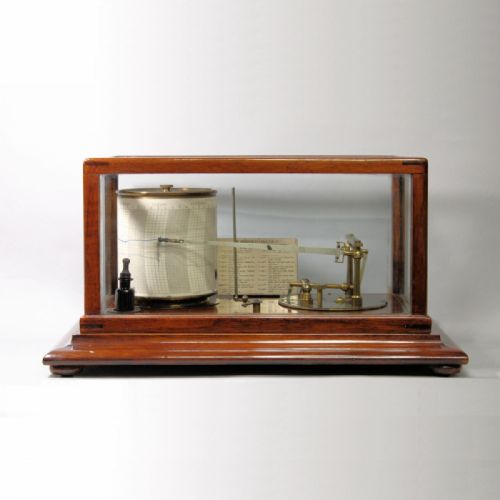
Makers housed these instruments in timber frames designed to suit domestic interiors, ranging from circular wall hangings to architectural desk pieces and elaborate barograph boxes. The arrangement reflects a period interest in domestic science and precise home measurement.
How they were made
Craftsmen built the housings using solid timbers like oak, mahogany and walnut, frequently applying carved details, wood inlay or marquetry to the exterior surfaces. Glass protected the delicate dials and thermometer tubes, while brass bezels framed the openings.
Internal mechanisms relied on aneroid capsules or mercury columns to register shifts in barometric pressure, linked to visible indicator hands via levers and springs. Silvered metal dials provided clear, engraved scales for reading pressure alongside mercury or spirit thermometers.
Edwardian Weather Station Retail Price Guide 2026
Typical asking prices for edwardian weather station among the pieces listed under this phrase on Sellingantiques today, from the lower quarter to the upper quarter. They describe what is for sale here now, not the wider market.
Enamel, brass, glass and silvered metal appear across the dials and bezels of these combined clocks, barographs and barometers.
What varies in quality
The distinction between standard pieces and finer examples rests upon the crispness of the timber carving and the sophistication of the case design, such as elaborate marquetry or architectural pediments. Heavier wood selection and balanced proportions elevate certain editions above basic utility items.
Execution of the internal brass components and the legibility of the silvered metal dials dictate the functional standard of the piece. Well-documented makers and signed mechanical assemblies provide a further measure of distinction.
Negretti and Zambra London·Short and Mason Limited·Dobbie Son and Hutton·Antoine Redier·Dollond London·R Fuess
The Edwardian Weather Station Glossary
- Aneroid barometer
- An instrument that measures atmospheric pressure without using liquid, relying instead on a flexible metal box that expands or contracts.
- Barograph
- A recording barometer that traces pressure changes over time onto a rotating drum via an inked arm.
- Mercury thermometer
- A temperature-measuring device utilising liquid mercury sealed inside a graduated glass tube.
- Banjo barometer
- A wall-mounted barometer shaped roughly like a banjo, typically housing a dial at the base and a thermometer along the long stem.
- Silvered metal
- A brass or copper dial treated to achieve a matte silver finish, upon which scale markings and numbers are engraved.
Edwardian Weather Station: Frequently Asked Questions
What instruments are in a weather station?
These combinations typically unite an aneroid barometer with a thermometer, and occasionally a clock or hygrometer. The primary dial measures atmospheric pressure while accompanying tubes track temperature.
Housed in a single wooden case, these instruments allowed households to monitor changing weather conditions from a central wall or desk location.
How do I tell an Edwardian barometer apart?
Edwardian examples often feature lighter oak or mahogany woodwork, sometimes incorporating simple carved motifs or clean circular lines. They sit between the heavier, more ornate carving of late Victorian pieces and the geometric lines of Art Deco.
Examining the style of the dial lettering and the treatment of the timber case helps clarify the period of manufacture.
Where were weather stations placed?
Most wall-hung models, such as banjo barometers and bulkhead instruments, were designed for hallways or libraries where family members could check them regularly. Desk clocks and barographs sat on tables or study surfaces.
Their placement depended on proximity to stable wall fixings or flat surfaces where delicate mechanical movements would remain undisturbed.
Are these instruments still accurate?
Many aneroid barometers and thermometers remain functional, though barometric instruments generally require calibration against local readings. The internal metal springs respond to current atmospheric pressure changes when properly adjusted.
Mechanical clocks and barographs require careful handling and occasional servicing to maintain reliable operation alongside the weather gauges.