

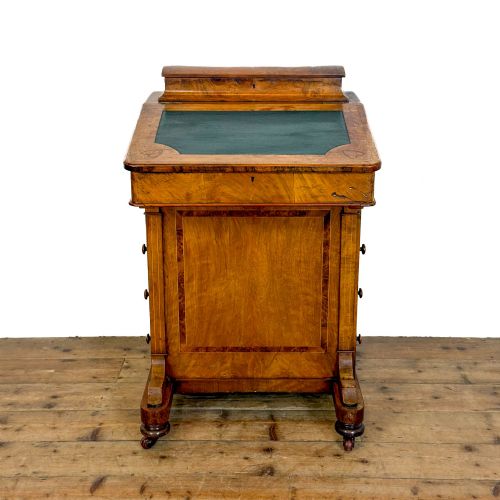


Edwardian Walnut Writing Slope
Edwardian walnut writing slope pieces are compact timber writing boxes offering fitted compartments and sloped lids for correspondence.
Edwardian Walnut Writing Slope
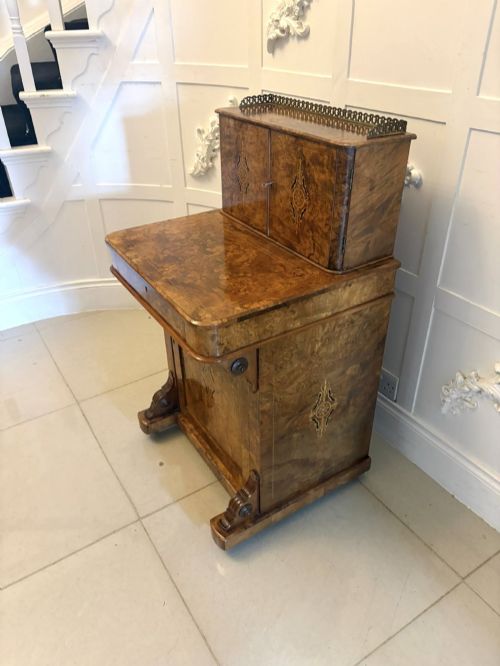
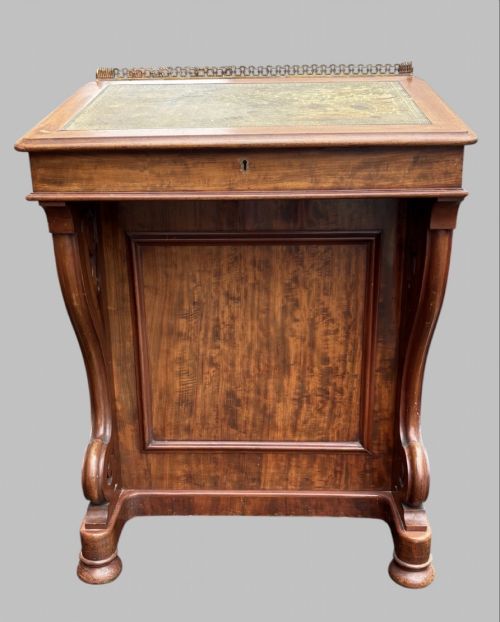
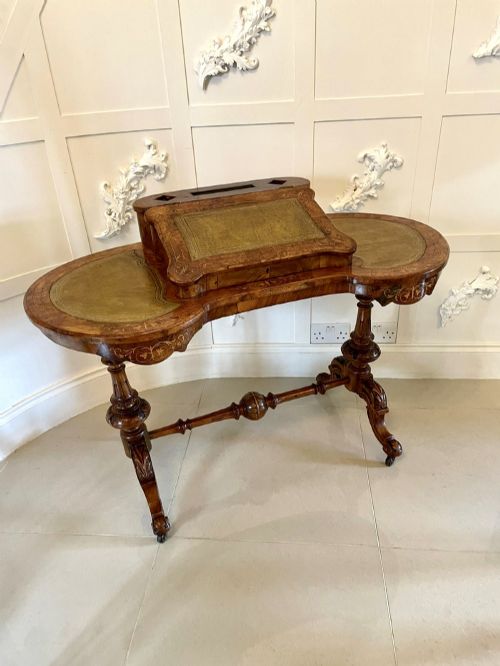
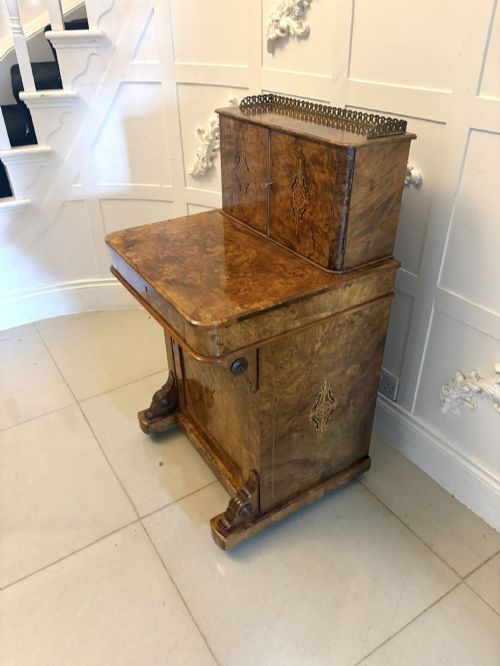
An Edwardian walnut writing slope brings together portable desk boxes and larger bureau forms in rich timber. The pieces search results show extend from traditional slope boxes with brass corners to davenports and bureau desks spanning Victorian and Edwardian periods.
Buyers meet variations ranging from compact document boxes to freestanding pedestal desks with leather inset tops and stationery cabinets. Walnut and burr walnut dominate these forms, often accented with boxwood inlay and marquetry.
What varies in quality
Quality separates through the choice of burr figure in the walnut veneer and the crispness of marquetry or boxwood inlay. Finer examples display meticulous grain matching across the slope lid and drawer fronts.
Hardware choice distinguishes the tier of production, noting heavy brass corners and fitted secret drawers against simpler joinery. The complexity of internal stationery fittings and metamorphic mechanisms also marks the standard of the piece.
Edwardian Walnut Writing Slope Retail Price Guide 2026
Typical asking prices for edwardian walnut writing slope among the pieces listed under this phrase on Sellingantiques today, from the lower quarter to the upper quarter. They describe what is for sale here now, not the wider market.
Listings feature walnut, burr walnut, brass, leather and elm across Victorian and Edwardian periods.
Gillows Designed·James Winter & Son
The Edwardian Walnut Writing Slope Glossary
- Burr Walnut
- A figured timber veneer taken from the growth excrescences of walnut trees. It displays swirling patterns prized by cabinet makers.
- Writing Slope
- A portable box with a slanted lid that opens to reveal a desk surface and inkwells. These pieces served travellers and domestic writers alike.
- Davenport
- A compact pedestal desk featuring a sloping writing surface above a set of drawers. They emerged strongly during the nineteenth century.
- Stationery Cabinet
- A desktop cabinet designed to hold paper, envelopes and writing implements. They frequently incorporate drop fronts and pigeon holes.
- Marquetry
- Decorative inlay work where pieces of wood veneer form pictorial patterns on the surface. Boxwood often provides contrasting tones in these designs.
Edwardian Walnut Writing Slope: Frequently Asked Questions
What is an Edwardian walnut writing slope?
An Edwardian walnut writing slope is a portable or stationary desk box featuring a slanted lid for correspondence. These pieces utilise figured walnut timber to house letters, ink and pens.
Interior fittings typically include small drawers and pigeon holes beneath the hinged writing surface. Many examples incorporate brass edges and lockable compartments.
How do you use a writing slope?
The hinged lid folds down toward the writer to create an angled board for paper. Inside, compartments store stationery, sealing wax and ink bottles securely.
When closed and locked, the box protects the writing materials for storage or travel. Larger versions remain stationary on tables or pedestals.
How do I tell Victorian from Edwardian pieces?
Victorian writing slopes often display heavier proportions and robust brass mounts or secret drawer mechanisms. Burr walnut veneer was heavily utilised during this earlier era for davenport desks and boxes.
Edwardian pieces tend toward lighter styles with refined boxwood inlay and marquetry decoration. The transition into the twentieth century brought sleeker stationery cabinets and metamorphic desks.
Where should I place a writing slope in my home?
Writing slopes sit well on study desks, sideboards or lamp tables where their timber grain can be appreciated. Compact slope boxes also function effectively on bookshelves or console tables.
Keep them away from direct sunlight and heat sources to protect the walnut veneer and leather inserts. The polished timber surfaces require only a soft cloth for dusting.