






Edwardian Wall Instrument
These edwardian wall instrument examples combine precision science with domestic utility, bringing mechanical heritage straight onto the wall.
Edwardian Wall Instrument
An edwardian wall instrument encompasses barometers, barographs, thermometers, and weather stations produced during the late nineteenth and early twentieth centuries. These objects served a practical domestic purpose in recording atmospheric changes before digital forecasting existed.
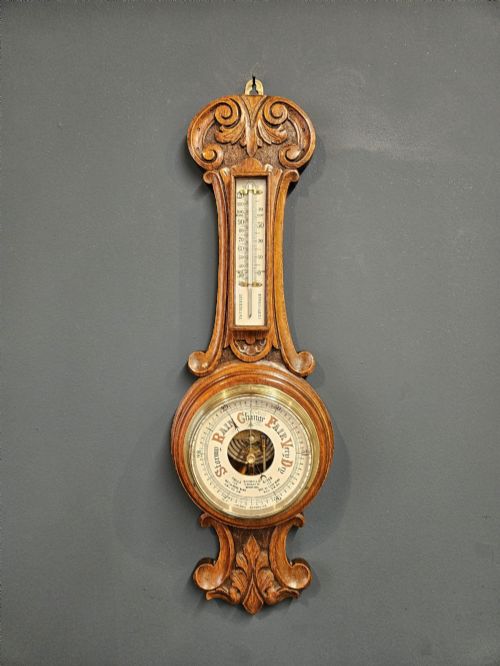
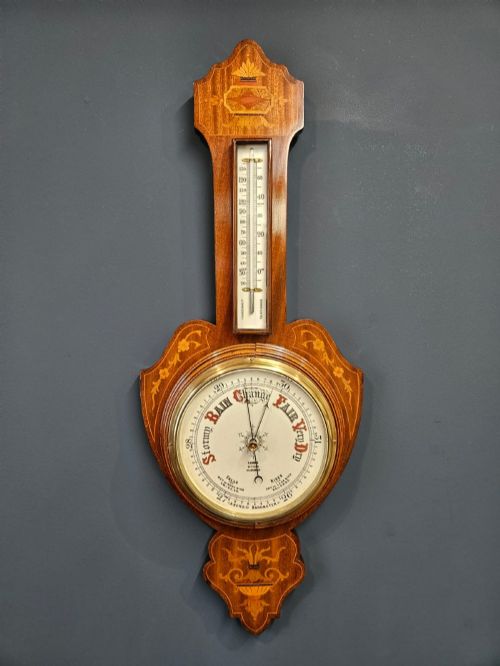
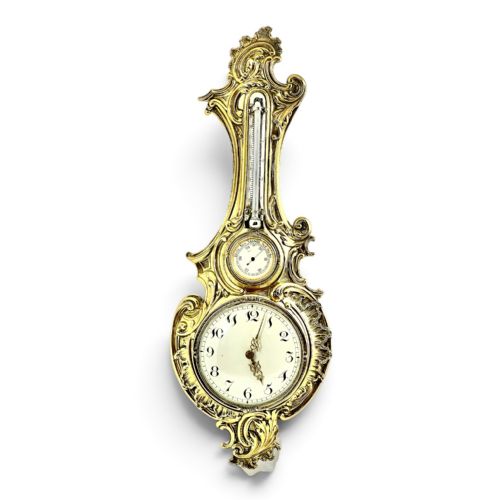
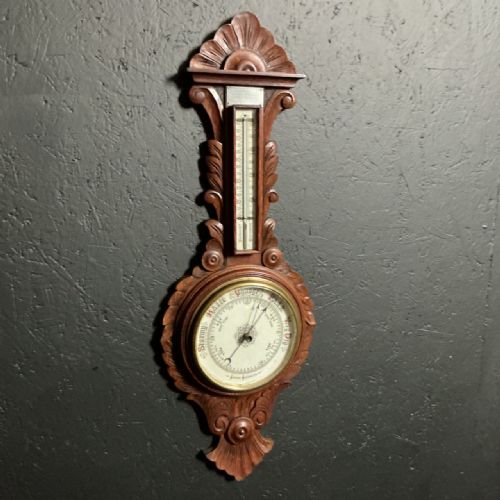
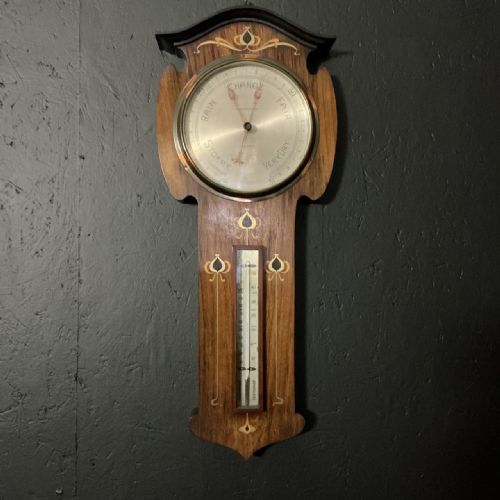
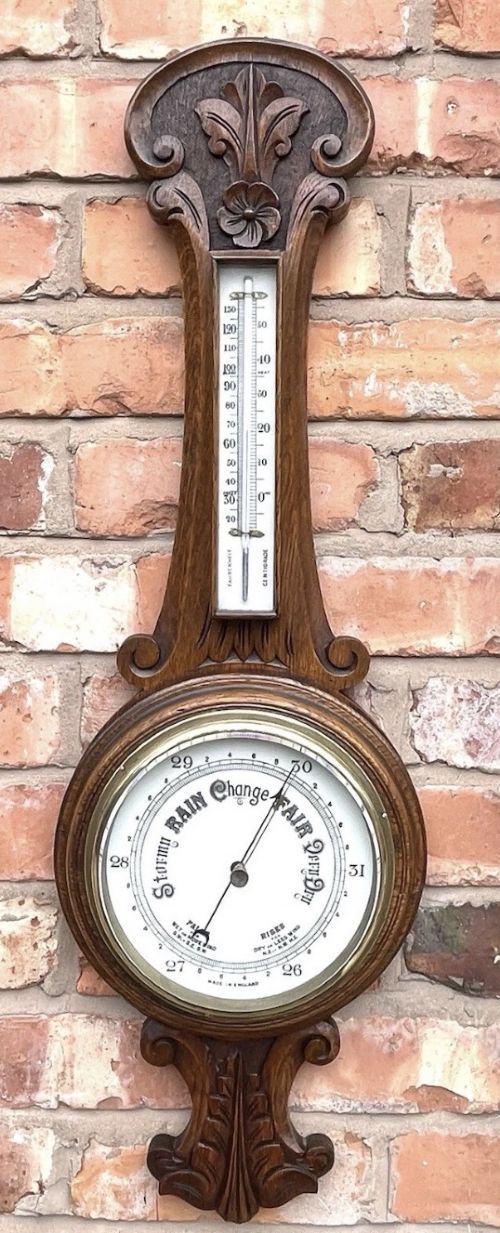
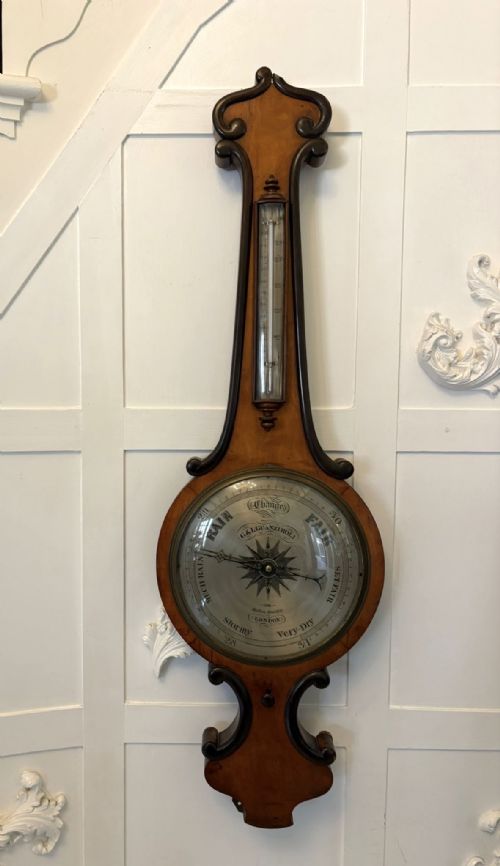
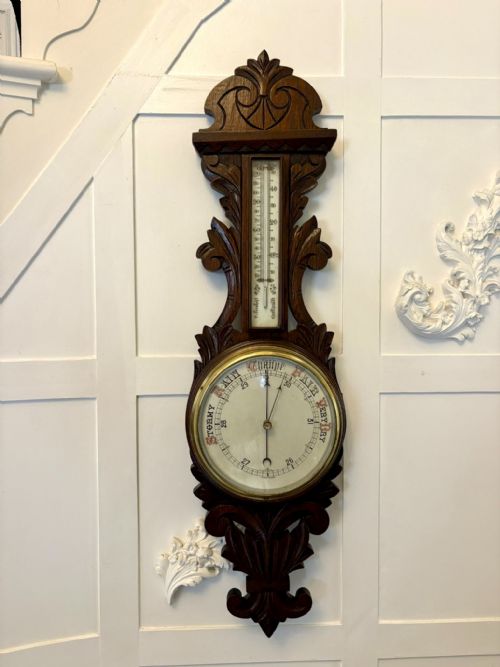
The version most commonly met on this page is the aneroid or mercury barometer, frequently housed in carved oak, mahogany, or walnut cases. Many examples combine multiple functions, mounting a thermometer or clock alongside the main weather dial.
Origins stretch across British workshops from the Victorian era into the Edwardian period, incorporating styles from plain industrial brass casings to heavily carved oak banjo frames.
How they were made
Cabinetmakers shaped dense hardwoods such as oak, mahogany, walnut, and rosewood into banjo, stick, or circular wall frames, often adding brass bezels and porcelain dials. Wood inlay and marquetry occasionally adorned the surfaces of finer domestic pieces.
Scientific mechanics utilised brass and steel movements, sometimes housing mercurial columns or aneroid capsules linked to delicate gears and pointers. Silk thread and glass tubes were also employed in specialist testing and measuring devices.
Edwardian Wall Instrument Retail Price Guide 2026
Typical asking prices for edwardian wall instrument among the pieces listed under this phrase on Sellingantiques today, from the lower quarter to the upper quarter. They describe what is for sale here now, not the wider market.
Several heavy oak barometers are carved with depictions of birds.
What varies in quality
The distinction between standard utility items and superior pieces lies in the crispness of the cabinet carving and the reputation of the instrument maker. Signed dials by established scientific firms indicate a higher grade of mechanical precision.
Materials dictate the upper tier of the range, where solid walnut, detailed marquetry, and heavy brass bulkheads replace simpler beechwood or plain oak cases. The complexity of the combination instruments, such as those housing both barometers and thermometers, also elevates the standard.
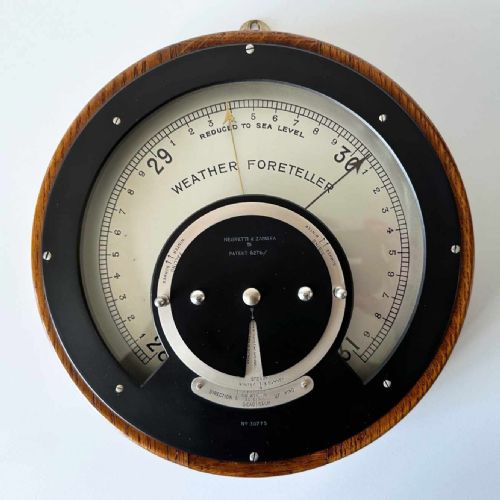
Short & Mason·G & L Guanziroli·Negretti & Zambra·Goodbrands of Manchester·Alexander Wright·Dollond London·Aitchison·J Hicks·Antoine Redier
The Edwardian Wall Instrument Glossary
- Aneroid barometer
- An instrument that measures atmospheric pressure by the expansion and contraction of a flexible metal capsule, eliminating the need for liquid mercury. This design allowed wall instruments to be built into compact banjo or circular cases.
- Stick barometer
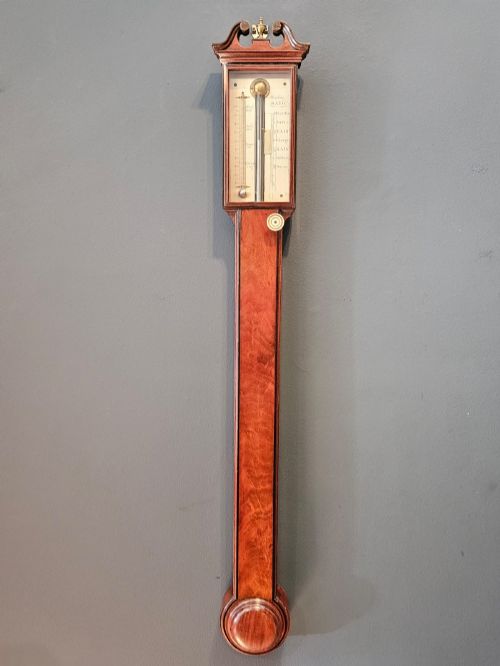
- A tall, narrow wall instrument that uses a vertical column of mercury to register barometric pressure. These pieces often feature exposed scales and protective wooden or glass frontages.
- Banjo barometer
- A household weather glass housed in a curved wooden frame resembling a banjo shape. They frequently incorporate thermometers and hygrometers alongside the primary dial.
- Barograph
- A self-recording meteorological instrument that draws a continuous line of atmospheric pressure onto a revolving drum of graph paper. These mechanical units often sat within polished mahogany and glass cases.
- Bulkhead barometer
- A robust wall instrument styled after marine equipment, enclosed in a heavy brass ring designed for shipboard or industrial use. Their waterproof housings made them suitable for humid environments.
Edwardian Wall Instrument: Frequently Asked Questions
How do I read an aneroid barometer?
Aneroid barometers use a pointer moving across a dial marked with weather predictions like storm, rain, change, fair, and very dry. The rotating bezel carries a secondary hand that you set manually over the primary pointer to track pressure movement over the course of the day.
Rising pointers indicate improving weather, while falling needles suggest approaching moisture or wind. Tapping the glass gently before reading ensures the internal metal capsule has overcome friction and settled accurately.
Where should I hang a wall barometer?
Choose a stable interior wall away from direct sunlight, radiators, and heavy draughts. Rapid temperature shifts can alter the mechanical readings inside brass and wood casings.
Ensure the fixing is secure, particularly with heavier carved oak and mercury-filled stick barometers. Wall placement at eye level allows easy daily adjustment of the forecast needle.
How do I tell mercury barometers from aneroid ones?
Mercury stick barometers feature long vertical glass tubes filled with a silvery liquid metal alongside a graduated scale. They rely on direct fluid height to measure atmospheric weight.
Aneroid barometers use circular dials with mechanical pointers driven by an internal vacuum capsule. They lack visible liquid columns and generally hang in square, circular, or banjo-shaped wooden frames.
Can antique barometers still predict the weather?
Most antique barometers continue to register atmospheric pressure accurately if their internal mechanical linkages remain clean and uncorroborated. Mercury and aneroid systems respond reliably to outside weather shifts when calibrated correctly against local readings.
Relocating an instrument to a different altitude requires professional calibration using the adjustment screw on the back. Once set, they function as practical meteorological tools just as they did a century ago.