

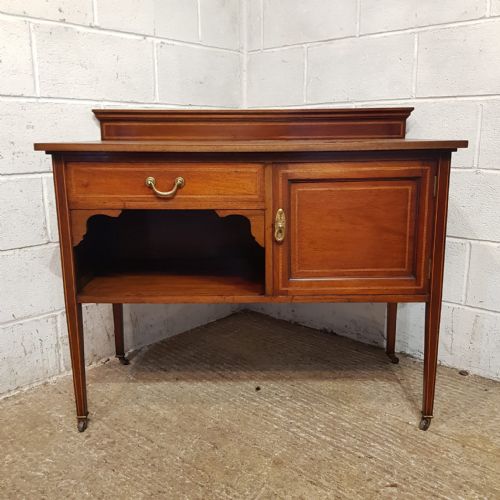


Edwardian Vanity Cabinet
These edwardian vanity cabinet options and related washstands offer practical bedroom utility paired with fine period timber work.
Edwardian Vanity Cabinet
An edwardian vanity cabinet and its closely related washstands and dressing tables provide functional bedroom surfaces designed for daily grooming and personal storage. These pieces combine utilitarian washing or dressing equipment with the refined cabinet-making standards typical of the early twentieth century.
Makers and workshops of the time produced these items in various regional styles, ranging from simple domestic washstands to elaborate dressing chests and gentleman shaving stands. Walnut, mahogany, and satinwood inlay appear consistently across the selection.
How they were made
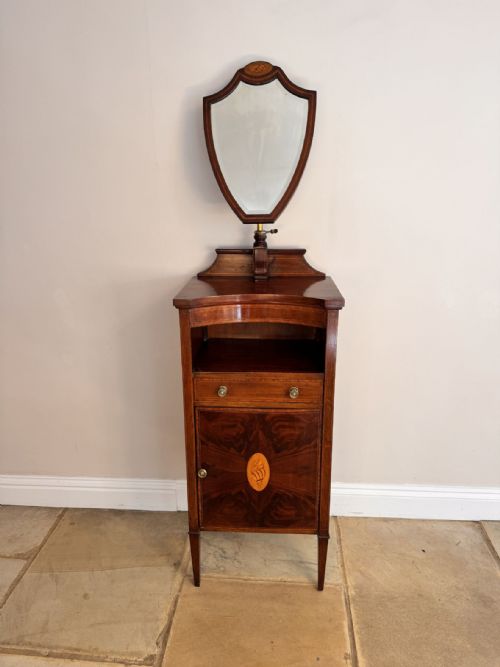
Cabinet makers utilised solid and veneered timbers such as mahogany, walnut, and oak to construct the main frames of these pieces. Satinwood inlay provides decorative contrast on drawer fronts and panels, reflecting prevailing Edwardian and Victorian tastes.
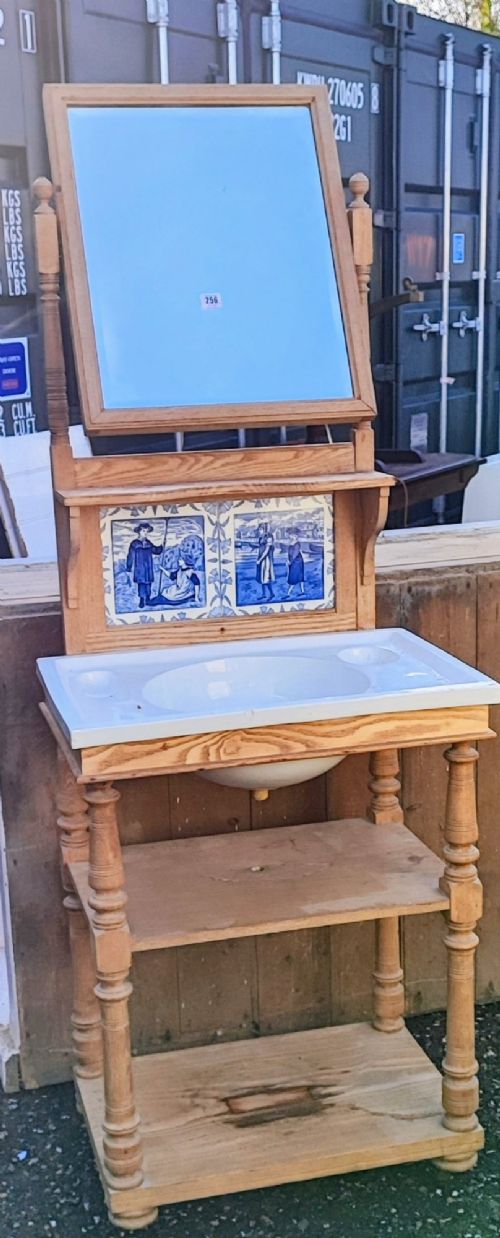
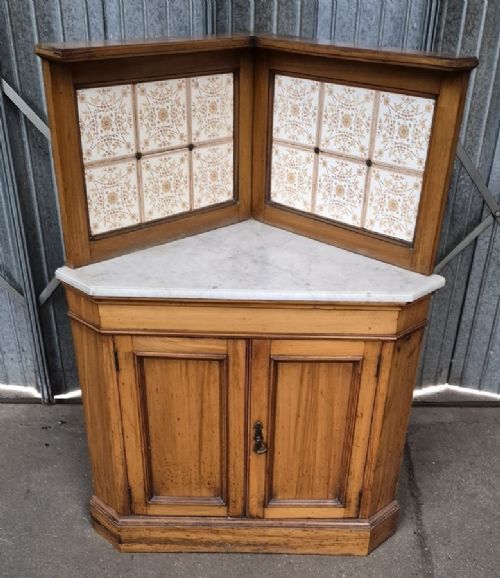
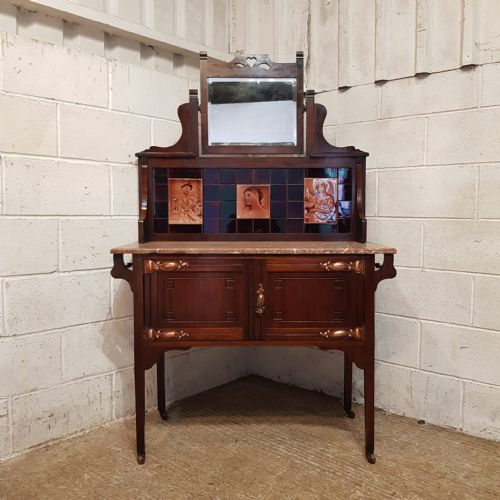
Functional surfaces frequently incorporate inset marble slabs and ceramic tiles designed to withstand moisture during washing routines. Brass hardware, including handles and towel rails, completes the construction alongside bevelled glass mirrors.
Edwardian Vanity Cabinet Retail Price Guide 2026
Typical asking prices for edwardian vanity cabinet among the pieces listed under this phrase on Sellingantiques today, from the lower quarter to the upper quarter. They describe what is for sale here now, not the wider market.
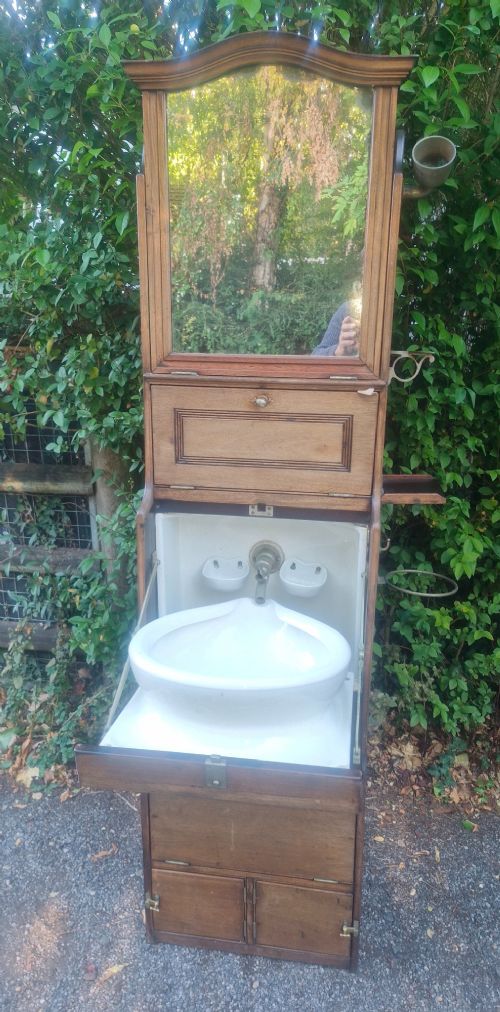
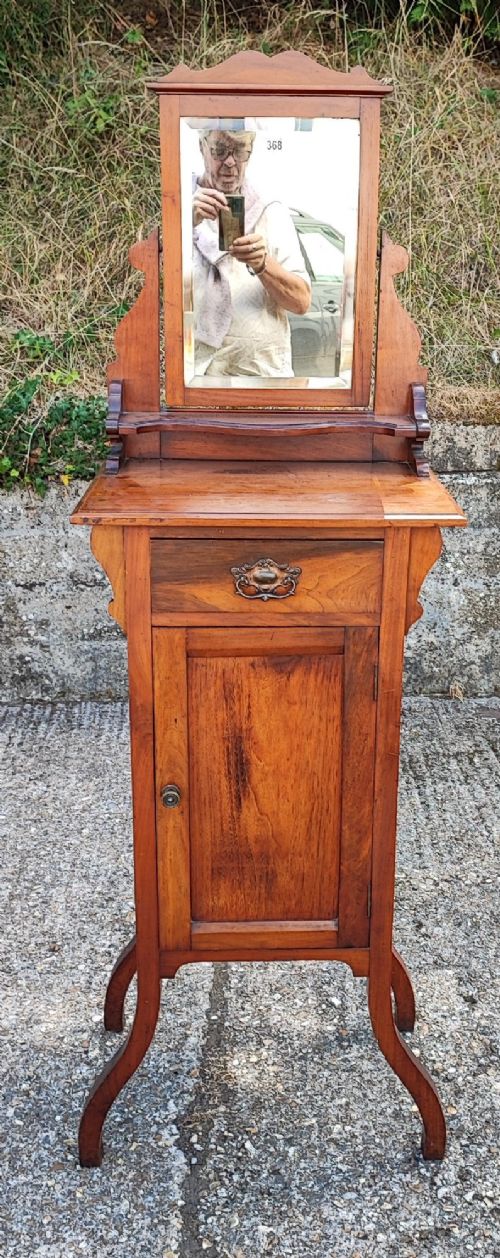
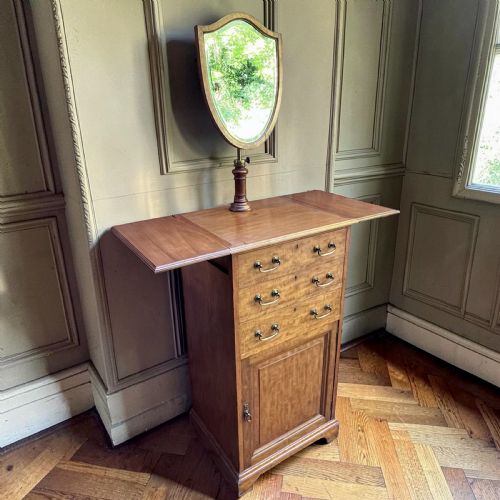
Several pieces include dedicated spaces for gentlemen to shave and adjust their mirrors before facing the morning.
What varies in quality
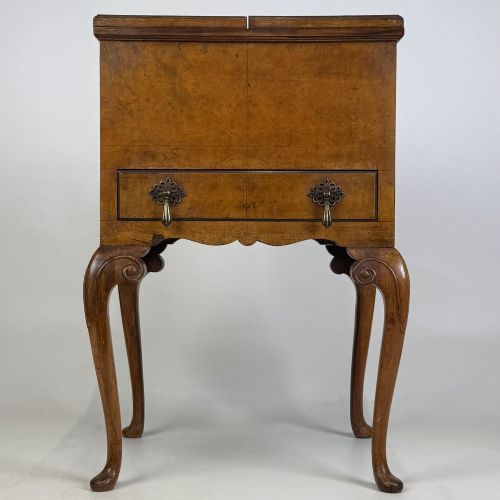
The standard of timber selection and complexity of inlay work separate standard domestic pieces from high workshop productions. Superior examples employ finely figured burr walnut or rich mahogany alongside detailed marquetry.
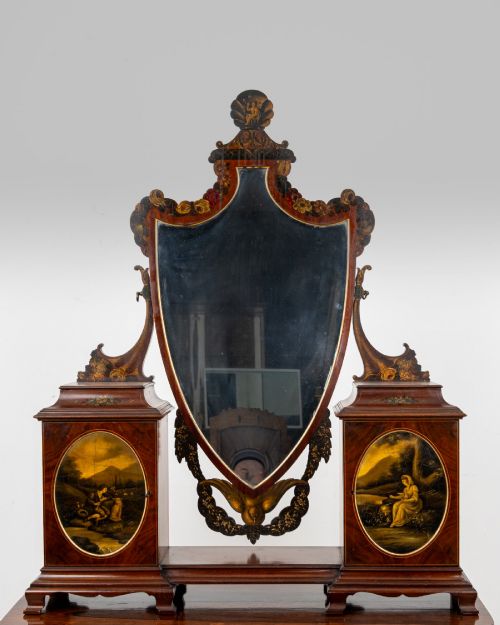
The integration of materials such as rouge marble tops, majolica panels, and adjustable brass mirror hardware indicates workshop origins. The precision of joinery in drawers and cabinet doors determines the overall structural integrity.
Flashman & Co·Edwards & Roberts·James Shoolbred·Gillows
The Edwardian Vanity Cabinet Glossary
- Marquetry
- Decorative woodwork where pieces of veneer are fitted into a ground to form floral or geometric patterns. This technique appears frequently on Edwardian dressing furniture.
- Satinwood
- A durable hardwood with a lustrous yellowish grain utilised for banding and inlay work. It contrasts sharply with darker woods like mahogany and walnut.
- Cheval mirror
- A full-length mirror supported in a frame that allows it to tilt. Table top versions also exist within dressing chest and cabinet designs.
- Majolica
- A type of earthenware glazed with tin-opacified enamel, often featuring colourful moulded reliefs. These panels decorate specific washstand backs.
Edwardian Vanity Cabinet: Frequently Asked Questions
What is an edwardian vanity cabinet?
An edwardian vanity cabinet is a piece of bedroom furniture designed for washing and grooming, typically combining wood cabinetry with functional surfaces.
These items range from simple washstands with marble tops to dressing chests with adjustable mirrors and storage drawers.
How were washstands used?
Washstands served as the primary washing station in bedrooms before plumbed bathrooms became standard in every home.
They held basins, pitchers, and toiletries on stone or tiled surfaces that protected the surrounding wood from water splashes.
Where do these pieces originate?
The pieces originate primarily from the Edwardian period and late Victorian era in Britain.
Workshops and retailers constructed them from timbers such as mahogany, walnut, and oak.
How do I care for marble tops?
Marble top washstands require cleaning with mild, non-acidic soap and warm water to protect the polished stone surface from staining.
Avoiding harsh chemical cleaners preserves the natural finish of the marble.