



Edwardian Upholstery Armchair
An edwardian upholstery armchair brings deep comfort and traditional craft to a room, offering generous proportions and period character.
Edwardian Upholstery Armchair
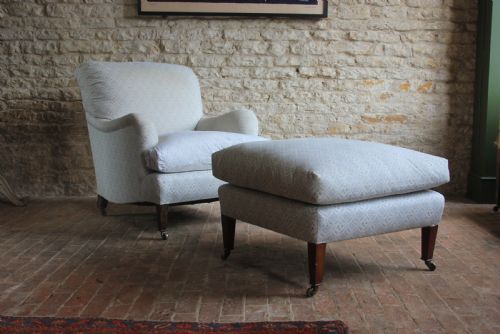
The edwardian upholstery armchair category encompasses deep-seated club chairs, winged fireside seats, and smaller boudoir or occasional chairs designed for domestic comfort. These pieces frequently appear alongside Victorian, nineteenth-century, and early twentieth-century examples that share similar upholstered forms.
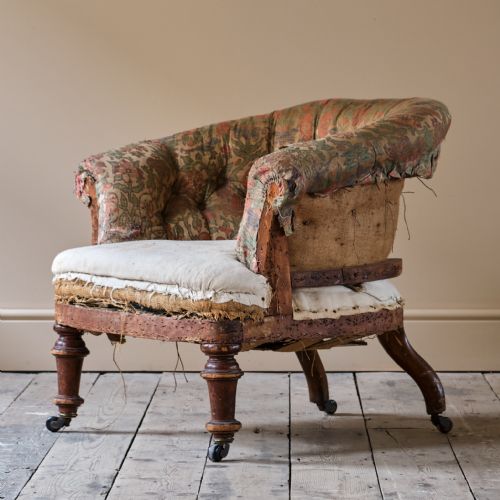
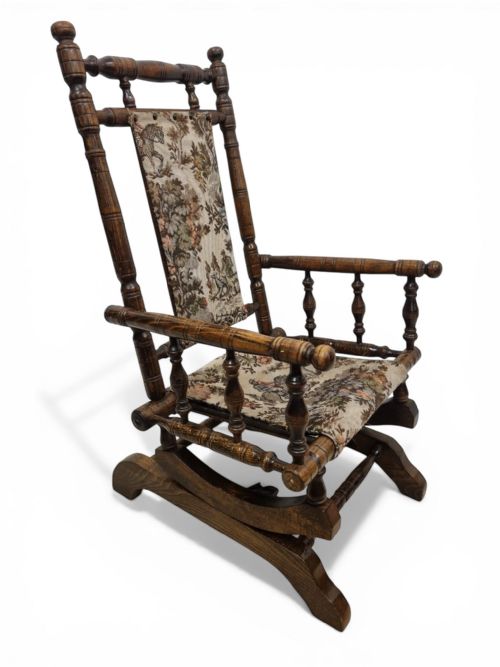
Buyers will encounter various stylistic interpretations, including English country house designs, Howard style models, and inlaid mahogany frames. Forms range from compact tub backs to expansive library armchairs and rocking chairs.
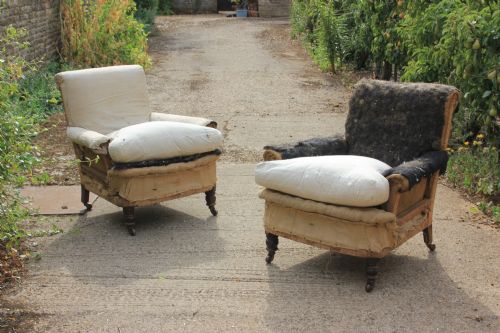
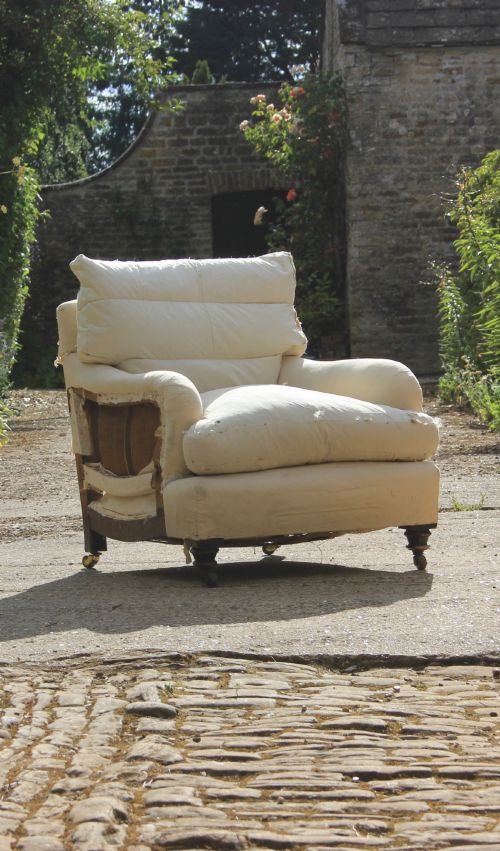
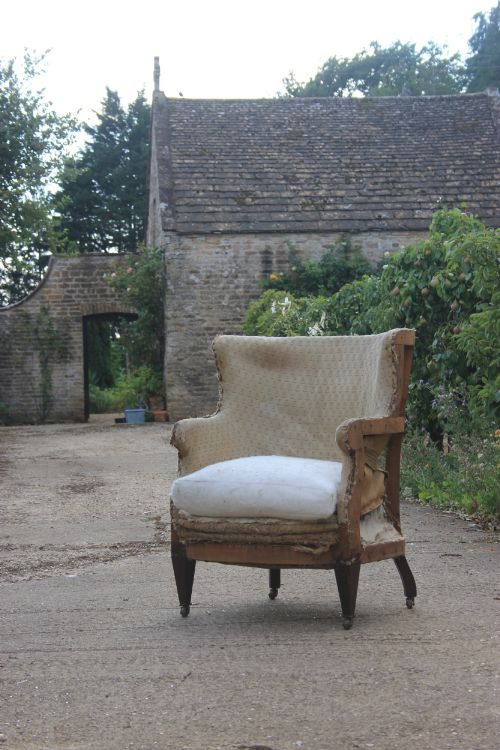
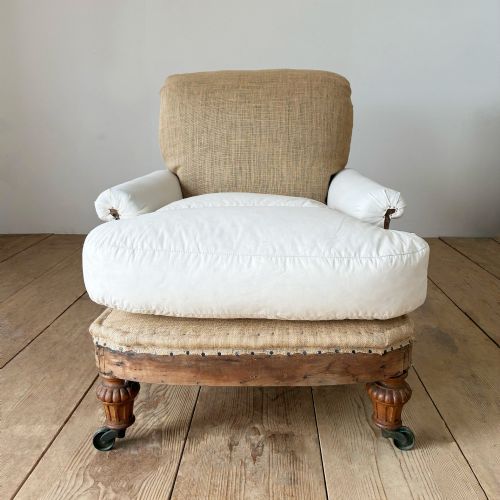
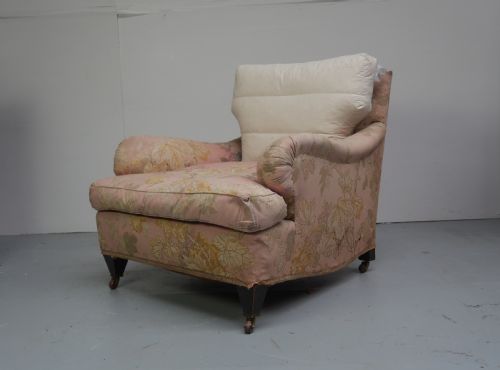
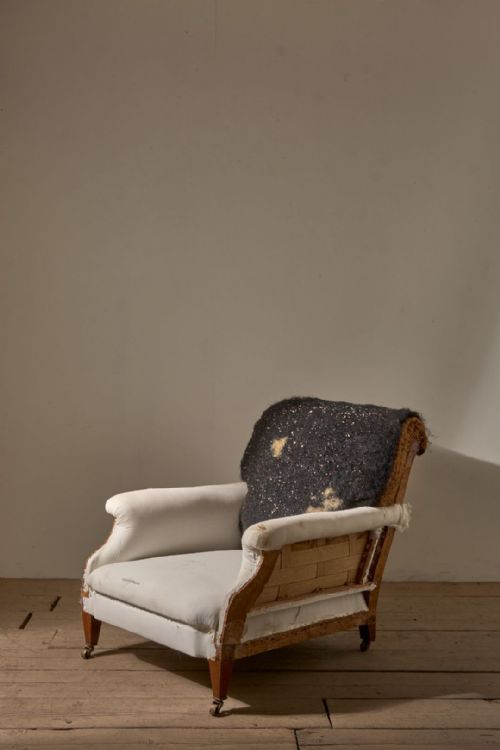
Many items survive in a state requiring complete reupholstery, often supplied with calico or ticking preparation, while others retain velvet, tapestry, leather, or printed fabric coverings.
Materials and construction
Frames rely on sturdy timbers such as mahogany, walnut, oak, and general hardwood, sometimes accented with fine inlay work or exposed polished legs with brass castors. Internal padding depends on traditional hessian support and heavy upholstery layers.
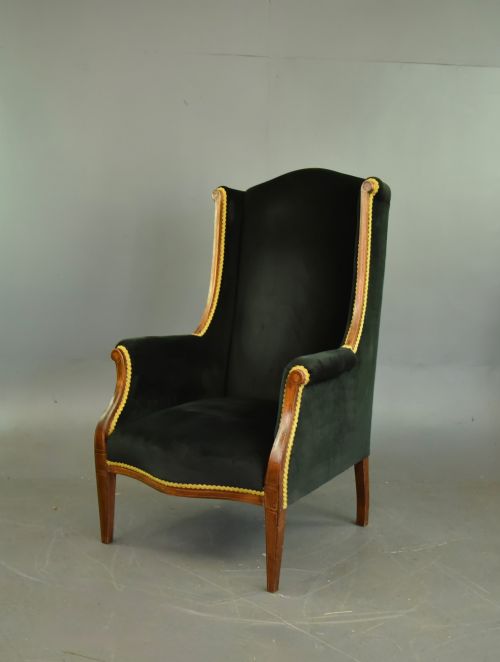
Visible textile choices span from crushed green velvet and patterned cotton to traditional ticking and floral fabric, whilst specific pieces utilise leather applied to library and desk armchairs.
Materials recorded across the inventory include mahogany, walnut, oak, brass, velvet, leather, hessian, and ticking.
Assessing quality and condition
The standard of an edwardian upholstery armchair rests upon the integrity of the internal wooden frame and the precision of the joinery beneath the fabric layers. Pieces bearing maker stamps or attribution to notable workshops carry distinct recognition.
The distinction between standard commercial production and finer output shows in the depth of the seating proportions, the crispness of mahogany inlay, and whether the framework retains its original castors and structural rigidity.
Howard and Sons·Gillows·Robert Strahan
The Edwardian Upholstery Armchair Glossary
- Howard style
- A low-slung, deep-sprung armchair design known for exceptional comfort and rolled arms. This form influenced numerous late nineteenth and early twentieth-century workshops.
- Ticking
- A tightly woven, heavy cotton fabric traditionally used as a durable inner lining for upholstered furniture. It often serves as the base layer before final decorative cloth is applied.
- Wingback
- An armchair featuring protective side panels attached to the arms and back to block draughts. These pieces are frequently encountered in fireside settings.
- Button back
- An upholstery technique where depressions are created by securing buttons through the padding to the wooden frame. This method produces a patterned, tufted surface.
- Calico
- A plain-woven, unbleached cotton cloth utilised as the primary foundational cover during the reupholstery process. It holds the internal stuffing firmly in place before top fabric is added.
Edwardian Upholstery Armchair: Frequently Asked Questions
What defines a Howard style armchair?
A Howard style armchair is characterised by low, scrolling arms, deep seat proportions, and traditional sprung construction designed for maximum lounging comfort. These chairs often feature concealed castors and low wooden legs.
Originally popularised by the nineteenth-century firm Howard and Sons, the aesthetic became widely imitated across the Edwardian period and remains a benchmark for English seating design.
Are these chairs suitable for daily use?
These armchairs were built for domestic relaxation and heavy daily occupation, employing robust hardwood frames and resilient internal webbing. Many surviving examples remain fully functional for modern living spaces.
Chairs requiring reupholstery allow buyers to renew internal padding and select durable modern fabrics while preserving the original historical framework.
How do I spot an Edwardian piece?
Edwardian seating typically exhibits lighter proportions than heavy Victorian furniture, often incorporating mahogany frames, subtle string inlay, and tapered legs. Stylistic influences often lean towards refined country house comfort.
Construction details and timber choices help distinguish these 1900s items from earlier nineteenth-century Victorian or later twentieth-century productions.
What does reupholstery included mean?
Listings offering reupholstery included indicate that the frame is supplied stripped back or prepared in calico, ready for the buyer to choose their own top fabric. The dealer or an upholsterer then completes the final covering.
This approach allows customisation of the textile while retaining the antique wooden structure and original stuffing profile of the armchair.