



Edwardian Trombone Chain
An edwardian trombone chain is a distinctive watch or neck chain built from elongated links, sought after for its bold silhouette and secure historical fastenings.
Edwardian Trombone Chain
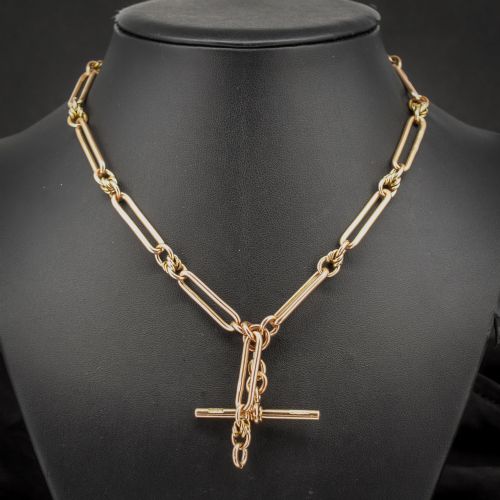
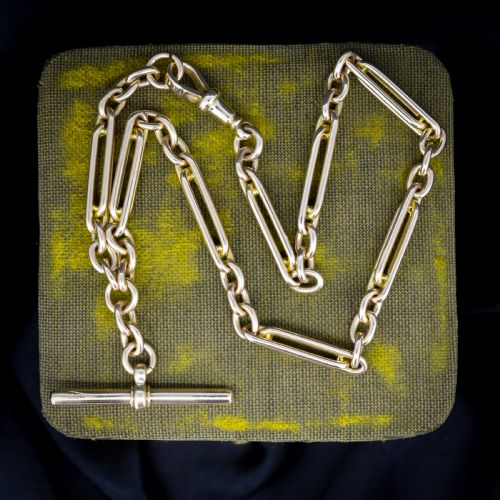
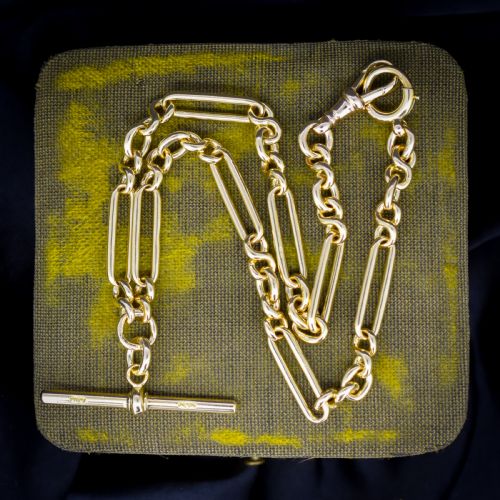
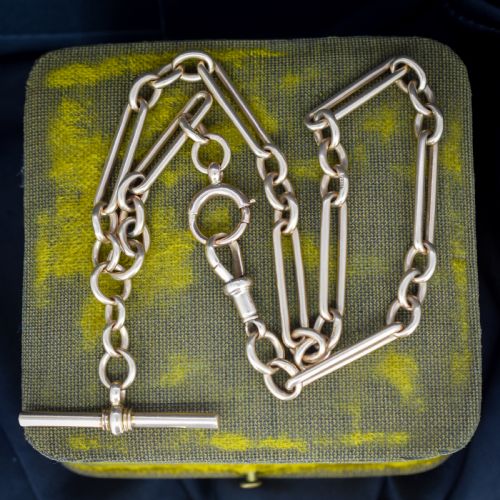
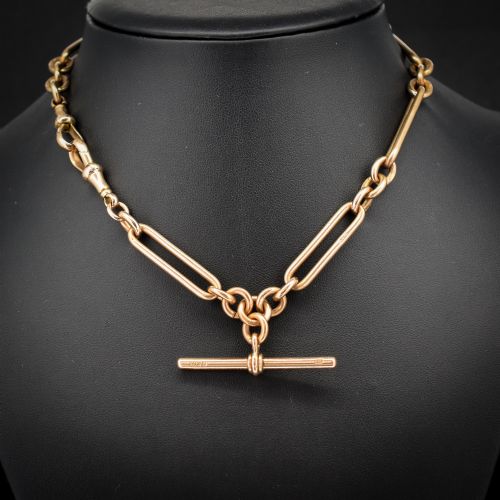
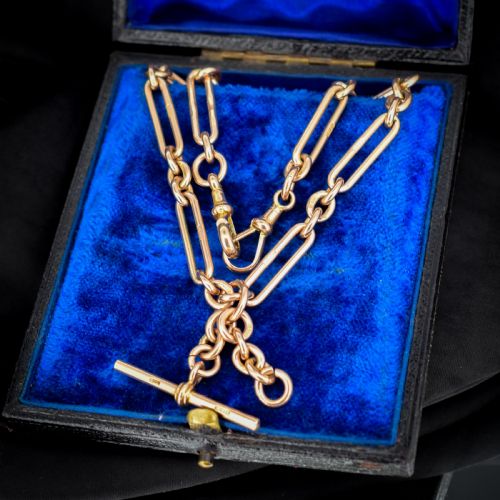
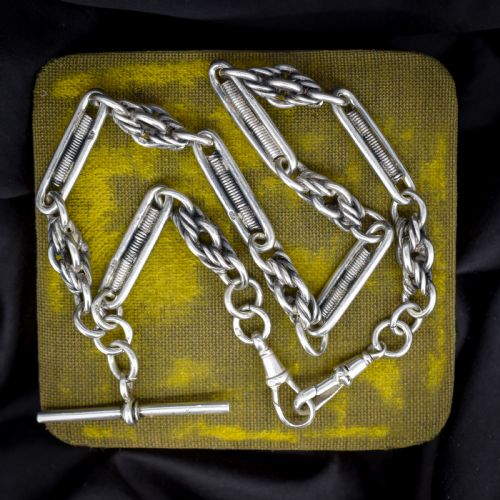
The edwardian trombone chain takes its name from the characteristic shape of its long, rectangular links, which resemble the slide of a musical instrument. These pieces primarily function as watch chains, Albert chains, or converted necklaces, often measuring in lengths spanning from thirteen to nineteen inches.
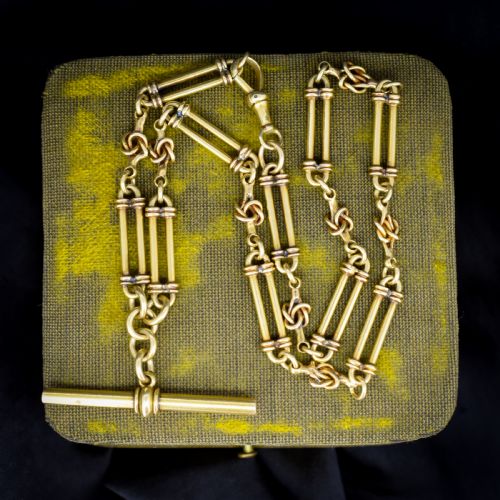
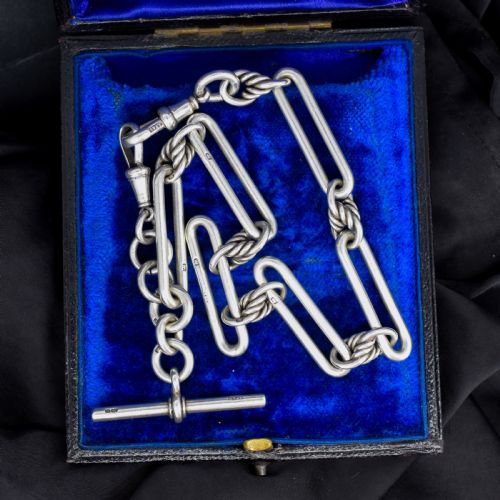
The examples found here cross several distinct periods, including the nineteenth century, the Edwardian era, and into the 1920s. Alongside the primary trombone links, many pieces incorporate alternative elements such as love knots, oval links, and fetter patterns.
Originating as utilitarian watch chains designed to secure pocket timepieces with T-bars and dog clips, these items frequently appear today adapted for wear as necklaces. The survivor stock includes solid sterling silver alongside various gold purities from nine carat up to eighteen carat, plus platinum.
Materials and construction
Goldsmiths and silversmiths constructed these chains using durable precious metals, predominantly sterling silver, alongside nine carat, ten carat, and eighteen carat yellow and rose gold, together with platinum. The metal selection dictates both the weight and the tone of the finished piece.
Individual long rectangular links are joined by smaller connecting rings or ornate patterns such as love knots and fetter links to create a flexible strand. Master makers integrated functional components like dog clips, bolt rings, barrel clasps, and T-bars directly into the structure.
Edwardian Trombone Chain Retail Price Guide 2026
Typical asking prices for edwardian trombone chain among the pieces listed under this phrase on Sellingantiques today, from the lower quarter to the upper quarter. They describe what is for sale here now, not the wider market.
Several chains still retain their antique T-bars, originally designed to slot securely through a gentleman's waistcoat buttonhole.
Factors of quality and distinction
The standard of an edwardian trombone chain rests on the heft of the precious metal and the precision of the link assembly. Thicker wire gauges and substantial overall weights distinguish top-tier examples from lighter, finer variants.
Completeness of original components drives distinction, particularly the presence of matching hallmarks, functioning dog clips, and original T-bars. Subtle variations in auxiliary link types, such as intricate love knots or alternating fetter patterns, elevate the design.
The Edwardian Trombone Chain Glossary
- Trombone link
- A long, rectangular metal link shaped like a trombone slide, forming the repeating pattern of the chain.
- Albert chain
- A pocket watch chain designed to pass through a waistcoat buttonhole, featuring a T-bar at one end and a swivel clip at the other.
- Dog clip
- A spring-loaded swivel fastener attached to watch chains and necklaces to secure charms, pendants, or pocket watches.
- T-bar
- A short transverse bar attached to the centre of an Albert chain used to anchor the chain through a garment buttonhole.
- Fetter link
- A shorter connecting link used in historical chain construction, often alternated with longer trombone links.
Edwardian Trombone Chain: Frequently Asked Questions
How do I wear a pocket watch chain as a necklace?
Many historical watch chains convert easily into necklaces by fastening the original dog clip directly to a jump ring or to the opposite end of the chain.
The T-bar can be left to hang as a decorative pendant drop at the front or removed if preferred.
What is the difference between an Albert chain and a standard chain?
An Albert chain specifically includes structural elements designed for securing a pocket watch, such as a T-bar and a swivel dog clip.
Standard chains lack these specific utilitarian attachments and rely on simpler clasps like bolt rings or barrel clasps.
Are these chains made of solid gold?
The pieces utilise various precious metal standards, ranging from nine carat and ten carat gold up to eighteen carat yellow and rose gold, alongside platinum and sterling silver.
Hallmarks stamped onto the metal components or T-bars typically confirm the exact purity.
How do I care for silver and gold chains?
Precious metal chains benefit from gentle cleaning with a soft polishing cloth specifically suited for silver or gold to maintain their finish.
Store them flat or hung individually to prevent the elongated trombone links from kinking or tangling.