

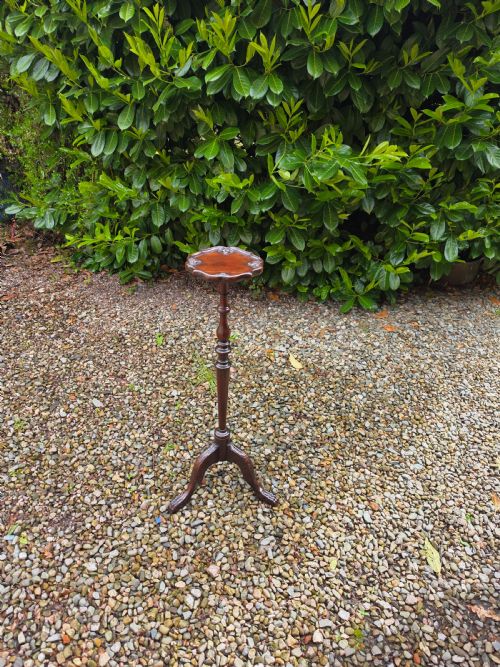


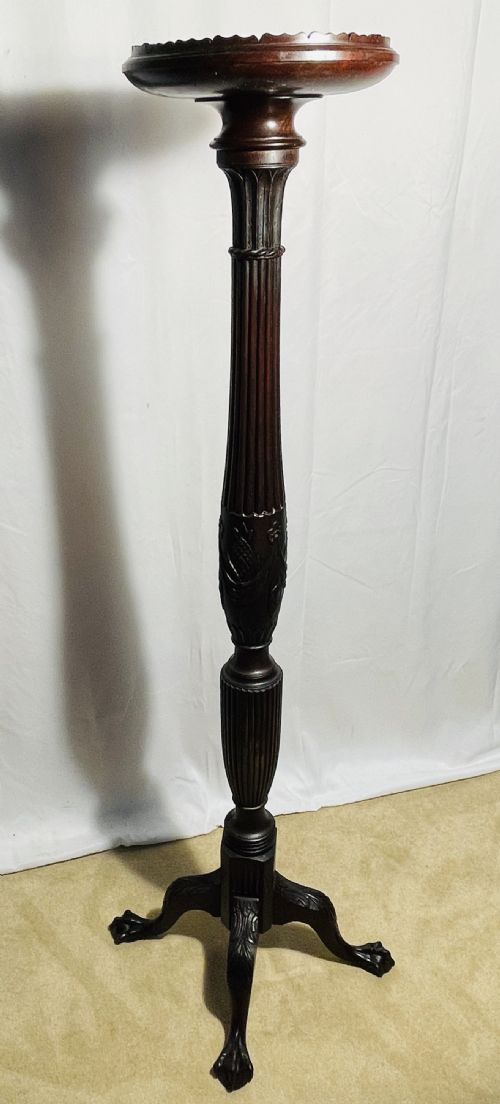


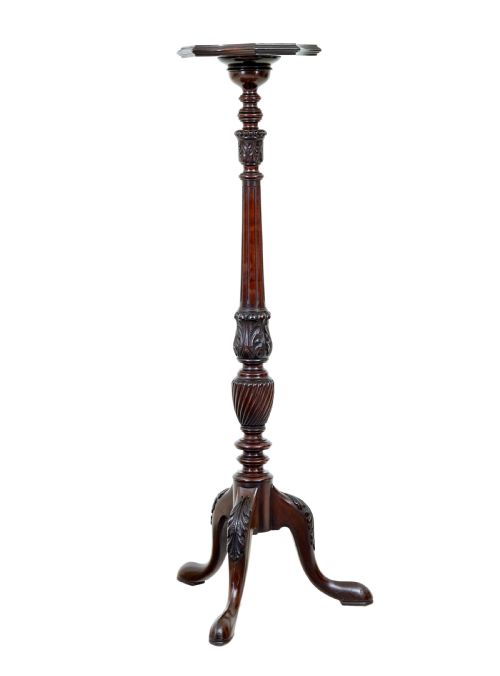


Edwardian Tripod Torchere
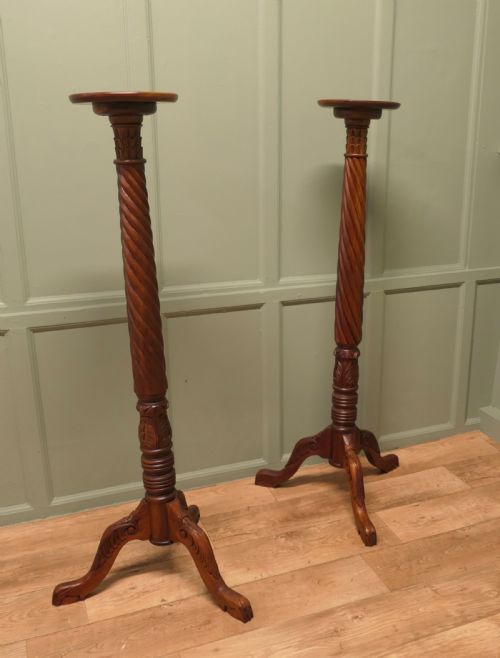
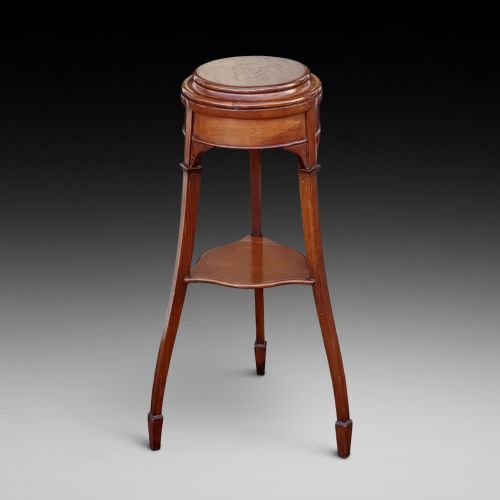
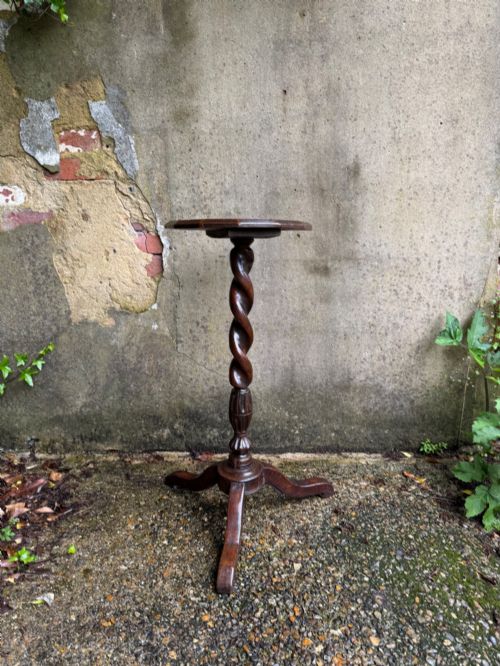
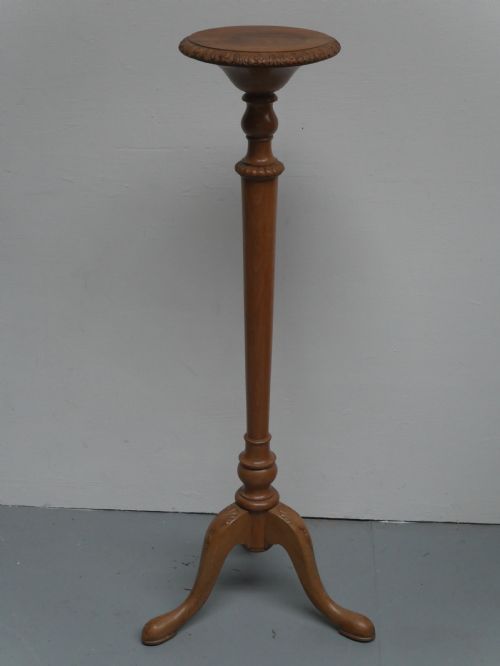
An edwardian tripod torchere brings height and a slender silhouette to a corner, lifting a plant, vase or lamp above the room.
Edwardian Tripod Torchere
The edwardian tripod torchere search phrase brings up tall display furniture designed to hold plants, jardinieres, busts and lamps. These slender stands occupy minimal floor space while drawing the eye upward.
Most examples found here date from the Edwardian period and the early twentieth century, alongside Victorian and nineteenth-century antecedents. They appear alongside related plant stands, pedestal bases and floor lamp adaptations.
Revival styles heavily influence the form, with Georgian Revival, Adam Revival, Regency Revival, Jacobean Revival and Queen Anne period revivals appearing frequently. These historicist designs adapt earlier decorative vocabulary for Edwardian drawing rooms.
Materials and Construction
Makers relied principally on timber, utilising mahogany and walnut as the primary woods for their fine grain and stability. Oak, hardwood and black lacquer decorated surfaces also appear across the selection.
Carving provides the primary ornamentation on shafts and supports, executed by hand to render classical motifs and revival details. Brass mounts and gold leaf occasionally accent the woodwork.
Edwardian Tripod Torchere Retail Price Guide 2026
Typical asking prices for edwardian tripod torchere among the pieces listed under this phrase on Sellingantiques today, from the lower quarter to the upper quarter. They describe what is for sale here now, not the wider market.
One black lacquer decorated torchere wears its Queen Anne revival disguise into the twentieth century with absolute confidence.
Factors of Quality
Quality rests in the crispness of the carving and the stability of the three-legged base. A well-proportioned shaft meets the floor cleanly without excessive bulk.
Selection of timber dictates the visual weight of the piece, with figured walnut and rich mahogany achieving a more refined finish than plain hardwoods.
The Edwardian Tripod Torchere Glossary
- Torchere
- A tall ornamental stand intended to carry a light, vase or plant. The form originated in the seventeenth century for holding burning torches or candles.
- Jardiniere
- An ornamental pot or stand for plants and flowers. These stands often feature raised rims or recessed tops to secure heavy ceramic vessels.
- Pedestal
- An architectural support used to elevate a bust, urn or sculpture. In domestic furniture, it describes a freestanding column or pillar base.
- Tripod
- A three-footed support structure utilised for stability on uneven floors. This configuration prevents the rocking that can affect four-legged stands.
- Revival
- A style that consciously copies the aesthetic of a previous historic era. Examples include Georgian, Adam, Regency, Jacobean and Queen Anne revivals.
Edwardian Tripod Torchere: Frequently Asked Questions
What is an edwardian tripod torchere used for?
These tall stands support items that benefit from elevation, such as potted plants, heavy vases, portrait busts and floor lamps.
By lifting objects off the floor, they fill empty corners and create vertical interest in a room without taking up much surface area.
How do I style a torchere stand at home?
Place a torchere in an empty corner, beside a fireplace, or framing a doorway where a vertical accent is needed.
Keep the top balanced with a trailing plant, a ceramic bowl, or a slender lamp that matches the proportions of the stand.
How can I tell an Edwardian piece from a Victorian one?
Edwardian stands tend to display lighter proportions, brighter mahogany or walnut tones, and more delicate revival detailing.
Victorian pieces often feel heavier in the hand, utilising darker finishes and denser, more robust carving.