



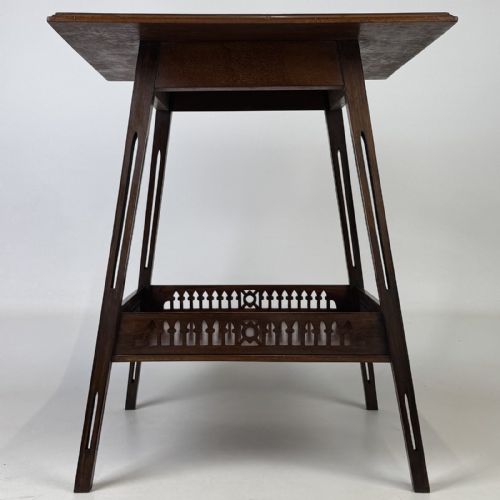
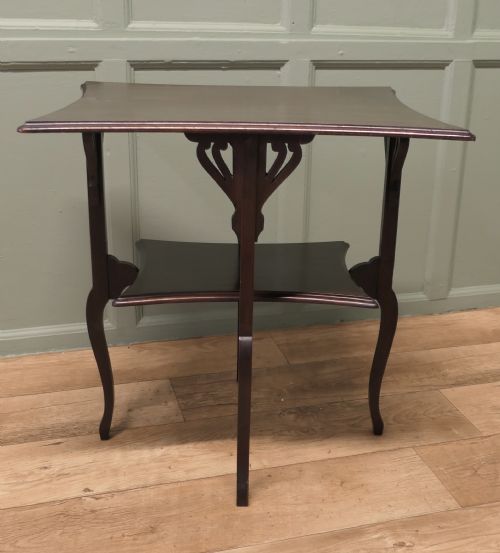
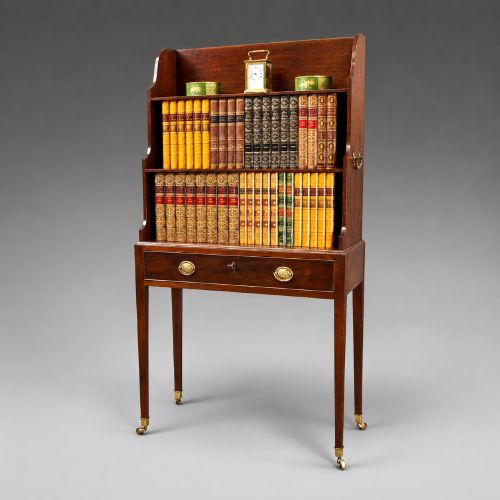
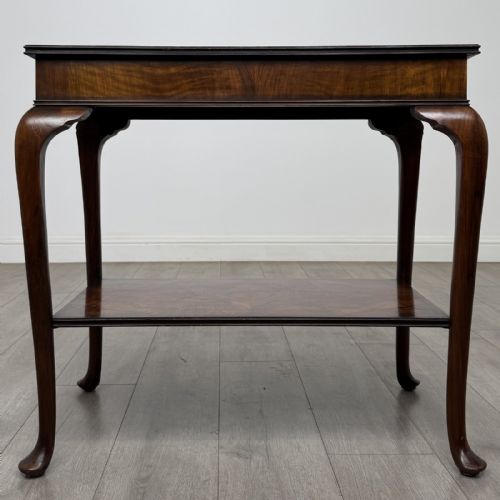


Edwardian Tier Shelf
These edwardian tier shelf pieces offer practical multi-level storage for books and ornaments, bringing slender timber display space to any room.
Edwardian Tier Shelf
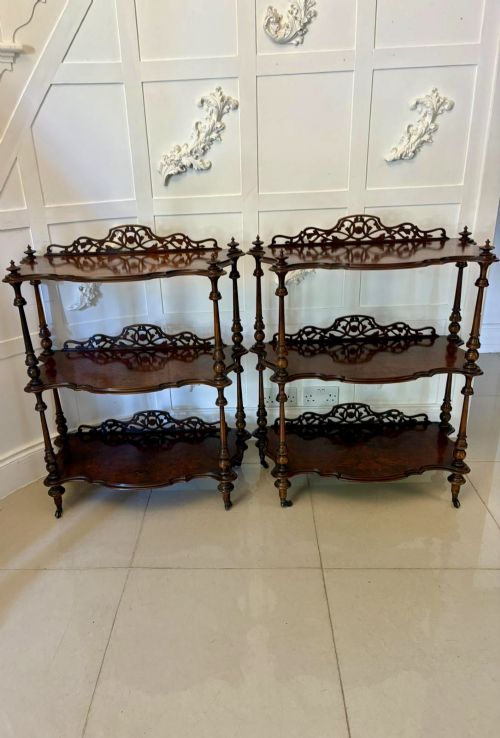
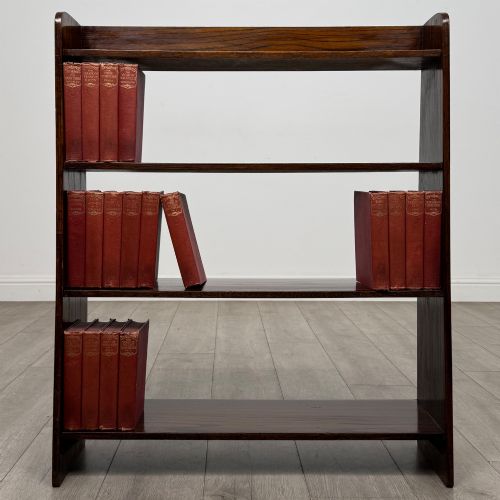
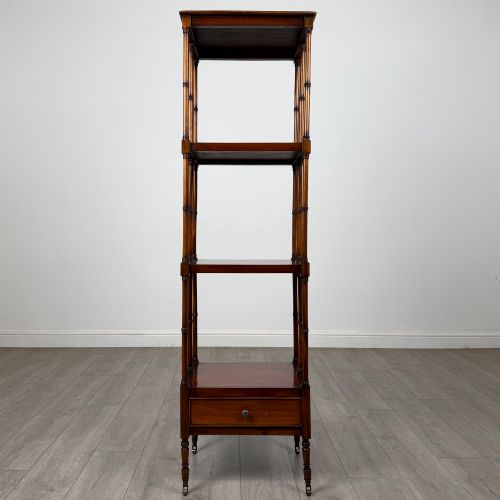
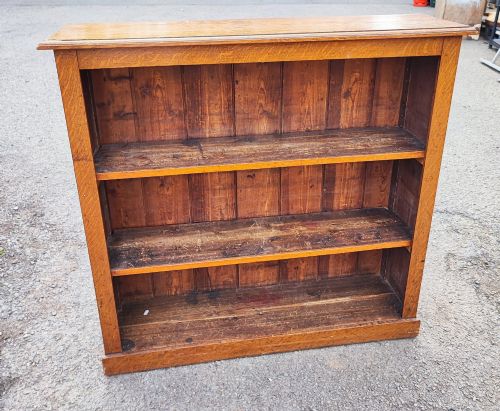
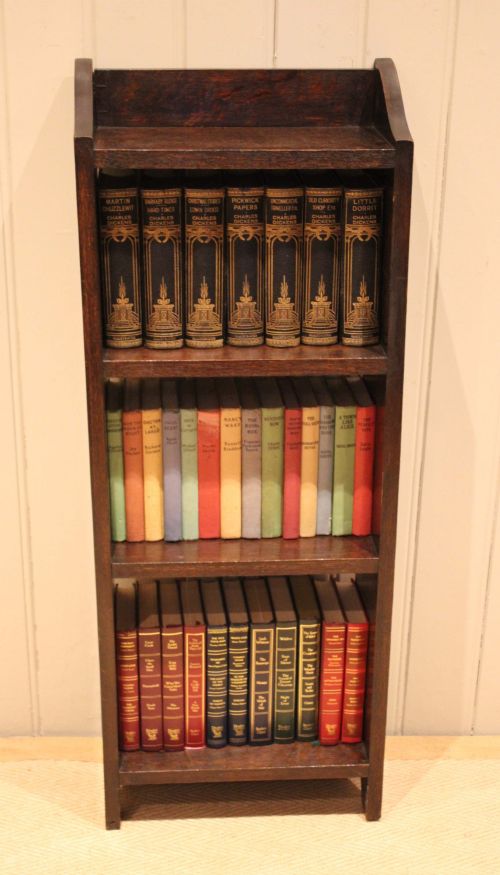
An edwardian tier shelf usually appears as a multi-level etagere, whatnot, or open bookcase designed for displaying books and decorative objects. The selection here leans heavily towards polished mahogany and oak pieces featuring multiple horizontal tiers.
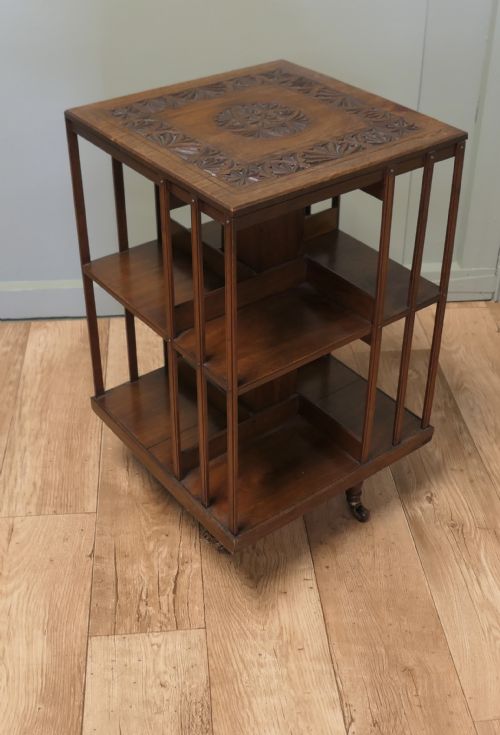
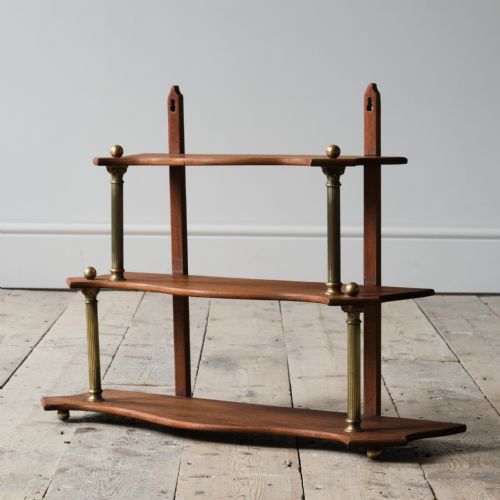
Makers of the period often combined shelving with side tables or rotating mechanisms, creating functional furniture for compact spaces. Buyers will encounter wall-hanging versions alongside freestanding revolving bookcases and tiered display stands.
Most examples originate from the Edwardian era or around nineteen hundred, carrying the lighter proportions that replaced heavier Victorian designs. The emphasis remains firmly on vertical display and accessible storage.
How they were made
Cabinetmakers relied primarily on mahogany and oak, frequently adding burr walnut veneers or rosewood to feature surfaces. Brass fittings, slender pillars, and subtle inlay work provided functional reinforcement and decorative contrast without adding undue weight.
Construction techniques balanced stability with visual lightness, utilising mortise and tenon joints for upright supports and secure shelf housings. Fretwork brackets and turned spindles offered structural support while maintaining the open, airy silhouette characteristic of the period.
Edwardian Tier Shelf Retail Price Guide 2026
Typical asking prices for edwardian tier shelf among the pieces listed under this phrase on Sellingantiques today, from the lower quarter to the upper quarter. They describe what is for sale here now, not the wider market.
Some revolving oak bookcases let you browse an entire library from the comfort of a single armchair.
What varies in quality
The choice of timber and veneer figure dictates the initial visual impact, with select burr walnut and figured mahogany commanding greater attention. Grain matching across multiple tiers and shelves demonstrates the maker's underlying skill and care.
Structural refinement separates standard production pieces from finer examples, visible in the precision of inlaid stringing and carved fretwork. Smooth operation in revolving tiers or fitted components indicates superior original assembly and thoughtful material selection.
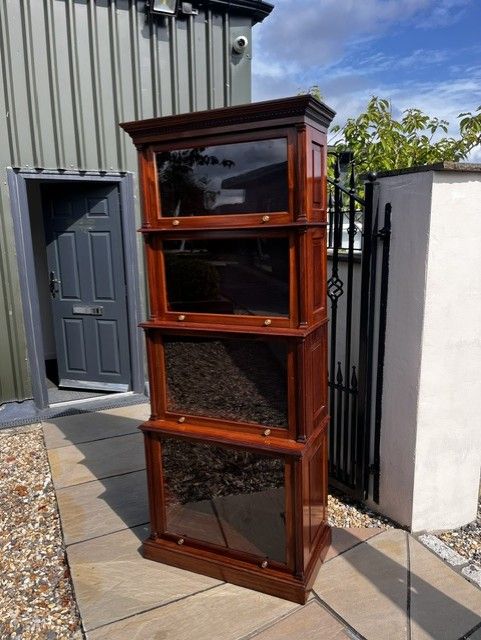
Globe Wernicke·Samson and Son
The Edwardian Tier Shelf Glossary
- Etagere
- A piece of furniture consisting of a set of open shelves for displaying small objects. These tiered stands became particularly popular during the late nineteenth and early twentieth centuries.
- Whatnot
- An open multi-tiered piece designed for holding ornaments or books. They typically feature three or more shelves supported by slender corner posts.
- Waterfall bookcase
- A standing set of open shelves where each successive shelf is slightly deeper than the one above it. This graded profile creates a sloping silhouette resembling cascading water.
- Parquetry
- Geometric mosaic woodwork used for surface decoration on tabletops and shelves. Artisans arranged contrasting timber veneers to form repeating patterns.
- Inlay
- A technique where contrasting materials are inserted into depressions carved into the base wood. This method creates decorative borders and floral motifs on horizontal surfaces.
Edwardian Tier Shelf: Frequently Asked Questions
How do I use an edwardian tier shelf at home?
These versatile pieces suit corners or hallways where floor space is limited, providing vertical display for books and decorative ceramics. Their open construction keeps rooms feeling bright while organising everyday items.
Position freestanding units away from direct heat sources to protect timber joints and polished surfaces. Wall-hanging variants require secure fixings into solid masonry or stud work to support loaded shelves safely.
What is the difference between an etagere and a whatnot?
An etagere generally emphasises decorative display with slender supports, often featuring French marquetry or ormolu mounts. They are lighter in appearance and suited for drawing rooms.
Whatnuts tend to serve a slightly more functional role for holding books and utilitarian objects. Both share the multi-tiered format characteristic of the era's display furniture.
How can I tell Edwardian pieces from Victorian ones?
Edwardian tier shelves typically feature lighter proportions, paler timbers, and restrained decorative elements compared to earlier Victorian furniture. The overall aesthetic shifted from heavy, dark massing toward airier, refined silhouettes.
Details such as slender pillars, subtle satinwood inlay, and fret-cut brackets frequently signal the turn of the twentieth century. Earlier items often employ denser rosewood or pollard oak with heavier carved mouldings.
Are revolving bookcases stable when fully loaded?
Revolving tier shelves rely on a concealed internal ball-bearing mechanism and a heavy cruciform base for balance. This engineering allows smooth rotation even when books are stacked on multiple levels.
Distributing heavier volumes on the lower tiers maintains optimal stability during use. Regular dusting of the pivot mechanism ensures the turning action remains effortless over time.