



Edwardian Three Seater Sofa
An Edwardian three seater sofa brings generous proportions and enduring craft to a room, offering deep seating wrapped in leather, fabric or mahogany.
Edwardian Three Seater Sofa
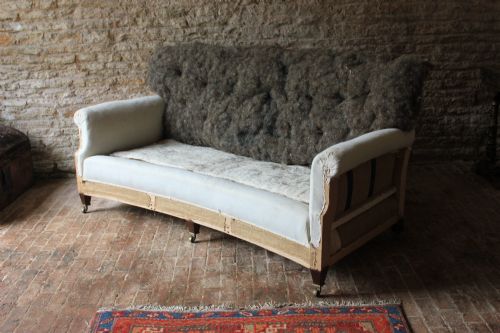
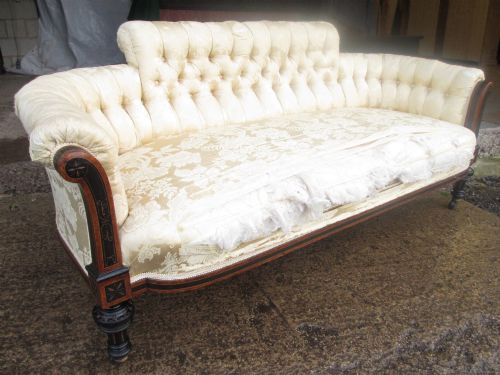
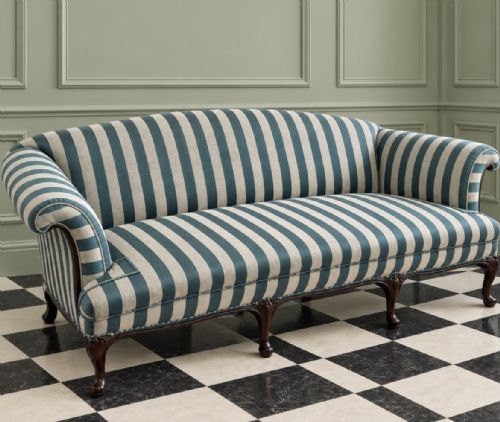
The edwardian three seater sofa represents a substantial seating form spanning the late nineteenth and early twentieth centuries, encompassing styles from traditional English chesterfields to revival designs. Buyers encounter robust frames dressed in leather, velvet, or floral fabric, often built with generous three-seater proportions suited to large entertaining spaces.
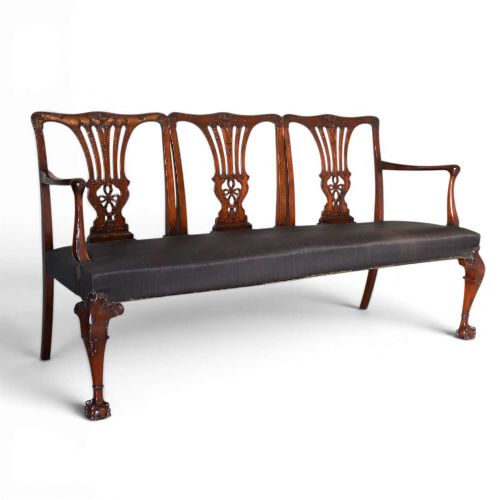
Examples on this page draw upon diverse design influences including Chippendale revival, Louis XVI style, and traditional club forms. Frameworks utilise materials such as mahogany, timber, gilt wood, and brass accents, pairing structural timber with deep upholstery.
The selection ranges from Victorian roots through to nineteen-thirties interpretations, capturing evolutionary shifts in domestic comfort. These large settees and salon suites function as both focal seating and historical examples of period furniture design.
What Varies in Quality
Distinctions in quality rest upon the integrity of the wooden framework and the execution of carved elements, such as the precision found in Chippendale-style backs. Finer pieces demonstrate superior joinery and original timber selection that withstands structural stress over generations.
The treatment and grade of the upholstery material dictate the character of each piece, ranging from restored hand-dyed leathers to specialised period fabrics. The depth of buttoning and the fidelity of revival styles, whether Louis XVI gilt wood or traditional chesterfield tufting, mark the difference between standard production and exceptional craftsmanship.
Edwardian Three Seater Sofa Retail Price Guide 2026
Typical asking prices for edwardian three seater sofa among the pieces listed under this phrase on Sellingantiques today, from the lower quarter to the upper quarter. They describe what is for sale here now, not the wider market.
Listings feature periods spanning the 19th Century, Edwardian era, and the 1920s to 1930s, constructed from mahogany, brass, leather, velvet, and timber.
Hampton and Sons·Howard and Sons
The Edwardian Three Seater Sofa Glossary
- Chesterfield
- A large upholstered sofa traditionally featuring deep button tufting and arms of the same height as the back. This form appears frequently in brown and tan leather across nineteenth and twentieth-century listings.
- Chippendale Revival
- A decorative style reintroducing eighteenth-century motifs such as ornate carved woodwork and intricate back designs. Pieces in this category often feature mahogany and polished timber.
- Camelback
- A sofa style defined by a graceful, undulating curved top rail that resembles the hump of a camel. This profile is seen on mahogany frames from the early twentieth century.
- Gilt Wood
- Timber coated with a thin layer of gold leaf or gold paint, utilised on decorative frames. This finish appears on Louis XVI style seating.
- Deep Buttoned
- An upholstery technique where buttons are pulled tight through the padding to create a diamond pattern. This method secures internal stuffing while providing a distinctive textured surface.
Edwardian Three Seater Sofa: Frequently Asked Questions
How do I identify an Edwardian sofa?
Examination of the timber, upholstery style, and overall proportions helps determine the period. Makers often utilised mahogany and specific revival motifs that distinguish early twentieth-century work from later interpretations.
Comparing structural details against known Victorian and Edwardian examples clarifies the manufacturing era. Hardware, fabric choices, and frame construction provide additional chronological markers.
Are these sofas comfortable for daily use?
Generous three-seater proportions and deep padding make these settees well-suited for relaxed seating. Many feature buttoned leather or soft fabric upholstery designed for sustained support.
Restored interiors often renew the underlying suspension while retaining the original external character. This balance ensures modern utility without compromising period aesthetics.
What maintenance do leather chesterfields need?
Leather surfaces benefit from regular dusting and occasional conditioning to prevent the hide from drying out. Hand-dyed and whiskey brown leathers respond well to specialised balms that preserve their supple texture.
Avoiding direct sunlight protects the natural tone of antique hides over time. Proper care maintains both the structural integrity of the deep tufting and the appearance of the finish.
How do I choose between leather and fabric?
Leather options, including tan and brown chesterfields, offer a durable surface that develops a rich patina through use. Fabric choices, such as velvet or patterned textiles, introduce softer textures and distinct visual warmth to a room.
Selecting the right material depends on the intended room setting and personal preference for maintenance. Both finishes represent authentic upholstery choices found across the listed periods.