
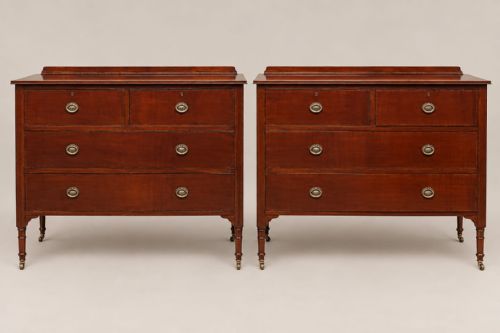
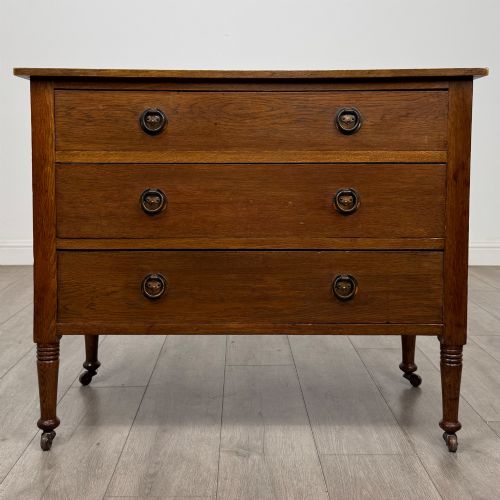
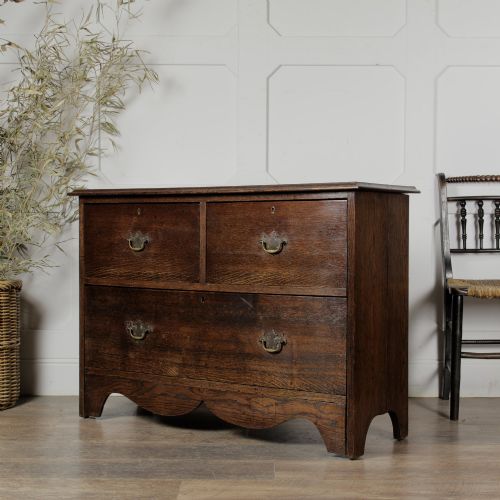

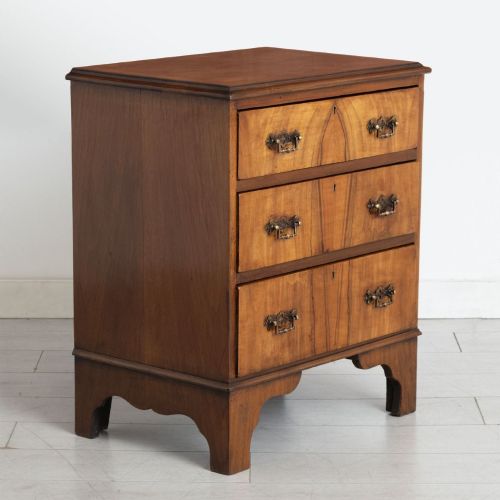
Edwardian Three Drawer Chest
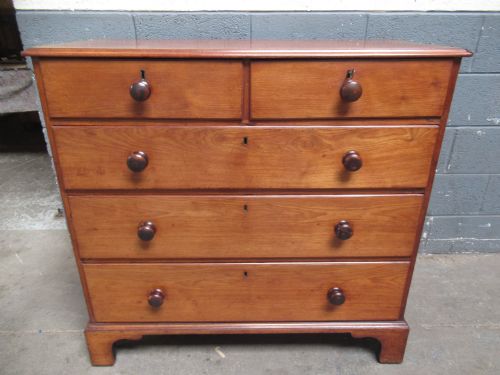
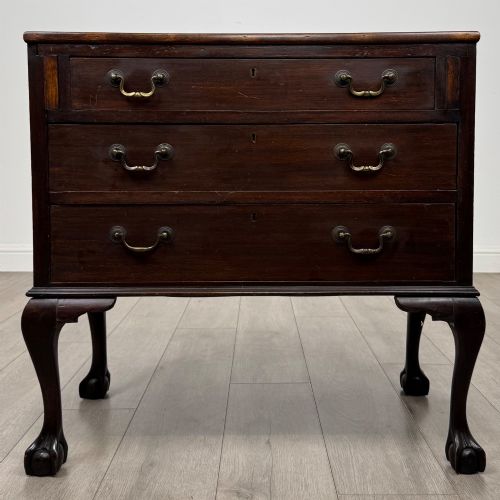
An edwardian three drawer chest combines practical bedroom storage with the warm timber tones of the early twentieth century.
Edwardian Three Drawer Chest
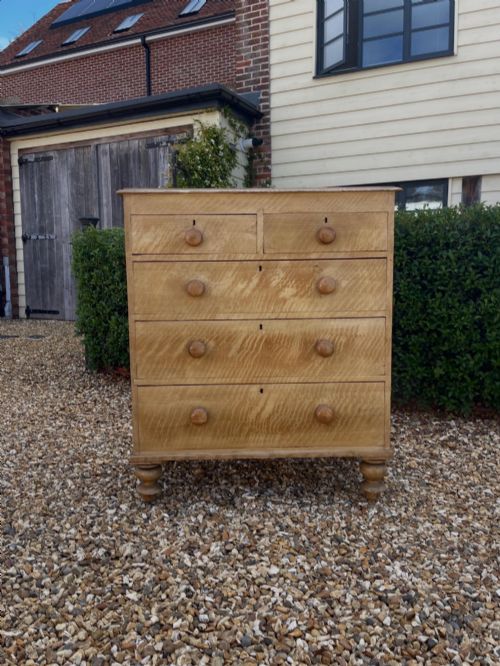
An edwardian three drawer chest is a staple item of domestic furniture designed for bedroom storage, typically offering a useful configuration of timber drawers beneath a flat top. Pieces meeting this description appear across Edwardian, Victorian, and early twentieth-century periods, alongside revival styles like Queen Anne and Arts and Crafts.
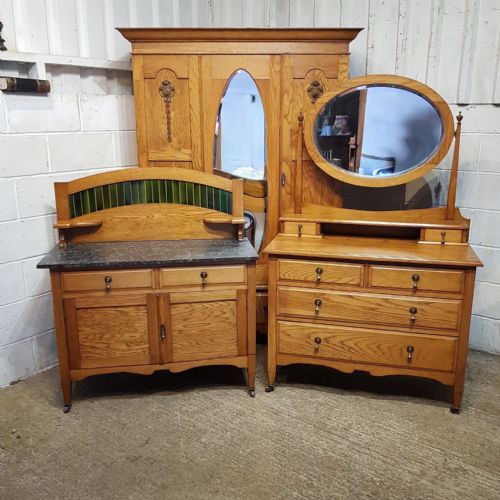
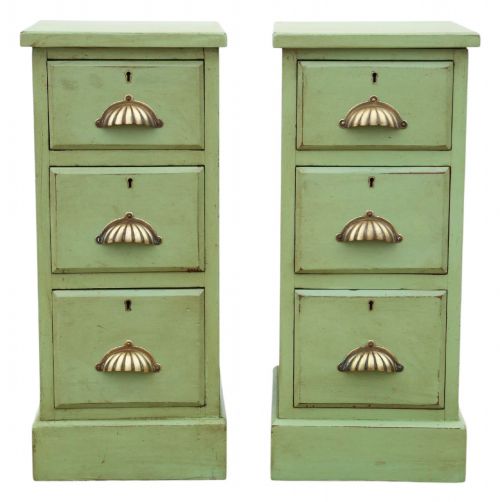
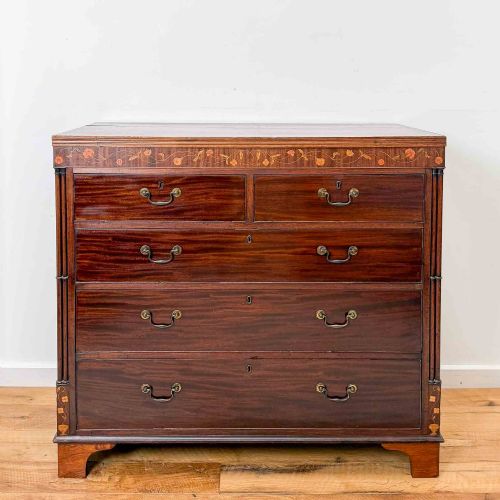
The versions most commonly met on this page are constructed from oak, mahogany, walnut, or pine, with occasional examples finished in satinwood, painted surfaces, or floral inlay details. Alongside standard chests of drawers, buyers will encounter related bedroom furniture such as bedside tables, dressing tables, and compact cabinets.
Dimensions vary from smaller bedside proportions to larger bedroom chests, accommodating different room layouts while maintaining the characteristic low profile typical of the period.
How they were made
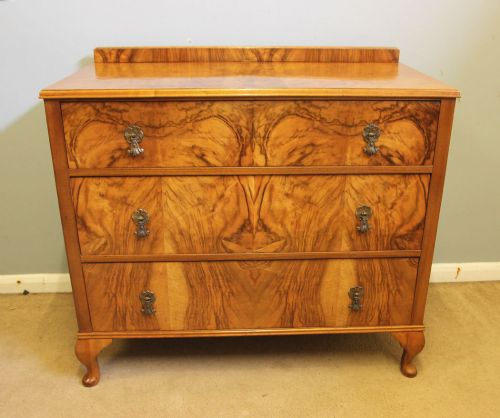
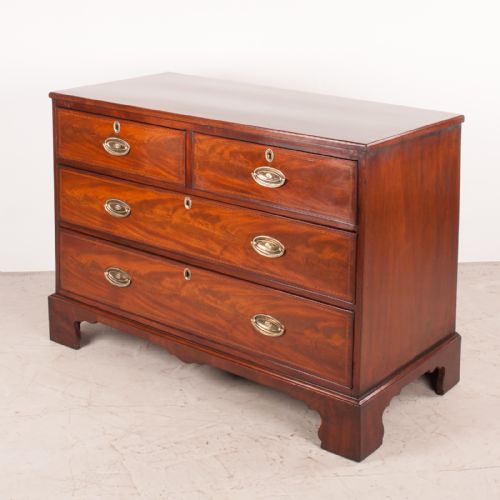
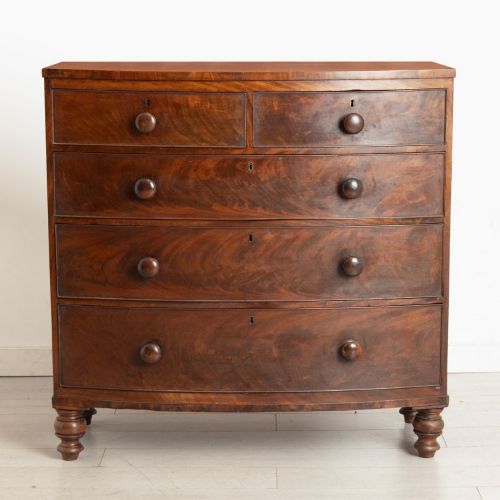
Cabinet makers of the period relied on solid hardwoods such as oak, mahogany, and walnut, frequently selecting figured veneers or flame mahogany to accentuate the natural grain on drawer fronts. Secondary timbers like pine appear on internal drawer linings and carcass backs.
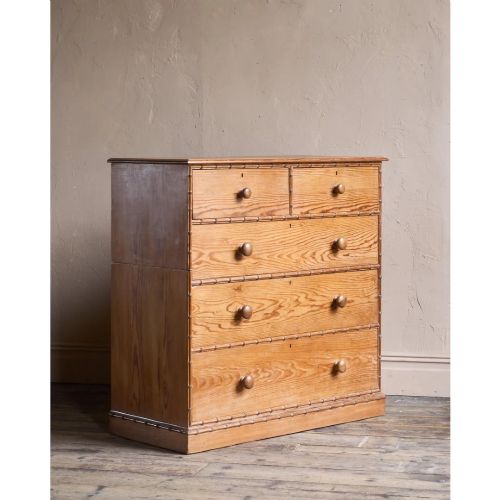
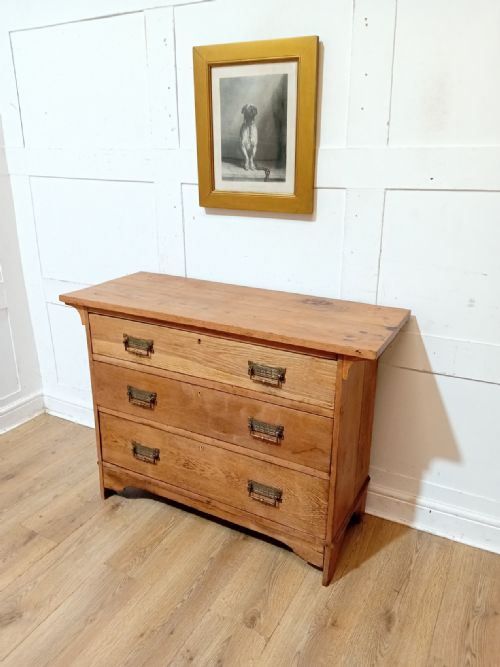
Surface decoration often involved contrasting stringing, floral inlay details, or faux bamboo turnings, whilst Arts and Crafts examples utilised exposed joints and simpler, robust construction methods that highlighted the raw material.
Listings on this site feature timbers including mahogany, oak, walnut, satinwood, and pine across periods from the nineteenth century into the 1930s.
What varies in quality
Quality in these chests is determined by the selection of timber figures, the precision of cabinet joinery, and the integrity of decorative elements such as inlay work and brass handles. Superior examples display carefully matched wood grains across drawer fronts and solid timber framing that ensures structural rigidity.
Lesser pieces may utilise simpler secondary woods with printed or minimal surface decoration, or show greater wear in the drawer runners and internal joints from decades of domestic use.
Howard and Sons·Harris Lebus
The Edwardian Three Drawer Chest Glossary
- Flame mahogany
- A veneer cut from the fork of the mahogany tree to produce a distinctive, flickering flame pattern across the wood surface.
- Satinwood
- A durable, yellowish timber prized for its smooth sheen and utilised extensively in fine inlay and decorative cabinet work.
- Arts and Crafts
- A design movement emphasising handcraftsmanship, simple structural forms, and the natural qualities of oak and ash timber.
- Bow front
- A convex curved cabinet front that projects outward in the centre, adding visual depth to chest designs.
Edwardian Three Drawer Chest: Frequently Asked Questions
How do I use an edwardian three drawer chest today?
These chests fit well in modern bedrooms as bedside storage or clothes organisation units, whilst their flat tops accommodate lamps and decorative objects.
Their moderate proportions allow them to function effectively in hallways or living spaces as supplementary drawer storage.
What woods were used for these chests?
Cabinet makers predominantly worked with mahogany, oak, walnut, and pine, occasionally utilising satinwood for lighter, decorative finishes.
Drawer interiors and backs generally relied on softer timbers, while primary display surfaces featured polished hardwoods.
How do I distinguish Edwardian pieces from Victorian ones?
Edwardian pieces tend to display lighter timber tones, simpler cleaner lines, and satinwood or floral inlay influences from Sheraton revivals.
Victorian chests frequently present heavier proportions, darker mahogany or walnut finishes, and bolder flame grain patterns.
Are these chests suitable for small bedrooms?
Many examples are built with compact footprints, making them practical for tighter spaces where larger wardrobes or tallboys will not fit.
Low bedside variants and narrower three-drawer formats provide functional surface and drawer space without dominating a small room.