
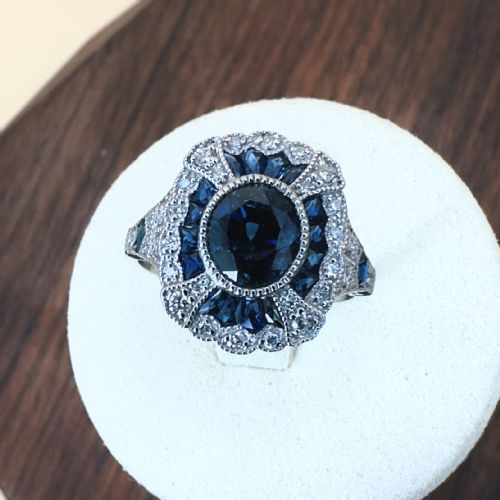


Edwardian Target Halo Ring
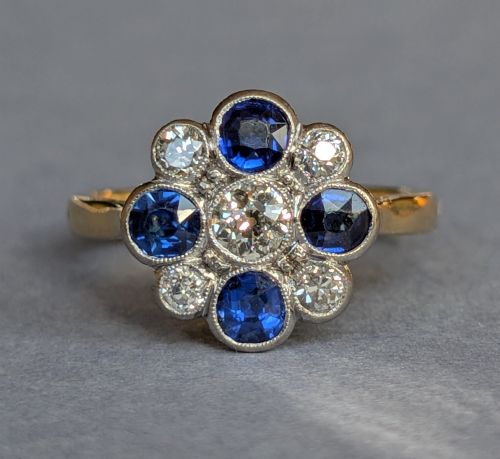
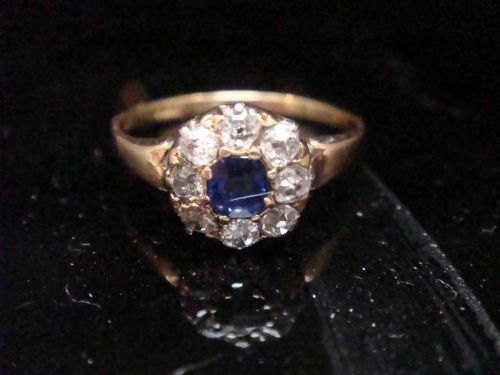
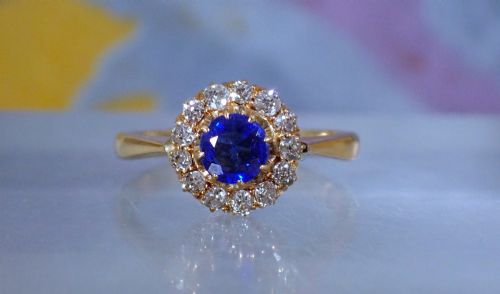
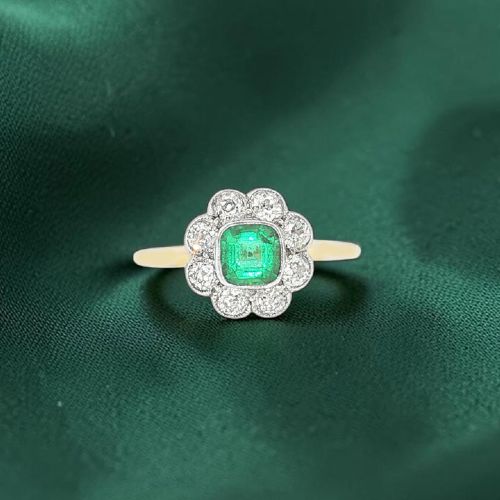
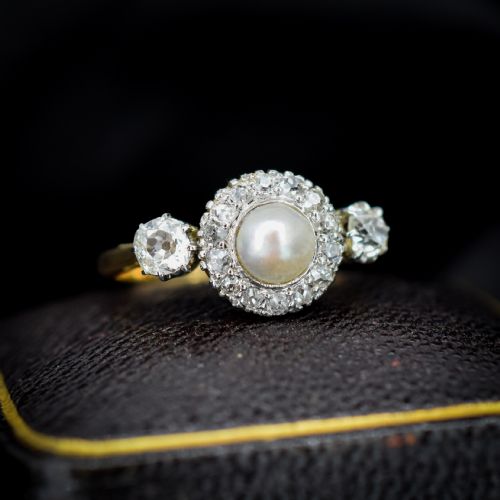
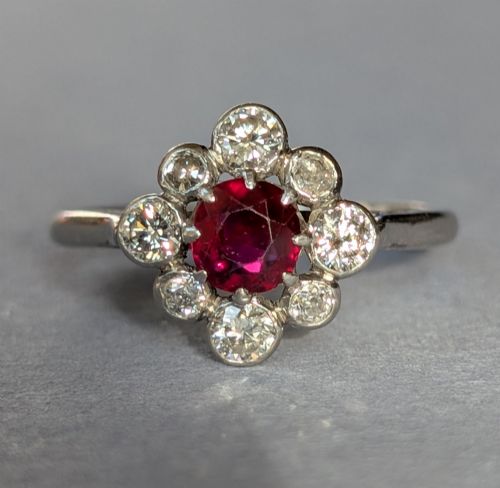
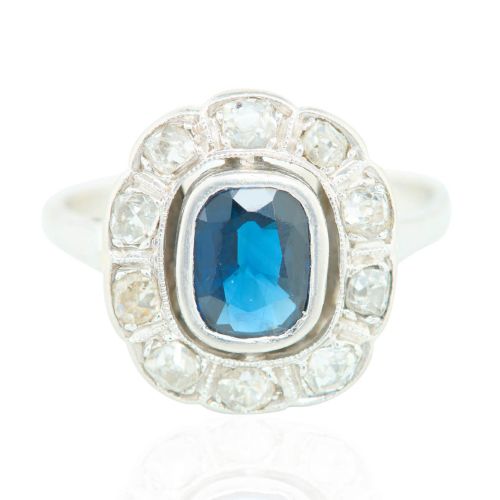
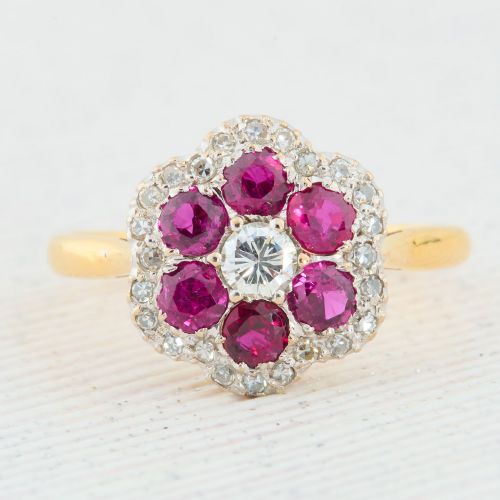
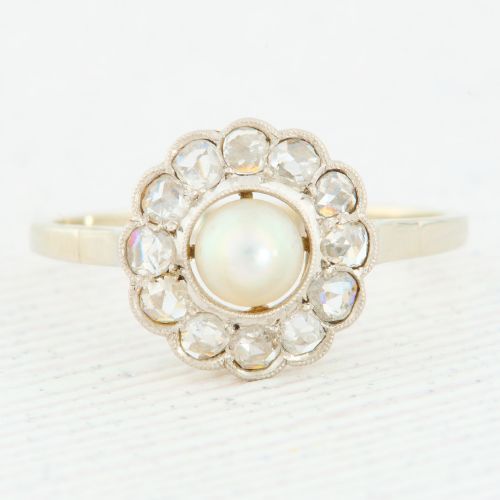
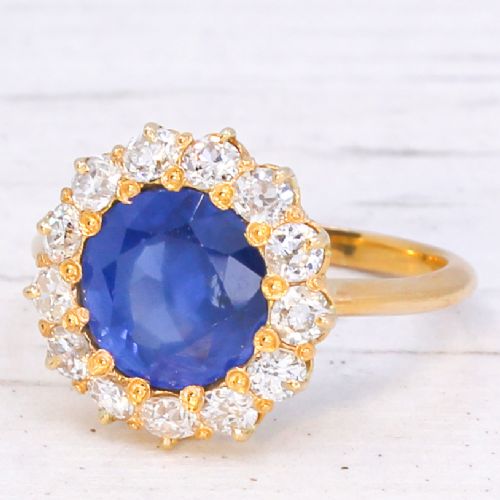
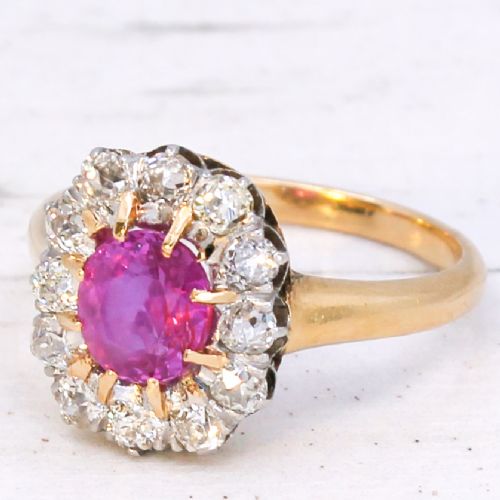
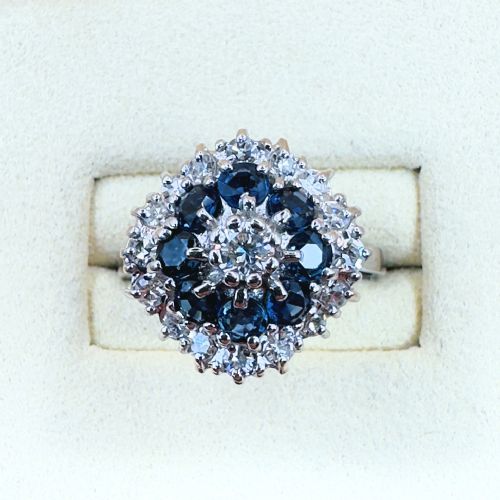
An edwardian target halo ring centres a striking gemstone within geometric tiers of pavé stones.
Edwardian Target Halo Ring
An edwardian target halo ring forms a concentric pattern where a central gemstone is enclosed by matching tiers of smaller stones. These pieces originate predominantly from the Edwardian era and the Art Deco period, though examples span from the Victorian period through to mid-century revivals.
The layout typically positions a sapphire, ruby, diamond, or pearl at the focal point, surrounded by a tight border that resembles a bullseye. Variations on this page incorporate emeralds, aquamarines, and opals set within circular or floral cluster configurations.
Materials and construction
Goldsmiths utilised 18ct yellow gold, 18ct white gold, and platinum to mount these stones securely. Platinum gained favour for its strength in holding delicate millgrained settings, while gold provided a warm contrast for earlier clusters.
Stones often feature old cut diamonds or calibre cut sapphires shaped specifically to fit tight geometric borders. Natural pearls and unheated sapphires appear regularly as the central focus of these concentric designs.
Some antique sapphires come directly from Ceylon and Burma, having travelled across the world before finding their forever target halo.
Evaluating quality and execution
Quality rests upon the precision of the stone geometry and the tightness of the concentric tiers. Calibré cut sapphires that fit seamlessly into their channels demonstrate superior craftsmanship compared to unevenly spaced stones.
The selection of the central gemstone dictates the distinction of the piece, particularly when featuring unheated Burmese or Ceylon sapphires alongside certified diamonds. The harmony between the central focal stone and the surrounding halo defines the overall balance.
The Edwardian Target Halo Ring Glossary
- Target ring
- A concentric cluster ring featuring a central stone encircled by one or more contrasting rings of smaller gems. This configuration creates a distinct bullseye visual effect.
- Calibré cut
- Small gemstones specifically cut and shaped to fit a precise geometric channel or border without gaps. This technique is frequently seen in Art Deco cluster designs.
- Millgrain
- A decorative raised border of tiny metal beads along the edge of a setting. This detail provides a refined finish typical of Edwardian jewellery.
- Cluster ring
- A ring design featuring a central stone surrounded by a group of smaller secondary stones. Configurations range from circular targets to floral and foliate patterns.
Edwardian Target Halo Ring: Frequently Asked Questions
What is a target halo ring?
A target halo ring is a cluster design featuring a central gemstone surrounded by concentric tiers of smaller stones. This concentric arrangement creates a bold geometric pattern reminiscent of a target.
Most examples found here date from the Edwardian and Art Deco eras, utilising platinum and 18ct gold settings.
How do I date these rings?
Dating relies on the combination of materials, gemstone cuts, and mounting styles. Edwardian pieces often pair yellow gold with platinum-topped settings and delicate millgrain, while Art Deco examples lean towards geometric platinum designs with calibre cut stones.
Later mid-century iterations introduce different gold alloys and heavier shared-prong settings.
Are the central sapphires natural?
Many listings feature natural sapphires, including unheated stones originating from Burma or Ceylon. These unheated gems are documented in antique descriptions to highlight their natural formation.
Grading reports often accompany certified stones to verify their origins and characteristics.
Can these be resized easily?
Resizing depends on the construction of the outer halo and the metal used in the shank. Platinum and 18ct gold bands can generally be adjusted by a skilled bench jeweller.
Jewellers must take care to protect calibre cut stones or delicate millgrain borders near the shoulders during any adjustment.