





Edwardian Tantalus
An edwardian tantalus locks away fine spirits behind a secure wooden bar, offering a clever way to display decanters while keeping the contents safe.
Edwardian Tantalus
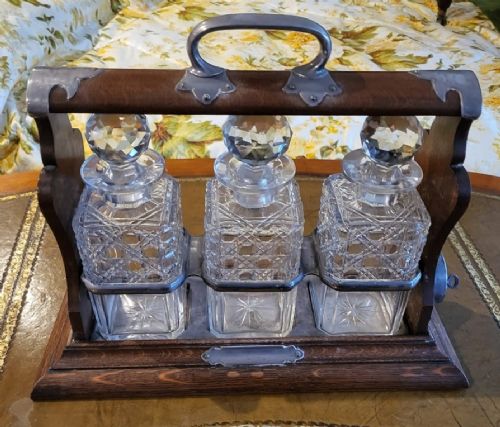
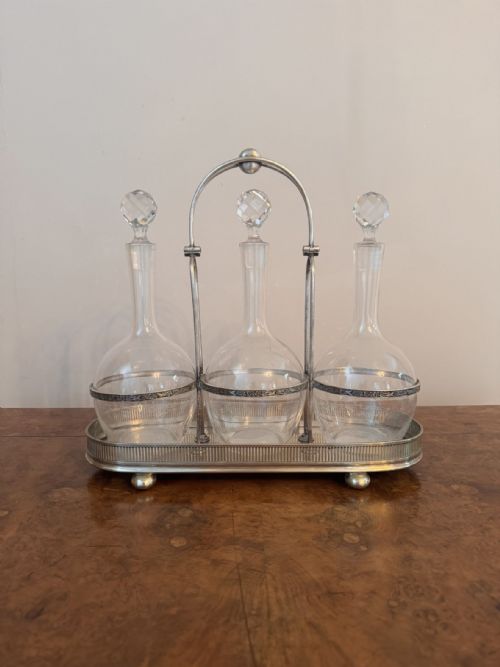
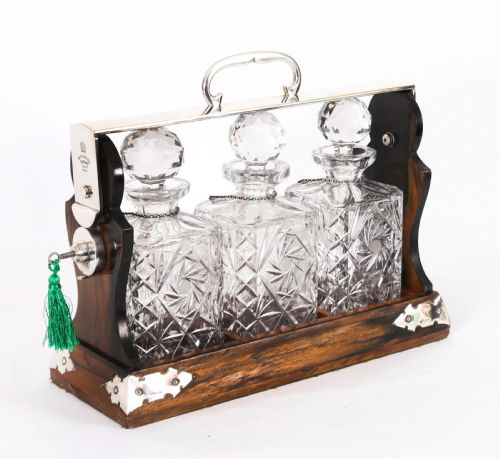
When you search for an edwardian tantalus, you encounter locking spirit frames designed to secure liquor from unauthorised access while remaining on display in a dining room or study. The most common examples on this page are sturdy wooden frameworks holding two or three cut glass decanters fitted with locking mechanisms.
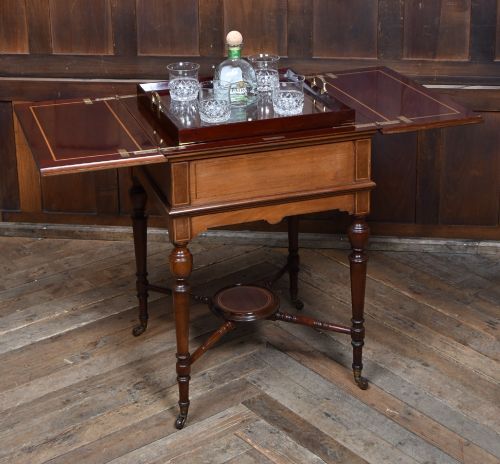
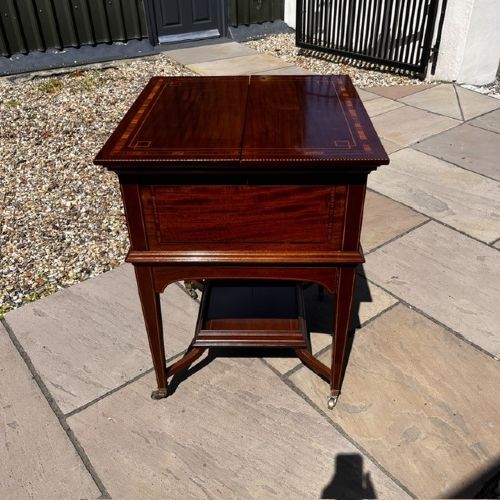
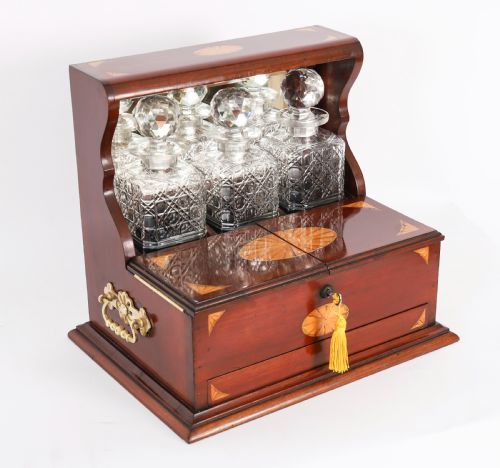
These pieces bridge the late Victorian period and the early twentieth century, incorporating materials like oak, mahogany, and walnut. Many feature integrated compartments for games, cards, or cigars, functioning as compact dry bars for entertaining guests.
Materials and construction
Cabinetmakers constructed the frames using solid timbers such as oak, pollard oak, walnut, and mahogany, often enhanced with satinwood inlay or brass mounts. The woodwork required precise joinery to house the locking action, which engages the stoppers to prevent the decanters from being lifted out.
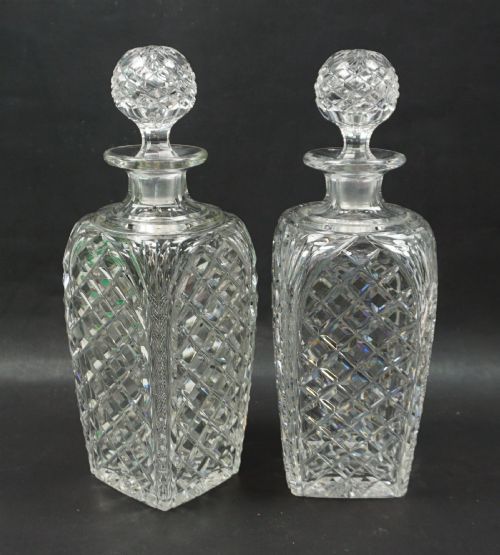
The bottles themselves consist of heavy cut crystal or glass, frequently paired with silver plated or sterling silver hardware, handles, and lock plates. Metal components provide structural rigidity to the locking arm, while the glass vessels utilise deep geometric cuttings to catch the light.
Edwardian Tantalus Retail Price Guide 2026
Typical asking prices for edwardian tantalus among the pieces listed under this phrase on Sellingantiques today, from the lower quarter to the upper quarter. They describe what is for sale here now, not the wider market.
The name derives from Greek mythology, ensuring that guests were perpetually tormented by the sight of whiskey they could not reach.
Assessing quality and execution
The distinction between standard examples and the finest pieces lies in the complexity of the internal fittings and the choice of cabinet timbers. Superior items incorporate games compendiums, secret drawers, and exotic veneers like coromandel rather than standard oak or plain walnut.
Hardware execution also defines the upper tier of pieces, particularly the integration of patented locking mechanisms by notable makers. Heavier gauge silver plating, crisper crystal cutting, and fully operational locking bars with original working keys separate exceptional specimens from simpler stands.
Betjemann·Hukin and Heath
The Edwardian Tantalus Glossary
- Tantalus
- A locking frame that holds decanters securely by their stoppers so the contents cannot be poured without a key. The name derives from the mythological figure of frustration.
- Games compendium
- A fitted box containing boards, pieces, and cards for various parlour pastimes. These are frequently built into the base or drawers beneath a spirit frame.
- Marquetry
- Decorative woodwork formed by fitting thin pieces of veneer into a solid ground to create patterns. This technique appears on the panels of finer cabinet frames.
- Silver plate
- A layer of silver fused to a base metal foundation, used extensively for the handles, lock plates, and bottle collars of these frames.
Edwardian Tantalus: Frequently Asked Questions
How does an edwardian tantalus lock work?
A metal bar drops across the necks of the glass decanters, preventing the stoppers from being removed and the bottles from being lifted from the frame.
Turning a key in the lock releases the bar, allowing the mechanism to swing open or lift clear of the glass.
Were these pieces used in the dining room?
These frames sat on sideboards or tables in dining rooms and studies during the late nineteenth and early twentieth centuries.
Hosts kept spirits ready for guests while maintaining control over household consumption.
How do I care for the wood and metal?
Wood surfaces benefit from occasional applications of appropriate wax to nourish the grain and protect the finish against drying out.
Silver plated components require gentle cleaning with a soft cloth to avoid removing the plating from the underlying metal.