


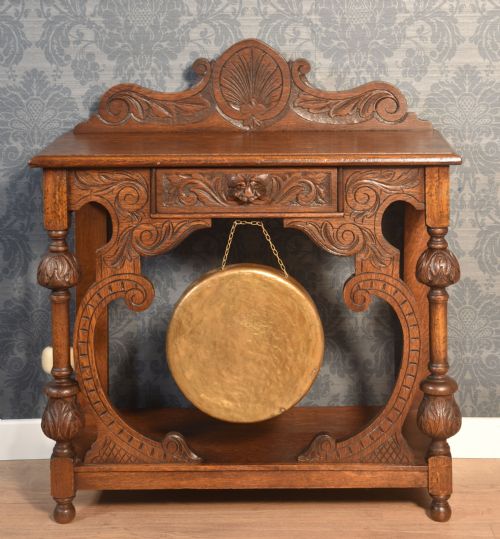

Edwardian Table Gong
An Edwardian table gong brings a distinct resonant chime to a room, mounted on timber stands or horns for afternoon tea and dinner.
Edwardian Table Gong
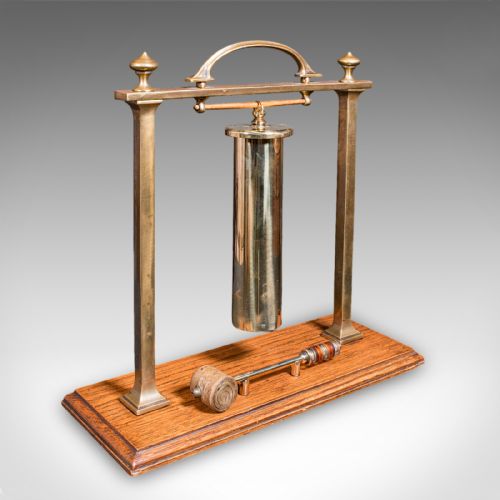
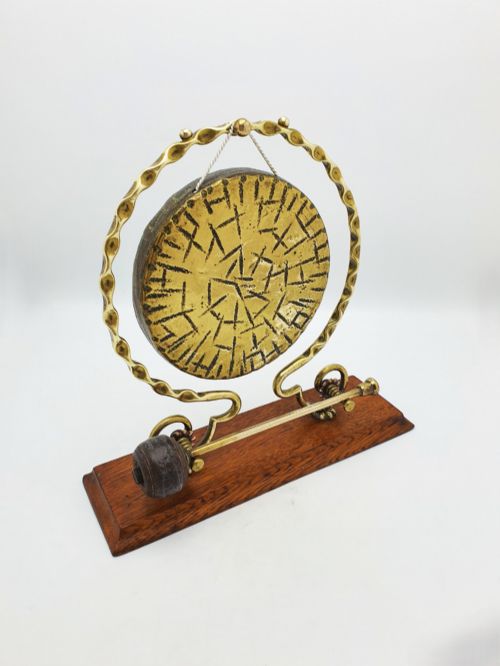
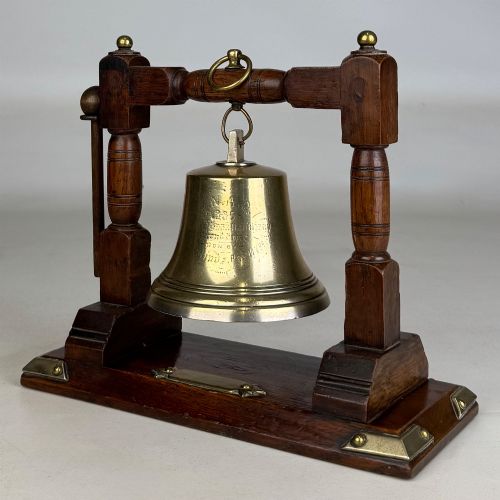
When you search for an edwardian table gong, you encounter striking table-top percussion pieces designed to summon guests to dining rooms or tea services. These instruments typically pair a suspended metal bell or gong with a sturdy wooden, horn, or metal support structure, often accompanied by a handheld striker.
The pieces on this page heavily feature Edwardian and adjacent turn-of-the-century periods, alongside Victorian influences. You will frequently find oak bases paired with brass bells, as well as more eclectic interpretations utilising cattle horn, silver plate, and bronze.
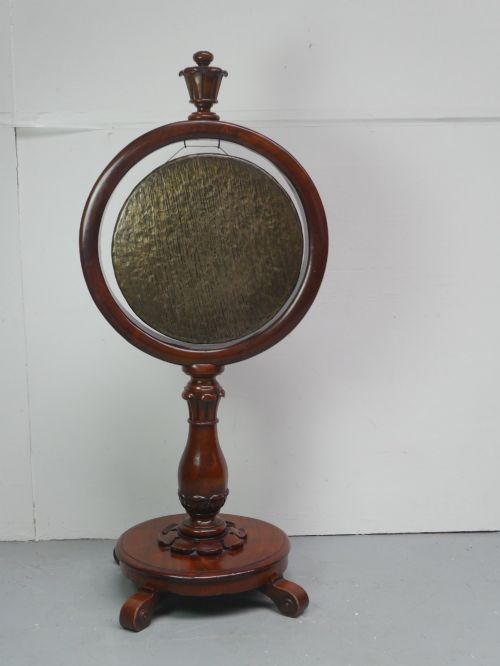
Forms vary from compact tabletop arrangements to more elaborate country house designs with carved frames or oriental motifs. Alongside traditional dinner gongs, the selection encompasses related items like table bells and occasional stands.
Materials and construction methods
Makers constructed the structural bases primarily from solid oak and walnut, frequently incorporating carved details or polished surfaces to anchor the piece. Natural materials such as cattle horn also appeared as curved supporting frames or suspended resonance elements.
The sounding vessels themselves utilise cast brass, bronze, and silver plate, shaped to produce a clear, sustained tone when struck. Cord is typically used to suspend the bell or gong securely from its wooden or horn framework.
Artisan techniques visible across the pieces include metal casting, detailed wood carving, and secure joinery. Stylistic touches draw upon Arts and Crafts, Art Nouveau, and Japonisme aesthetics to ornament the frames and mountings.
Listings feature materials spanning brass, oak, silver plate, bronze, horn, and cord across Edwardian and Victorian periods.
Distinctions in craftsmanship and resonance
Quality in an edwardian table gong rests largely on the acoustic resonance of the metal and the stability of its mounting frame. Finer examples combine thick, well-cast bronze or brass with dense, stable hardwoods that support a pure, sustained tone.
The intricacy of the carpentry and metalwork further distinguishes superior pieces. Well-executed carving on oak bases and finely finished metal mountings reflect a higher standard of period workshop production.
The Edwardian Table Gong Glossary
- Dinner Gong
- A suspended metal disc or bowl struck with a mallet to announce meals. They became popular in large country houses during the late nineteenth and early Edwardian periods.
- Plinth
- A heavy flat base that supports the upright frame and suspended bell. Oak and walnut were common woods utilised for stability.
- Striker
- The handheld mallet or hammer used to hit the gong. These often feature matching wooden or metal handles.
- Japonisme
- The influence of Japanese art on Western design, visible in oriental motifs and forms from the late Victorian and Edwardian eras.
- Aesthetic Movement
- A late nineteenth-century design current emphasising visual beauty over narrative function. Pieces from this style often feature refined lines and decorative brasswork.
Edwardian Table Gong: Frequently Asked Questions
How were table gongs used?
Hosts utilised these gongs in country houses and town residences to announce that dinner, tea, or afternoon gatherings were served. A sharp strike on the suspended bell produced a resonant tone carrying through the household.
Servants and family members relied on this clear acoustic signal before electronic intercoms or doorbells became standard in domestic interiors.
What materials make up the stands?
Stands and bases were predominantly fashioned from solid oak or walnut, sometimes enhanced with hand carving. Natural cattle horn also served as a curved structural support in specific country house designs.
Metal components like brass or bronze brackets secured the suspended gong to the wooden or horn plinth using strong cord.
Are all these gongs from the Edwardian period?
While the selection focuses heavily on Edwardian pieces and the year nineteen hundred, the inventory also spans late Victorian and early twentieth-century examples. Stylistic crossover is common between these neighbouring eras.
Design influences range from Arts and Crafts simplicity to Art Nouveau curves and Chinoiserie details, reflecting the diverse tastes of the period.
How do I care for a brass gong?
Maintain the polished surfaces by dusting the wooden frames and metal bells regularly with a soft, dry cloth. Avoid harsh chemical cleaners that might strip the aged patina from the brass or bronze.
Check the suspension cord periodically to ensure the bell remains securely hung from its oak or horn support without undue friction.