



Edwardian Swivel Stool
Edwardian swivel stool designs offer clever height adjustment and steady revolving movement, making them sought-after seating for both music rooms and studies.
Edwardian Swivel Stool
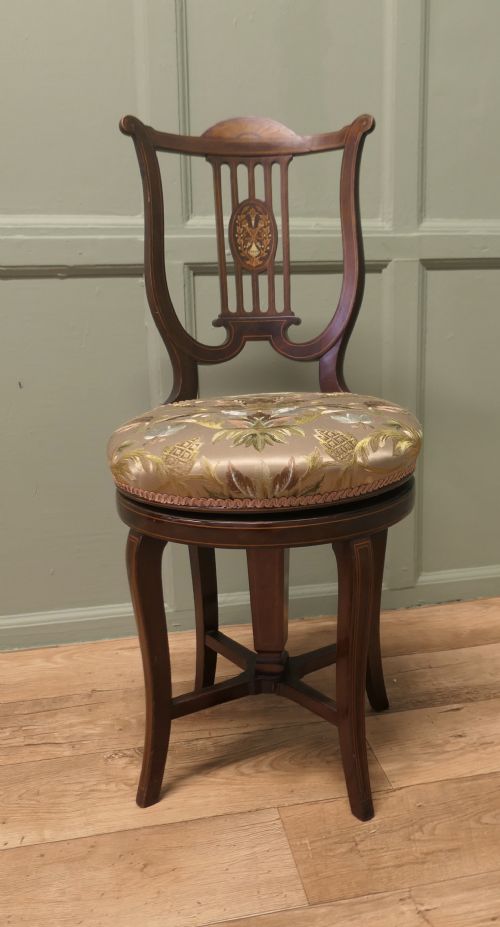
Makers of the era utilised styles spanning from restrained Edwardian interpretations to Sheraton Revival motifs and Victorian Arts & Crafts designs. Walnut, mahogany, and rosewood serve as the primary timbers, often paired with upholstered fabric, velvet, or textile seats that provide comfort during long practice sessions. While formal Edwardian pieces date around nineteen hundred, related examples stretch from mid-nineteenth century workshops into the early twentieth century.
Materials and construction methods
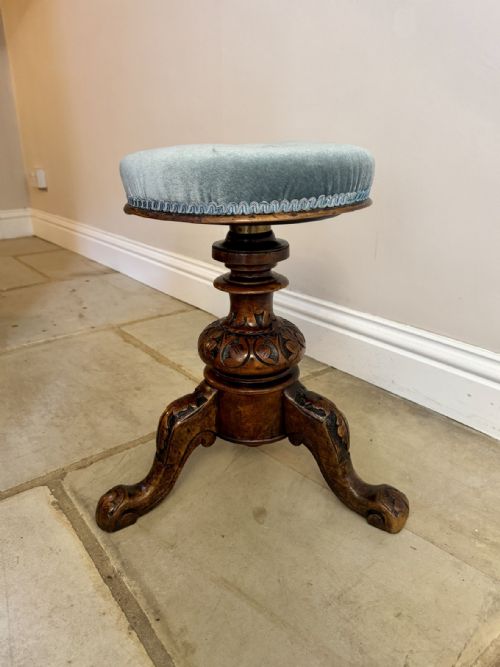
Cabinetmakers constructed these revolving seats using dense hardwoods like mahogany, walnut, and rosewood, occasionally applying ebonised finishes or satinwood details. The timber frames often display carved ornamentation, particularly on tripod legs, claw feet, or the delicate supports of lyre-back music chairs.
Mechanical adjustment relied on robust brass screw mechanisms concealed within the central column or base, allowing smooth vertical movement. Seats were padded with traditional textile upholstery, velvet, or durable fabric secured over stuffing to ensure both resilience and comfort.
Edwardian Swivel Stool Retail Price Guide 2026
Typical asking prices for edwardian swivel stool among the pieces listed under this phrase on Sellingantiques today, from the lower quarter to the upper quarter. They describe what is for sale here now, not the wider market.
A good music stool is the only seat where spinning around in circles counts as historical preservation.
Assessing quality in revolving seating
The distinction between standard utility seating and finer workshop production lies in the precision of the timber carving and the stability of the revolving mechanism. Superior examples feature seamless screw action that holds its height securely without wobble, alongside well-figured mahogany or walnut grain.
Design complexity also separates pieces within this category, moving from plain circular revolving tops to sophisticated music chairs with supportive backs and sturdy tripod bases. The integration of decorative elements like brass fittings and high-grade upholstery fabrics indicates a higher tier of original manufacture.
James Shoolbred
The Edwardian Swivel Stool Glossary
- Swivel stool
- A seat featuring a mechanism that allows the top to rotate freely in a complete circle. This movement assisted musicians in reaching instruments or sheet music without standing.
- Rise and fall piano stool
- A seating form equipped with a screw or ratchet mechanism to adjust the height of the seat. Users turn the top to raise or lower the sitting surface.
- Sheraton Revival
- A late nineteenth and early twentieth century design movement that reinterpreted eighteenth century neoclassical furniture forms. Pieces in this style often feature lighter proportions and refined classical details.
- Lyre back
- A chair backrest shaped in the outline of a classical lyre instrument. This motif frequently appears on nineteenth century music chairs and piano stools.
- Ebonised
- Wood treated with a dark finish to imitate expensive ebony. This technique was popular in Victorian and later furniture to create strong visual contrast.
Edwardian Swivel Stool: Frequently Asked Questions
What is an edwardian swivel stool used for?
These pieces were originally designed for musicians sitting at pianos, harps, or cellos who needed mobility and height adjustment during performance. The revolving seat allowed players to turn easily toward music stands or instruments.
Today, they function well as compact desk chairs, dressing table seats, or accent furniture in living spaces where flexible seating is useful.
How do you adjust the height?
Height adjustment operates through a central wooden or brass screw mechanism concealed beneath the seat. Rotating the top clockwise or anticlockwise raises or lowers the seating surface along a threaded spindle.
Most mechanisms allow smooth movement across several inches, enabling users to find a comfortable sitting position tailored to their desk or instrument.
How can you date an antique music stool?
Dating relies on identifying timber choices, stylistic details, and construction marks. Pieces from the Victorian era often feature heavier carved walnut or rosewood, while Edwardian examples tend to show lighter mahogany frames and Sheraton Revival influences.
Maker stamps or registration marks found beneath the seat can also provide precise manufacturing dates.
Are these seats comfortable for daily use?
The upholstered velvet or fabric tops provide a supportive padded surface intended for extended periods of practice or sitting. The addition of a backrest on music chair variants offers extra lumbar support compared to simple circular stools.
Properly maintained mechanical components ensure the seat remains stable and level during regular daily use.