


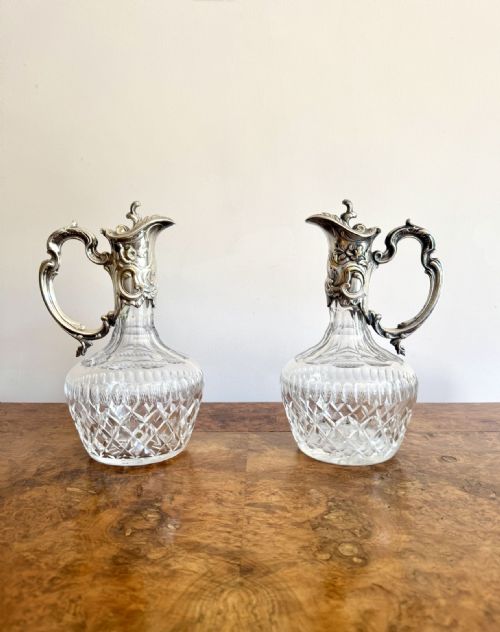


Edwardian Style Decanter
These edwardian style decanter selections bring refined glass and silver mountings to your table, offering timeless functional elegance for entertaining.
Edwardian Style Decanter
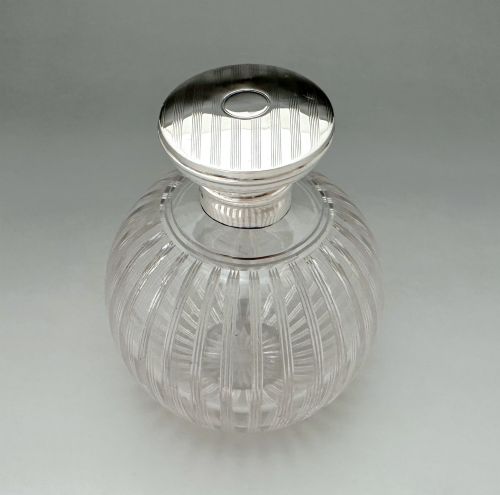
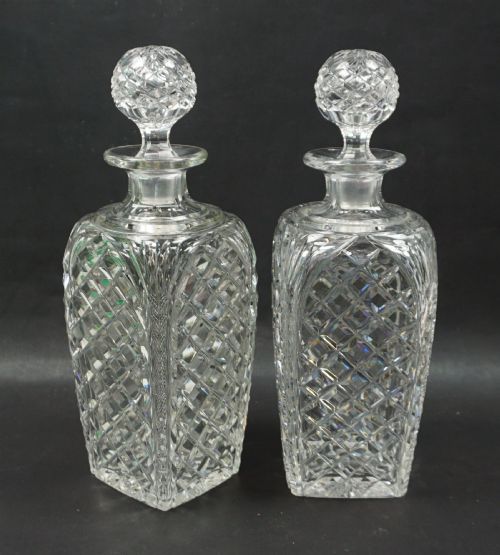
When you search for edwardian style decanter, you meet a range of serving vessels and barware spanning the early twentieth century. The selection includes square section tapered crystal bottles, silver mounted cologne flasks, and paired claret jugs.
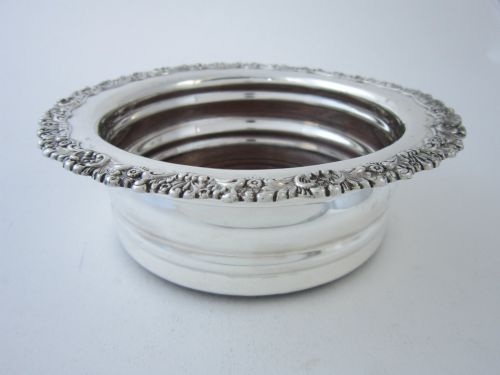
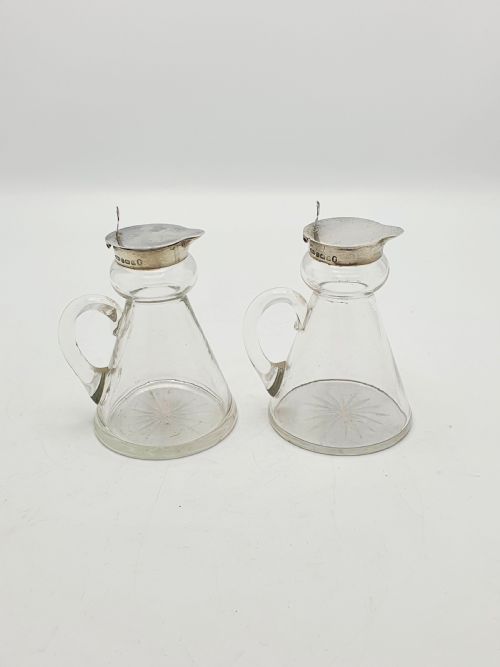
Most examples date from the Edwardian period through to the George V era and the nineteen thirties. Alongside standard decanters, related barware pieces such as wine coasters, whiskey noggins, and oak tantaluses appear frequently.
Makers and designers from this broad timeframe utilised traditional forms that echo Georgian and Victorian precedents. Buyers encounter both plain clear glass bodies and heavy cut crystal paired with sterling silver or silver plate.
How they were made
Glass bodies are shaped through blowing and heavy cutting to create deep geometric patterns that catch the light. Crystal and clear glass provide the foundational weight for square section tapered decanters and liquor flasks.
Metal mounts, collars, and handles combine sterling silver or silver plated elements with organic materials like oak and mahogany. Craftspeople secured these collars directly onto the glass necks to house stoppers and pourers securely.
Specialist techniques include Mary Gregory style enamelling applied to glass surfaces, alongside hallmark stamping on silver mounts to indicate year and assay office. Woodwork components are joined with turned mouldings to hold bottle bases.
Edwardian Style Decanter Retail Price Guide 2026
Typical asking prices for edwardian style decanter among the pieces listed under this phrase on Sellingantiques today, from the lower quarter to the upper quarter. They describe what is for sale here now, not the wider market.
What varies in quality
Quality rests in the depth and clarity of the glass cutting, where sharper facets and heavier crystal indicate superior manufacture. Thin, lightweight glass sits at the lower end, while dense, resonant crystal commands greater attention.
The choice of metal mounting dictates the tier of the object. Heavy gauge sterling silver collars and substantial silver plated frames demonstrate finer craftsmanship than thin electroplate over base metal.
Design attribution elevates certain pieces significantly, particularly items associated with known retail houses or specific Arts and Crafts designers. Matched pairs and complete sets with original stoppers maintain higher regard than single assembled components.
Archibald Knox for Liberty·Asprey
The Edwardian Style Decanter Glossary
- Crystal glass
- Glass containing lead oxide, which increases weight, brilliance, and refractive index. This material allows for deep, sharp wheel cutting.
- Silver plate
- A layer of silver fused or electroplated onto a base metal core such as copper or brass. It provided an accessible alternative to solid sterling silver during the twentieth century.
- Tantalus
- A locking wooden frame that holds decanters securely while displaying the bottles within. The locking mechanism prevents unauthorized access to the spirits inside.
- Whiskey noggin
- A small individual spirit decanter or jug, typically fitted with a silver lip and handle. They were designed for private bedside or desk use.
- Wine coaster
- A small circular tray with a raised gallery, often featuring a turned wood base and silver plated rim. They were passed along the table to protect polished surfaces from moisture rings.
- Mary Gregory glass
- Glass decorated with silhouette figures painted in white enamel, usually depicting children in woodland settings. This technique gained popularity during the late Victorian and Edwardian periods.
Edwardian Style Decanter: Frequently Asked Questions
How do I date an Edwardian decanter?
Dating relies heavily on hallmarks stamped onto any silver mounts, which indicate the exact year of assay and the maker's mark. Stylistic clues such as heavy cut crystal patterns and square section profiles also point toward the early twentieth century.
Changes in manufacturing techniques and glass clarity help separate these pieces from later reproductions. Comparing the style of stoppers and collar mounts against known production periods provides further confirmation.
Are these decanters safe for daily use?
Most glass decanters remain entirely functional for holding and serving wines and spirits today. Modern cleaning methods, using bottle brushes and warm water without harsh abrasives, protect the interior surfaces.
Silver mounts require occasional polishing with appropriate cloths to prevent tarnish build-up. Wooden bases and coasters should be kept dry to maintain the integrity of the polish and framing.
What is the difference between crystal and glass?
True crystal contains a high proportion of lead oxide, which adds substantial weight and allows artisans to cut deeper, sharper facets. Clear glass lacks this mineral content, resulting in a lighter object with softer edges.
Crystal produces a distinct resonant ring when tapped gently, whereas standard glass produces a duller sound. Both materials appear frequently across the barware and decanter categories from this era.
How do I care for silver plated mounts?
Silver plate requires gentle cleaning with a specialised non-abrasive silver polish to preserve the thin metal layer over the base metal. Frequent light cleaning prevents heavy tarnish from accumulating in recessed decorative areas.
Avoiding harsh chemical dips protects the underlying alloy from exposure. Storing pieces in stable humidity environments prevents accelerated tarnishing of both silver and accompanying wooden frames.