



Edwardian Striped Chair
An edwardian striped chair brings lightness and pattern to a room, offering comfortable upright seating shaped by early twentieth-century taste.
Edwardian Striped Chair
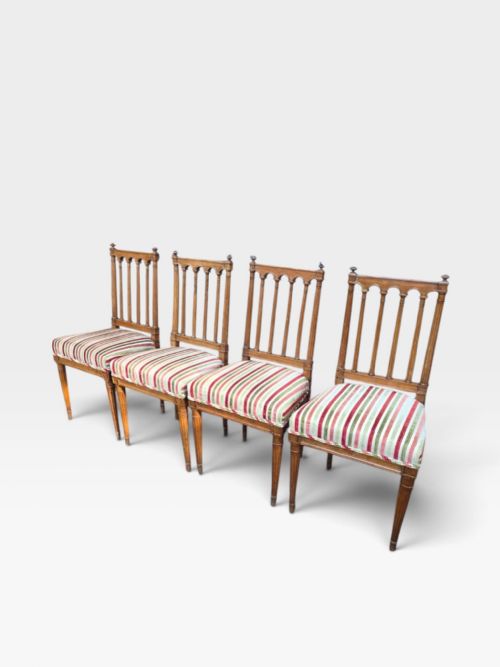
When searching for an edwardian striped chair, you encounter a range of forms including bedroom chairs, salon chairs, and armchairs produced around the turn of the twentieth century. These pieces reflect lighter domestic interiors compared to heavy Victorian furnishings, often featuring slender proportions and open frames.
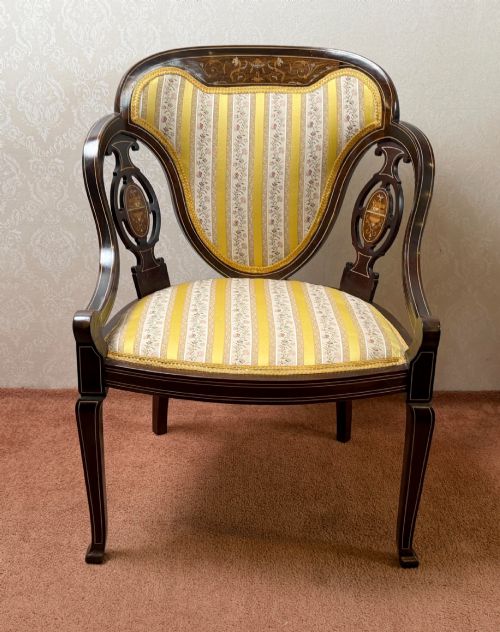
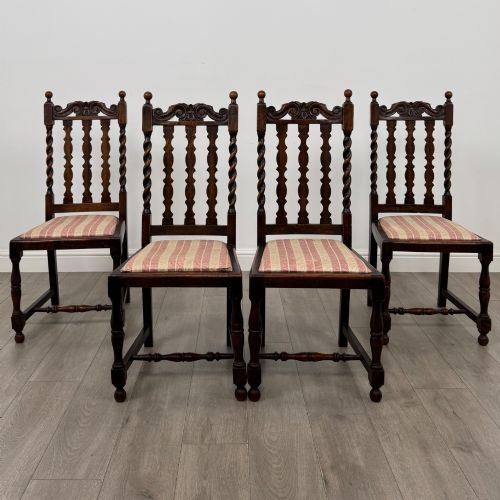
The most common examples on this page are mahogany frames finished with string inlay, alongside oak dining and bedroom chairs. Many pieces retain or have been updated with stripe fabric that complements the polished wood structures.
Origins span the Edwardian period itself, with occasional overlapping styles from the late nineteenth century and revivals reaching into later decades. Forms vary from simple upholstered slipper chairs to carved armchairs and matched sets.
Materials and construction methods
Makers utilised solid timbers such as mahogany and oak for structural frames, frequently embellishing surfaces with satinwood inlay and delicate stringing. Selected pieces incorporate carved details along top rails and stiles.
Upholstery techniques applied to these seats involve traditional stuffing secured over webbed foundations, finished with textile coverings. Brass accents and inlaid bone details appear on specific frames as decorative highlights.
Edwardian Striped Chair Retail Price Guide 2026
Typical asking prices for edwardian striped chair among the pieces listed under this phrase on Sellingantiques today, from the lower quarter to the upper quarter. They describe what is for sale here now, not the wider market.
Some chairs hid away in bedrooms just so someone could pull on their stockings in proper comfort.
Distinguishing quality in construction and finish
The standard of a frame depends on the selection of timber and the precision of its joinery, where tight joints and crisp carving separate finer pieces from simpler workshop output. Grain patterns in mahogany and the execution of satinwood inlay dictate visual depth.
Upholstery execution alters the finished character, with hand-stitched borders and appropriate fabric choices maintaining the proportion and dignity of the original design.
The Edwardian Striped Chair Glossary
- String inlay
- A narrow strip of contrasting wood set into a channel on the surface of the furniture to create linear decoration. This technique defines many Edwardian mahogany frames.
- Slipper chair
- A low-seated upholstered chair originally designed for bedrooms to assist with dressing. These pieces feature compact proportions and accessible heights.
- Barley twist
- A woodworking profile formed by cutting a spiral twist resembling barley sugar into a furniture leg or upright. It appears frequently on oak dining chairs.
- Bergere
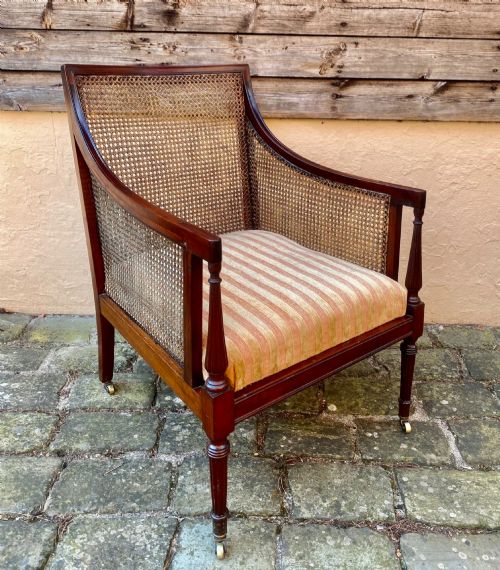
- An enclosed upholstered armchair with exposed wooden framing and woven cane panels on the sides or back. The style draws on French eighteenth-century precedents.
- Salon chair
- A light, decorative chair intended for formal reception rooms rather than heavy daily use. They often display painted details or fine inlay.
Edwardian Striped Chair: Frequently Asked Questions
What defines an edwardian striped chair?
These chairs combine early twentieth-century wooden frames, typically in mahogany or oak, with fabric upholstery featuring linear stripe patterns. They prioritise lighter proportions than preceding Victorian designs.
Many examples incorporate subtle inlaid details or carved top rails while maintaining compact, functional shapes for domestic spaces.
Where were these chairs placed originally?
Original placements varied from formal reception rooms and drawing rooms to bedrooms and private dressing areas. Smaller forms served as occasional seating where space was limited.
Drawing room pieces often matched larger salon suites, while bedroom variants focused on portable comfort.
How do I care for the wood and fabric?
Maintenance requires regular dusting of wooden frames with a soft cloth and occasional application of appropriate wax to nourish polished surfaces. Fabric upholstery benefits from gentle vacuuming using a low suction attachment.
Keep these chairs away from direct sunlight and excessive heat sources to protect both the timber finish and textile fibres.
Are these chairs suitable for daily use?
Most pieces function well for everyday seating when the underlying frame remains sturdy and structurally sound. Periodic checks of the joints ensure stability over time.
Lighter salon chairs suit occasional sitting, whereas sturdy armchairs and dining chairs handle regular daily occupation.