



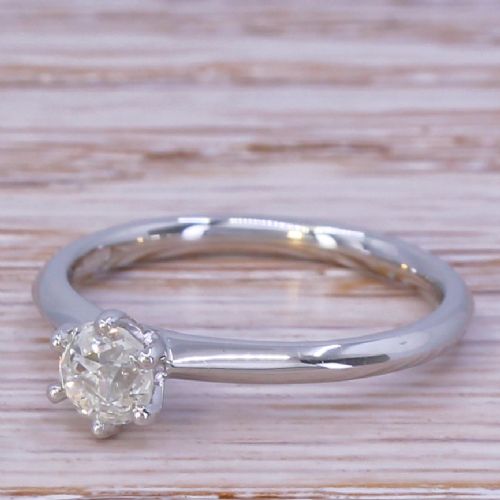


Edwardian Single Stone Ring
An edwardian single stone ring centres a single gem on the hand, offering a refined profile suited to daily wear.
Edwardian Single Stone Ring
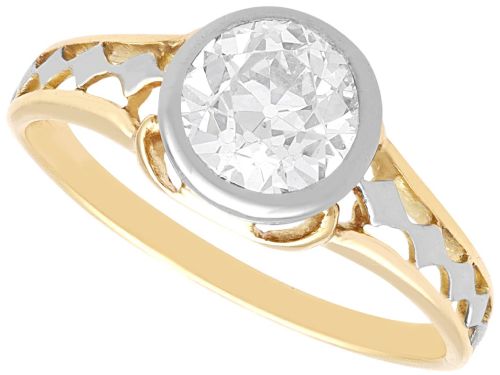
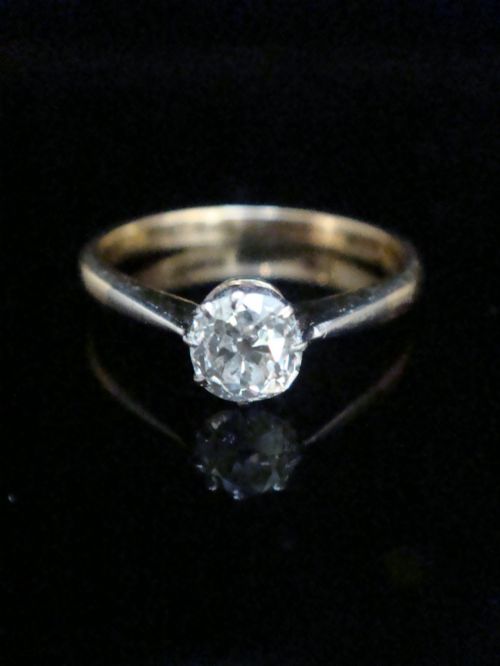
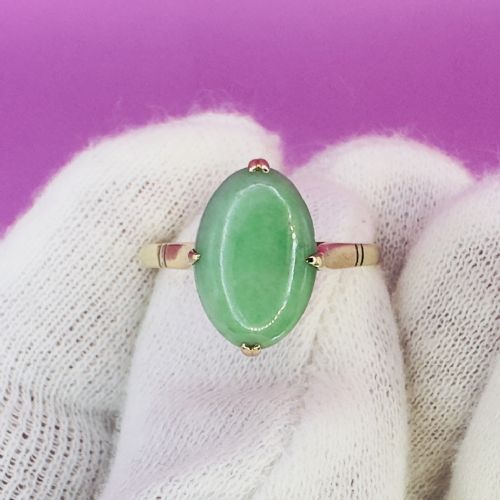
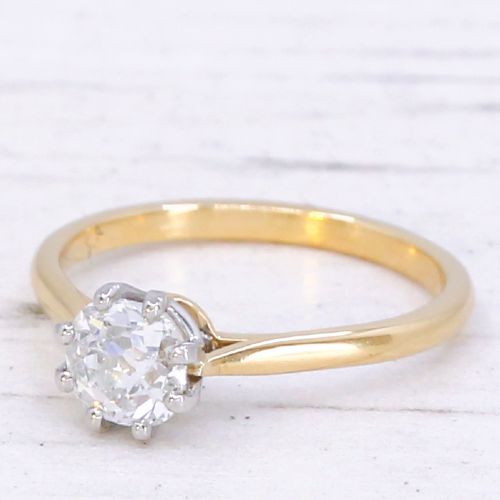
When you search for an edwardian single stone ring, you encounter pieces dominated by diamond solitaires alongside select examples set with jade, black onyx or moonstone. These rings range from the Edwardian period into the 1920s Art Deco era, with Victorian and mid-twentieth-century pieces also appearing.
The most common form on this page pairs a central diamond with precious metal, often utilising old European cut or old mine cut stones. These mountings display the focused brilliance typical of early twentieth-century jewellery design.
Settings vary from delicate platinum claws to robust 18ct gold or yellow gold bands, occasionally incorporating belcher or gypsy mountings. Each ring highlights the solitary stone as the primary visual focus.
How they were made
Goldsmiths constructed these rings using platinum, 18ct gold, 9ct gold and yellow gold, frequently combining platinum settings with yellow gold shanks during the transition into the twentieth century. Metals were shaped by hand to secure diamonds, jade, onyx and moonstone.
Stones were cut by hand, resulting in characteristic old European cuts and old mine cuts with distinctive facets that catch candlelight differently than modern brilliant cuts. Settings rely on traditional claw work or flush gypsy mountings to hold each gem securely.
Edwardian Single Stone Ring Retail Price Guide 2026
Typical asking prices for edwardian single stone ring among the pieces listed under this phrase on Sellingantiques today, from the lower quarter to the upper quarter. They describe what is for sale here now, not the wider market.
Listings feature periods spanning from the 19th century through the Edwardian era to the 1950s, utilising diamond, platinum, gold, jade, onyx and moonstone.
What varies in quality
Quality in these rings rests upon the proportion and weight of the central stone, ranging from modest fractions of a carat to substantial multi-carat diamonds. The precision of the hand-cut facets and the clarity of alternative gems like jade or black onyx define the character of each piece.
The integrity of the metalwork also separates examples, seen in the delicacy of platinum settings versus heavier gold bands. Well-preserved settings maintain the original secure grip on the stone without excessive thinning of the shank.
The Edwardian Single Stone Ring Glossary
- Solitaire ring
- A ring set with a single gem. This design emphasises the central stone above all else.
- Old European cut
- An early round diamond cut featuring a small table and deep pavilion. This cut predates the modern brilliant cut.
- Old mine cut
- An earlier cushion-shaped diamond cut with a high crown and large culet. It is commonly found in antique jewellery.
- Belcher mounting
- A ring setting where the claws project upward from the shank to cradle the stone. This style gained popularity in the nineteenth and twentieth centuries.
- Gypsy ring
- A ring style where the stone is flush-set directly into the thick band. The metal tapers smoothly around the gem.
Edwardian Single Stone Ring: Frequently Asked Questions
How do I care for antique rings?
Caring for these rings involves regular gentle cleaning with warm soapy water and a soft brush. Avoid harsh chemical cleaners that can damage older metals or softer gems like jade and moonstone.
Store them separately from other jewellery to prevent scratching the stones or delicate claw settings.
What cuts of diamond are common?
Old European cut and old mine cut diamonds dominate these pieces. These hand-cut stones feature distinct facets that offer a softer, deeper glow compared to modern cuts.
Each cut displays the individual hand of the lapidary who shaped the rough stone.
Are these rings suitable for daily wear?
Most of these rings were built for everyday use, particularly those set with diamonds in platinum or gold. However, antique settings benefit from occasional inspection by a jeweller to ensure the stones remain secure.
Gentle handling preserves the original metalwork and claw integrity over time.