




Edwardian Silver Pearl Necklace
An edwardian silver pearl necklace brings together delicate metalwork and lustrous pearls from the early twentieth century for everyday wear or collection.
Edwardian Silver Pearl Necklace
An edwardian silver pearl necklace captures the decorative spirit of the early twentieth century, spanning periods from the Victorian era through the 1930s alongside Edwardian designs. Buyers searching for an edwardian silver pearl necklace encounter various forms, most frequently pendants and necklaces incorporating pearls alongside other stones.
The aesthetic leans heavily into Arts and Crafts and Art Nouveau styles, featuring intricate silver work and characteristic period motifs. These pieces range from simple cultured pearl double strands in original boxes to elaborate enamel and gemstone drops.
Pieces originating from this broad timeframe reflect diverse influences, including Austro-Hungarian designs and British guild work. The typical survival on this page pairs silver settings with pearls, often accompanied by amethyst, enamel, or blister pearls.
Materials and Construction
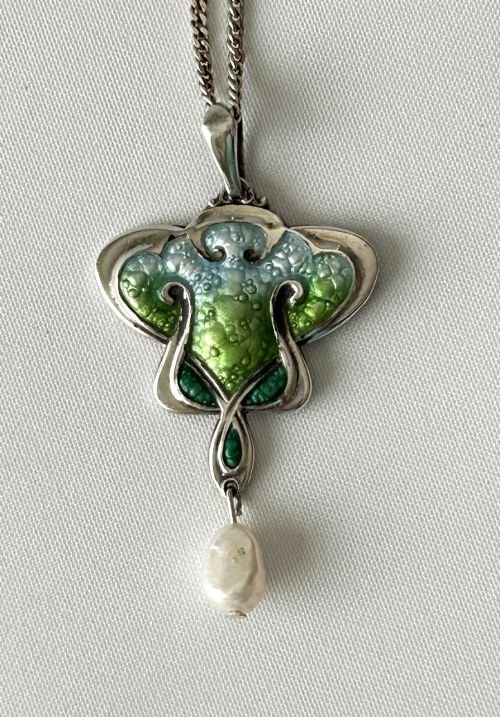
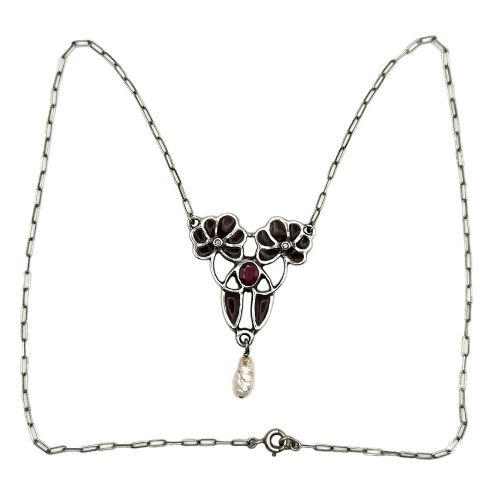
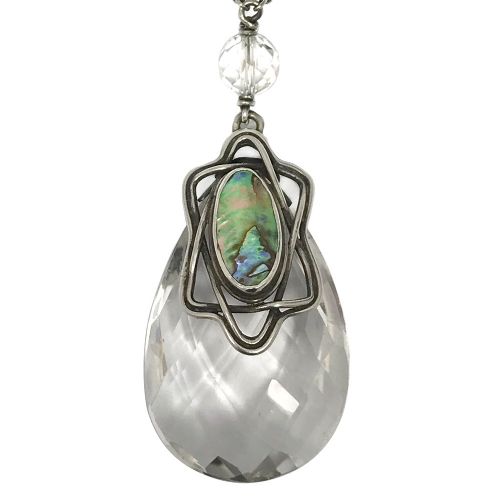
Makers utilised sterling silver and silver gilt as the primary metallic base for these necklaces and pendants, frequently pairing them with platinum in specific designs. Enamel work, particularly translucent plique-à-jour, added vibrant colour to the metal frames alongside gemstones like amethyst, rock crystal, opal, and turquoise matrix.
Pearl incorporation varies from standard cultured pearls and blister pearls to delicate pearl drops suspended from chains. Artisans employed filigree, fine wirework, and bezel settings to secure the stones and pearls within the intricate Arts and Crafts and Art Nouveau frameworks.
Edwardian Silver Pearl Necklace Retail Price Guide 2026
Typical asking prices for edwardian silver pearl necklace among the pieces listed under this phrase on Sellingantiques today, from the lower quarter to the upper quarter. They describe what is for sale here now, not the wider market.
Some pearls grew against oyster shells just to end up dangling inside tiny silver frames.
Assessing Quality and Execution
Quality in these necklaces rests upon the refinement of the metalwork and the harmony of the design, particularly in complex Arts and Crafts or Art Nouveau pieces. Superior examples demonstrate meticulous hand-crafting in the silver filigree and enamel work, showing clean lines and secure stone settings.
The selection of auxiliary materials also dictates distinction, where well-matched pearls, clear rock crystal, or vibrant plique-à-jour enamel elevate an ordinary mounting into a notable work of jeweller's art.
Archibald Knox·Liberty & Co·Murrle Bennett·George Hunt·Eduard Loss·Artificers Guild·Theodor Fahrner
The Edwardian Silver Pearl Necklace Glossary
- Plique-à-jour
- An enamelling technique where enamel is applied in cells without a backing, allowing light to shine through transparent colour much like miniature stained glass. This method appears frequently in Art Nouveau jewellery.
- Blister pearl
- A pearl that forms when a pearl nucleus attaches to the inside shell of an oyster, creating a domed shape with a hollow or flat back. These often feature prominently in Arts and Crafts pendants.
- Silver gilt
- Silver that has been coated with a thin layer of gold over its surface, giving it a warm golden tone while retaining a silver base. This finish is common in period pendants.
- Filigree
- Delicate jewellery ornamentation made from twisted fine threads of gold or silver soldered together in openwork patterns. Victorian and Edwardian makers utilised this technique for intricate lockets and frames.
- Cultured pearl
- Pearls created by human intervention by inserting a nucleus into an oyster, encouraging the creature to coat it in nacre. These became prominent in early twentieth-century double strand necklaces.
Edwardian Silver Pearl Necklace: Frequently Asked Questions
How do I wear an antique silver pearl necklace safely?
Wear these delicate pieces with care, avoiding contact with perfumes, cosmetics, and harsh chemicals that can damage the silver and pearls. Store them flat in a lined box to prevent tangling and scratching.
Regularly check the clasp security and chain integrity before wearing, especially given the age of the fine silver links and original settings.
Are these necklaces made from solid silver?
Most pieces utilise sterling silver or silver gilt as the primary metal structure for the chains, settings, and pendant backs. Some higher-end examples incorporate platinum alongside the silver elements.
Testing and hallmarks help confirm the metal purity, though many period pieces rely on craftsmanship and stylistic attribution rather than prominent stamps.
How can I tell an Edwardian pearl necklace apart from a Victorian one?
Edwardian pieces generally favour lighter, airier platinum and silver mountings with delicate floral or garland motifs. Victorian items tend to be heavier, often featuring bolder silver filigree or dark enamel work.
Overlaps in style do occur because production techniques evolved gradually around the turn of the twentieth century.
What is the difference between a pendant and a necklace?
A necklace refers to any decorative band worn around the neck, which may include integrated beads or double strands. A pendant is a specific ornamental piece suspended from a separate chain or cord.
Many listings combine these terms because pendants frequently arrive attached to their original or period-appropriate chains.